
More than $4 billion worth of carpet ends up in landfills (around 80% of the carpet waste) every year in the US. A damp carpet means trouble. From the lingering odor to the looming threat of mold and mildew growth, the horrors are tremendous. Inhaling or touching mold can trigger allergies and exacerbate asthma. Carpet odor is not life-threatening, it is just gross. Check out these steps for carpet odor removal so you won’t have to throw it away.
3 Basic Steps For Carpet Odor Removal Due To Water Damage
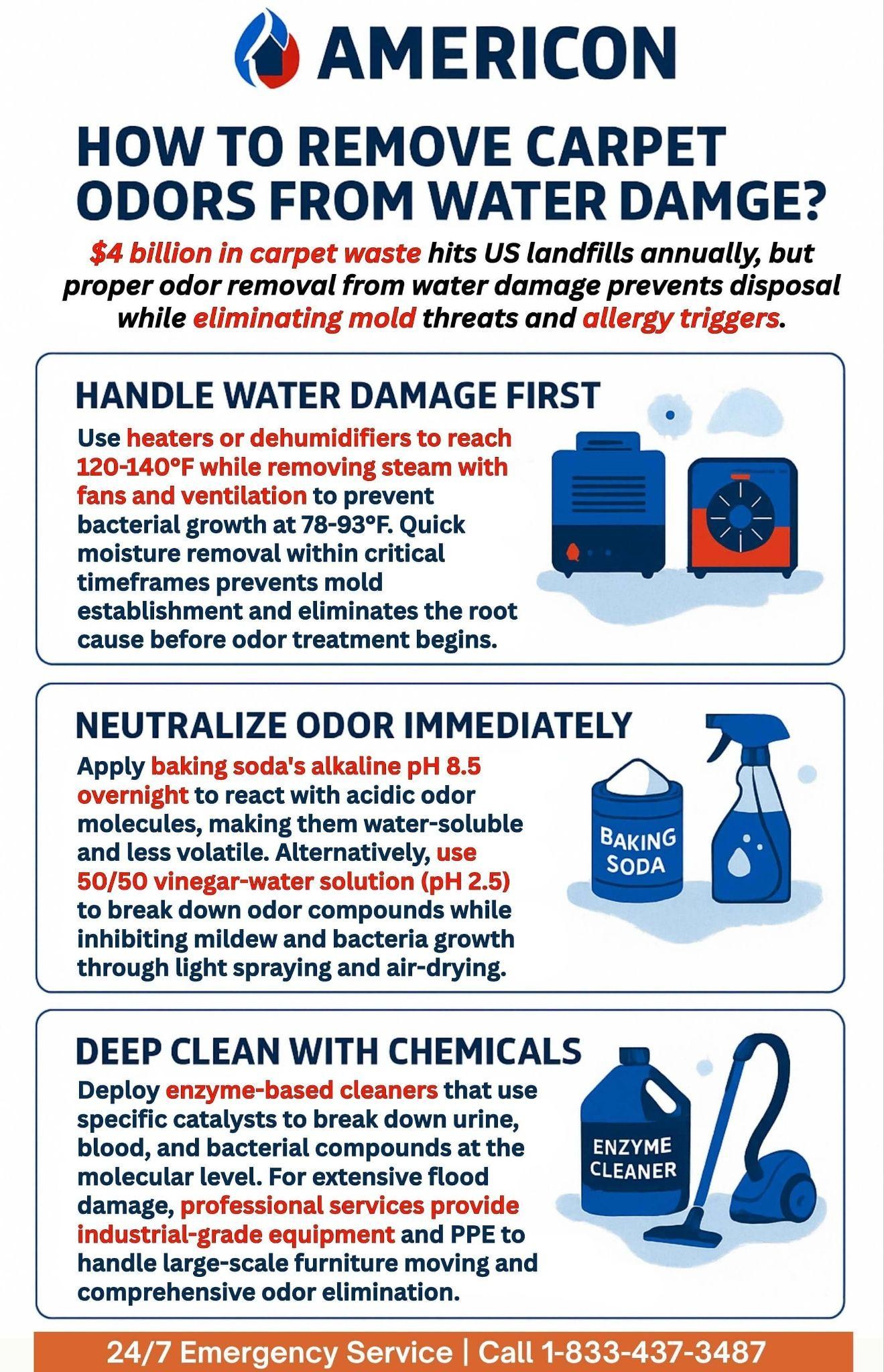
Remove carpet odors from water damage by drying the area completely, cleaning with white vinegar or baking soda, and applying an enzymatic cleaner. Use fans or dehumidifiers to eliminate moisture. If odors persist, replace the carpet pad or consider professional restoration. Here’s a detailed overview:
1. Handle The Water Damage To Carpet
Continuous exposure to dampness at home for asthma patients costs $22.4 billion each year in the US. Before you learn how to get rid of the damp carpet smell, you need to address the root cause aka the water damage.
- If your carpet was soaked in water due to the flood or if you had dropped some water on your carpet, you require a heater or some other heat source (such as a dehumidifier) to raise the temperature to 120-140 degrees Fahrenheit to dry your carpet out.
But, the problem is the heat would only turn the moisture into steam which if condensed will reverse everything and you will be back to square one. So, you must get rid of the steam as well. When you reduce the humidity and increase ventilation, the bacterial growth halts at 26 to 34 degrees Celsius (78 to 93 degrees Fahrenheit) which is why it is important to remove the moisture before addressing the odor.
- Use fans to drive the heat out (use a generator to power the fan if you are facing electricity issues). Timing is crucial, so you need to act fast to dry out the damp patches before mold starts to catch the moisture.
Removing the moisture and damp patches will either prevent the mold growth or kill it as they do not thrive without moisture.
2. Neutralize The Odor Immediately
Mold and mildew produce the musty odor, but sometimes bacteria, pet urine, and other contaminants also instigate it. Use these ingredients commonly found in your kitchen to get rid of damp carpet smell; these compounds are backed by science so they work more often than not.
Use Baking Soda To Remove The Carpet Odor
Baking soda or sodium bicarbonate is a common household staple in the US and it is different from “baking powder”. It is an alkaline compound with a pH of 8.5 which basically reacts with the odor molecules (most foul-smelling compounds are acidic) and turns those musty odor-producing molecules into a regular nobody (reduce the vapor pressure and make it less “smelly” and water-soluble).
Now the trick to make baking soda work is to maximize the surface area as well as the contact time at the room temperature (which is 68-72 degree Fahrenheit).
- You can use a handful of baking soda and sprinkle it over the affected area and leave it overnight to absorb the moisture as well as the odor.
- The next morning, you can vacuum up the baking soda and repeat the process if your carpet still reeks of mildew.
- Usually for more stubborn smells, you must apply the baking soda generously and repeatedly until the smell goes away.
Pro Tip: Wondering how to make a rug smell fresh fast? You can add a drop or two of lavender essential oil in the baking soda.
Use Vinegar To Remove The Odor
Acetic acid, more commonly known as vinegar, is a chemical compound which effectively breaks down the odor-causing molecules. Household vinegar in the US usually has about 5% acetic acid so you can consider it a very diluted form of the acid. The lower pH of 2.5 allows acetic acid to inhibit the mildew, bacteria, and fungi growth as well as helps in containing the musty odor.
Use vinegar this way to kill the mildew smell from your carpet:
- Take 1 cups of water and 1 cups of vinegar (use 50/50 ratio of both solvents) and make a solution
- For a stronger solution, you can also use 1:2 (33.33/66.67) or 1:3 (25/75) ratio of water and vinegar to get better results.
- Before you spray, test on a small patch of your carpet to confirm the solution is perfect and does not damage or discolor the carpet.
- The key to achieving the best result is by spraying the solution lightly. Oversaturation may lead to more problems you don’t want.
- Let the solution air dry (if possible, keep the windows open to promote cross-ventilation).
- Reapply the solution if it feels necessary.
Usually the strong smell of vinegar usually dissipates within 15 minutes to 2 hours, depending upon the amount you have used and the quality of ventilation in the room.
Pro Tip: Using a few drops of tea tree oil not only helps in combating the mildew odor, but also inhibits fungi growth more effectively than the vinegar.
3. Deep Clean Your Carpet With Chemicals
Lastly, deep cleaning your carpet with chemicals is an optional step you can deploy if the smell is too strong. There are two ways to deep clean your carpet: use industrial grade enzyme-based cleaners or consult a professional carpet cleaning service.
Enzyme-based Cleaners
Enzyme-based cleaners use specific enzymes to eliminate the carpet odor. These enzymes act as a catalyst, effectively breaking down the odor causing compounds. Different types of enzymes are used to break down odor causing substances, such as urine, blood, and bacteria. You can follow the instructions available on the packaging to deep clean your carpet and to remove the odor.
Hire A Professional Cleaner
Cleaning the carpets after the flood is difficult as you will need to move the furniture and perform every single task on a huge level. You can consult an expert with proper tools and personal protective equipment (PPE) to remove carpet odor from water damage.
Can water damaged carpet be cleaned?
Can water damaged carpet be cleaned?
Yes, water-damaged carpet can be cleaned if addressed promptly and the damage isn’t from contaminated water. Start by extracting standing water using a wet vacuum, then thoroughly dry the carpet with fans and dehumidifiers to prevent mold growth. Steam cleaning or shampooing with antimicrobial agents removes bacteria, stains, and odors.
If the carpet was soaked with clean water (Category 1), full restoration is often possible. However, if exposed to greywater (Category 2) or blackwater (Category 3), such as sewage or floodwater, replacement may be necessary due to health risks and deep contamination.
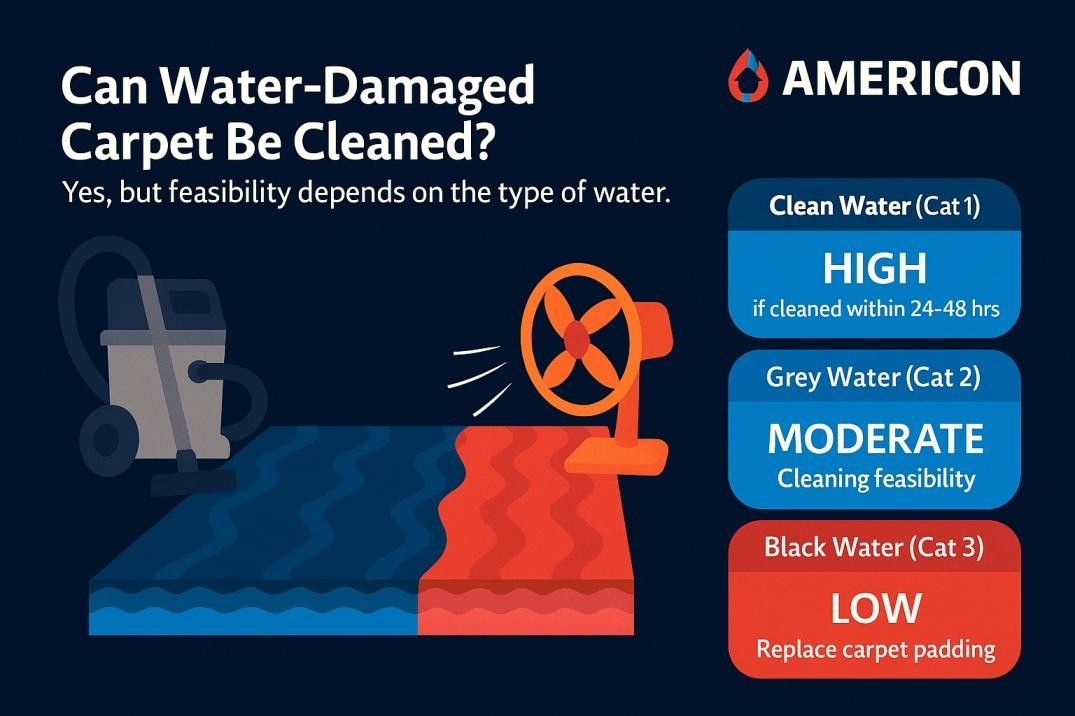
The carpet padding often retains moisture and may need to be replaced even if the carpet surface is salvaged.
| Water Damage Type | Description | Cleaning Feasibility | Recommended Action |
| Clean Water (Cat 1) | From broken pipes or rain | High if cleaned within 24-48 hrs | Dry, disinfect, steam clean |
| Grey Water (Cat 2) | From appliances or sump leaks | Moderate with quick action | Clean with antimicrobial solution |
| Black Water (Cat 3) | Sewage or floodwater | Low due to contamination | Replace carpet and padding |
Act quickly to improve your chances of saving the carpet and avoiding long-term damage.
Need Professional Help For Fast Carpet Cleaning & Odor Removal?
You don’t have to worry about spending the whole day cleaning and the next few days drying out your carpet only to find the smell is not fully gone. Americon Restoration can help you clean and restore your carpet back to its original glory by using industrial grade dehumidifiers for quick drying, environmentally friendly detergents for cleaning the carpet, using enzyme compounds for breaking down odors, and then finally deodorizing your carpets to not just look clean, but get rid of putrid smells for good. And we do all of that fast and without being a bother for your routine. So call 1-833-437-3487 to get started ASAP.
Frequently Asked Questions:
A damp carpet smell can last from 24 hours to several days depending on humidity, airflow, and how quickly the carpet dries. If moisture remains trapped, the odor may persist for over a week and lead to mold or mildew.
Remove pee smell from carpet by blotting the area, applying a vinegar-water solution, and sprinkling baking soda. Let it sit overnight, then vacuum thoroughly. Use an enzyme cleaner for persistent odors.
Eliminate mildew smell from carpet by drying the area completely, scrubbing with a vinegar solution, and applying baking soda. Allow it to sit before vacuuming. A dehumidifier can help prevent future mildew.
Get musty smell out of carpet by increasing ventilation, using a vinegar-water spray, and applying baking soda. After it dries, vacuum the area. For deeper odors, use a steam cleaner or enzyme treatment.
Yes, you can leave vinegar on carpet overnight to neutralize odors, but it’s not always recommended as vinegar is acidic and may discolor the carpet. Test a small area first. The acidity helps break down bacteria, especially on pet stains or mildew spots.




 Loading...