

Mold growth can start within 24 to 48 hours of water damage. It’s a rather sneaky substance that needs the mere presence of moisture to start growing. And you need to get rid of it before you and your family start having health issues due to the mold. Lately, there’s quite a buzz about activated charcoal and mold growth. But, can you really use activated charcoal for mold? Does it really help get rid of mold? Here’s a brief answer to this.
Does Activated Charcoal Remove Mold?
Some people claim that activated charcoal is an effective measure for mold removal. There is some truth to this, however, using activated charcoal alone will not remove or prevent mold damage. What it will do is remove mycotoxins from the air. Mycotoxins are toxins created by mold and fungus, and they are what makes you sick when you have mold damage in your home. The toxins attach themselves to mold spores, which are released from the mold into the air. Activated charcoal binds itself to those mycotoxins via adsorption, where the toxins adhere to the surface of the charcoal due to its porous nature. While it will not kill mold or slow down the effects of mold damage on your home, it may help prevent or slow the effects of mold sickness.
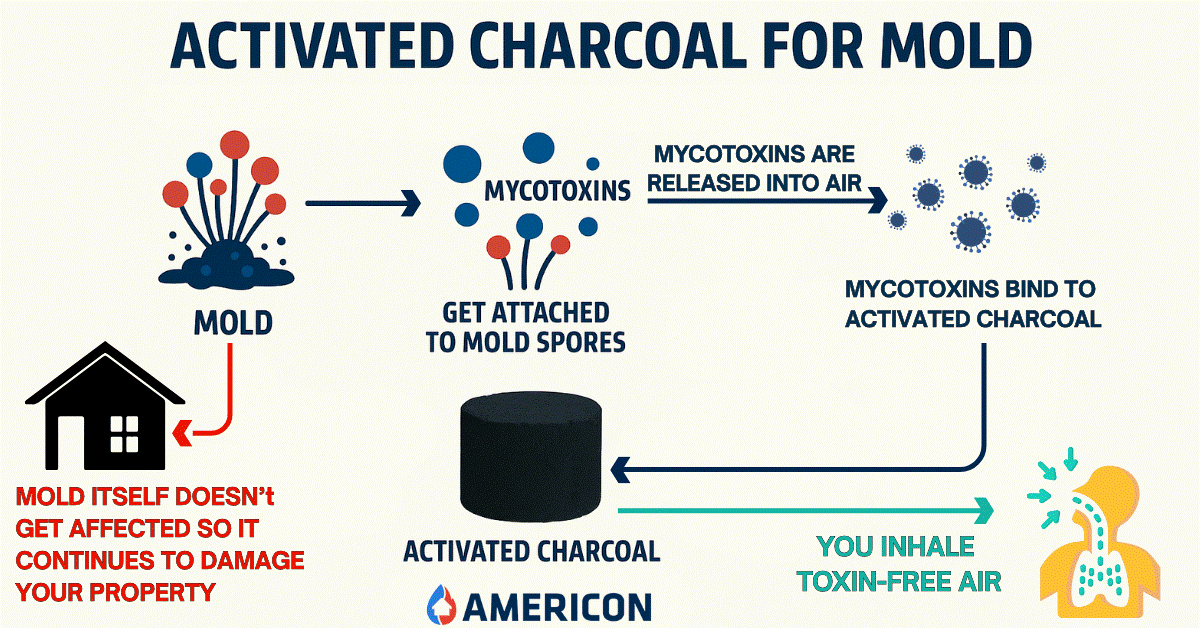
So you can say it filters the air for you, so you won’t inhale the toxins released from active mold colonies and fungus. Plus, another usage is mold odor removal with charcoal that helps get rid of the musty smell after mold removal. But, to say that you can use charcoal to get rid of mold is wrong, as it only controls the effects of it and doesn’t really remove the root cause. You need full on biohazard decontamination and remediation to kill the mold and prevent recurrence.
3 Natural Mold Removal Methods (Only Work For Minor Outbreaks)
Now you might be wondering if activated charcoal doesn’t remove mold, what is an effective home remedy to get rid of it? Well, there are plenty of natural mold removal methods you can use for minor outbreaks and spots.
1. Baking Soda
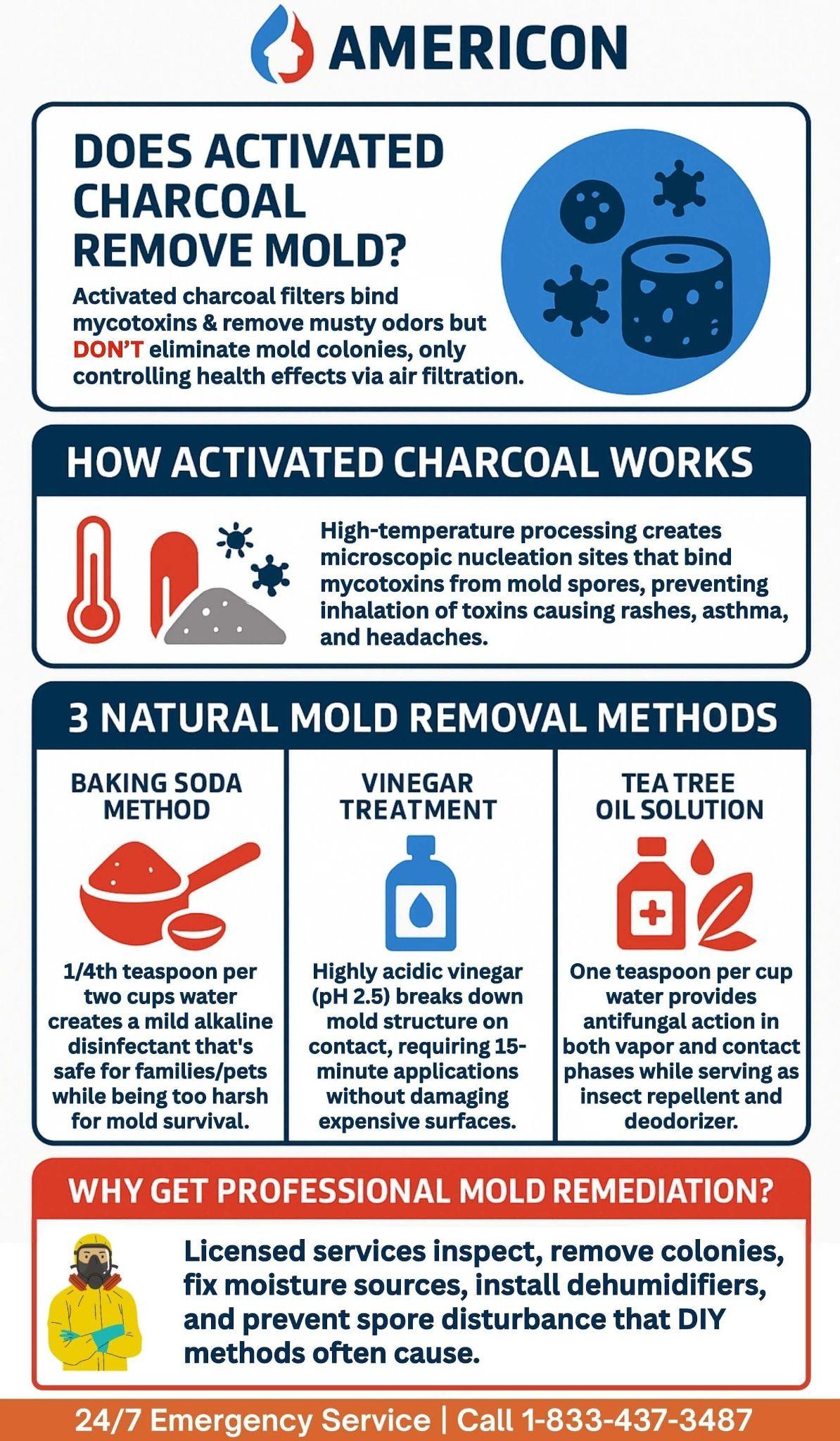
One of the most effective methods to get rid of mold growth is baking soda. Homeowners swear by it. It’s a mild solution that isn’t harmful to your family or pets. Moreover, it doesn’t even affect the surface it’s applied to. However, it still serves as a natural disinfectant that is too high for the mold to thrive.
- Add one-fourth teaspoon of baking soda to two cups of water
- Spray it on the mold area and scrub
- Rinse with water and repeat the process for long-lasting effects
2. Vinegar
Vinegar is another natural ingredient that helps get rid of mold. It’s highly acidic (pH around 2.5) and spraying it over the mold will break the mold structure, eventually killing it. However, just like baking soda, vinegar is also only effective for minor mold outbreaks.
But on the good side, it doesn’t affect the surface it is applied to. So it’s safe to use for your expensive paint or wood floors. And using it is even easier than baking soda.
- Spray the affected area with vinegar
- Let it sit for around 15 minutes
- Spray again and wait
- Finally, wipe the surface with a damp rag
3. Tea Tree Oil
There are many studies that support the idea of tea tree oil as an effective natural antifungal agent. This essential oil inhibits the growth of mold in both vapor and contact phases. And just like the above-mentioned methods, tea tree is also a safe method for mold removal.
In addition to that, it’s a great insect repellent, antiseptic, and deodorizer.
- Add one teaspoon of tea tree oil to one cup of water
- Spray the mold-affected area
- Wait for an hour and wipe it away with a dry towel
Always wear protective gloves, as some people are sensitive to tea tree oil
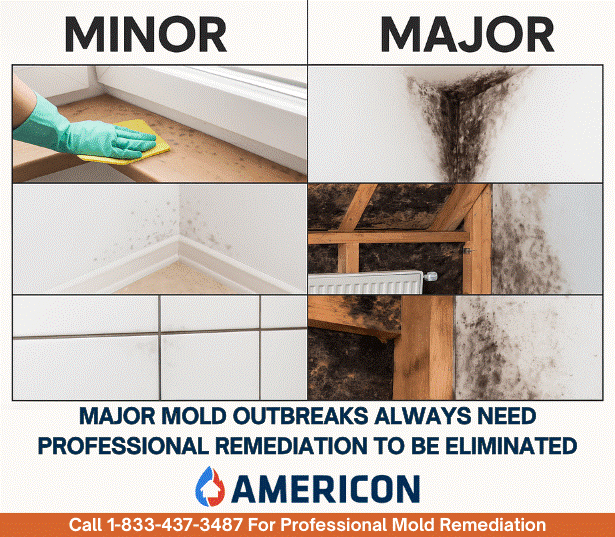
Remember, these are only for minor mold spots, for major outbreaks, only mold remediation professionals can help.
What Method Works Best for Mold Removal?
Despite all the natural remedies, the best way to get rid of mold growth is to hire a mold remediation company, especially when there are colonies of active mold growing in your home. As per studies, mold growth, if not properly treated, can return after a certain period. So for future safety, it’s best to hire a mold remediation service that will inspect your area, remove the mold, dehumidify, and restore the surface.
Not only that, a professional mold removal service will also make sure the mold doesn’t come back by fixing the source of moisture, drying the area thoroughly, installing a dehumidifier (or a relevant long-term preventive technique), and routine maintenance.
Furthermore, if you try to fix the mold yourself, chances are you might disturb the mold colony. And it will release a great number of mold spores and mycotoxins in the air, ultimately causing more harm. So it’s best if you leave it to the professionals.
How To Use Activated Charcoal for Mold?
Activated charcoal is made from the same material as charcoal, but is processed at a high temperature to get activated. And in this process, the composition plus surface texture of charcoal changes, and it produces higher density microscopic ‘Nucleation Sites’ on its surface, where the mycotoxins actually bind.
These mycotoxins attach themselves to the mold spores and spread in the environment, causing skin rash, asthma, eye irritation, headache, blurred vision, and more.
But, if you know already that your space is prone to mold growth or it’s a high-humidity area, you can at least use activated charcoal filters for mild protection from the after-effects of mold infestation on your body, while you sought help from professional mold remediators.
Activated charcoal is also an effective filtration medium to absorb pollutants and gases in the air, which is especially beneficial for people with respiratory diseases or sensitivities. Some people also ingest activated charcoal supplements as it is believed that the charcoal absorbs mycotoxins as it goes through your system and flush them out of your body.
However, the mold in your home will not be affected by activated charcoal and will continue to damage your property and release toxins in the air. You’ll have to continuously change activated charcoal filters just to minimize its airborne pollutants and their effects on your health.
So Then, What Gets Rid of Mold For Good?
Professional mold elimination by containing the area, removing the mold, cleaning the region, and preventing further growth through the use of biocides, HEPA filtration, antimicrobial treatments, and moisture control.
If you want to get rid of stubborn mold infestation then Americon Restoration can help. Call 1-833-437-3487 to get started immediately!
Frequently Asked Questions:
Get rid of mold permanently by fixing all moisture problems, removing affected materials, and cleaning with EPA-registered mold removers. Use a dehumidifier to keep humidity below 50%. Seal leaks, improve ventilation, and monitor for regrowth to ensure mold does not return.
Detox your house from mold by removing contaminated items, using HEPA air purifiers, and cleaning with vinegar or baking soda. Wash all fabrics with hot water, ventilate rooms daily, and run a dehumidifier. Inspect HVAC systems and use mold-killing sprays in high-risk areas.
Signs of mold sickness include chronic coughing, sneezing, skin rashes, fatigue, headaches, sinus congestion, and red or itchy eyes. People with asthma or allergies may experience worsened symptoms. Long-term exposure may cause memory issues, mood changes, or respiratory infections.


 Loading...