
When a home, business, or public area is polluted with hazardous materials, making it safe is the first concern. A professional service of Biohazard Cleanup guarantees that these dangerous substances—like pathogens, bodily fluids, chemicals, or infectious waste—are mixed up less, in a correct and detailed manner. Such situations necessitate the use of specialized knowledge, protective gear, and a strict set of standards. If the problem is not fixed properly, the risk of getting exposed to the contaminants will still be there, thus, the health of the people and the safety of the property will be in danger.
Biohazard remediation professionals use standardized procedures to get rid of substances that can be a source of diseases or even death. Such interventions are necessary when there has been a trauma event, a chemical spill, a sewage backup, or an outbreak of an infection. The restoration they achieve is not only of safety but also of the owner’s confidence. All these chapters aim to assist property owners in realizing the importance of calling the pros when dangerous materials are a threat.
Understanding Biohazard Cleanup and Its Critical Importance
Biohazard cleanup Service is the detailed process that involves finding, separating, removing, and disinfecting to the utmost extent, those things which may threaten human health. These biohazards could be biological waste, blood and other body fluids, toxic chemicals, mold, or disease-causing germs. This is a job for the trained professionals who are rightly equipped with protective gear, use heavy-duty disinfectants, and employ the latest methods of disposal to make sure that the area is safe again.
Such dangers have led to the establishment of rules and requirements for the disposal of hazardous waste. Crew members who have received training in the removal of hazards facilitate the observance of safety instructions and the protection of nature. They also stop the transmission of harmful bacteria, viruses, and toxins to the human body. As an example, sewage leaks are filled with harmful microorganisms. Infections in fluids in the cases of trauma are the most likely. The release of chemicals can make the quality of the air inside lower.
Types of Biohazards and Their Associated Risks
Biohazard Type | Source | Health Risks |
Bloodborne pathogens | Trauma scenes, injuries | Infection, disease transmission |
Chemical contaminants | Industrial spills, household leaks | Respiratory issues, poisoning |
Sewage and wastewater | Plumbing failures, flooding | Viral and bacterial exposure |
Mold and microbial growth | Moisture buildup, water damage | Allergies, respiratory health complications |
Understanding these categories underscores why proper Biohazard Cleanup is essential. Professionals protect both human health and structural integrity.
Key Components of Effective Biohazard Remediation
Fixing errors of dangers successfully need planned and organized manner. Cleaning after a biohazard is definitely not something done superficially- it entails deep disinfection, disposal of hazardous waste, and revitalization of nature. The success of the procedure is dependent on a number of vital factors.
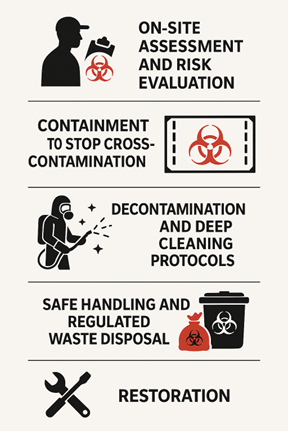
On-Site Assessment and Risk Evaluation
The moment technicians show up, the assessment is already on the go. They thoroughly check out the locale that has suffered damage to figure out the degree of pollution, the possible dangers, and the safety measures that will be needed. This inspection is what dictates the whole cleaning-up plan. It is used to decide the discarded materials, the quantity of isolation, and the types of the most qualified agents applied for cleaning.
Containment to Stop Cross-Contamination
Containment is the measure that prohibits cross-contamination. Technicians close off the areas that have been impacted with the help of barriers, filtration devices, or negative air systems. It is their way of ensuring that the pollutants are kept in a limited space. The right containment is the protection of the unaffected areas against a dangerous exposure.
Decontamination and Deep Cleaning Protocols
Decontamination procedures are aimed at the elimination of biological or chemical agents that threaten health.
Basically, disinfectants that are certified are the means by which the pathogens are destroyed, and machines that are specially designed are employed to take off the remnants from both the surfaces and the air. Sometimes, situations may arise in which it is necessary to get rid of the porous materials such as carpets or drywall in order to prevent.
Safe Handling and Regulated Waste Disposal
How waste is disposed of is just as vital as the other steps. Items that are a source of biohazard must not be disposed of with regular clutters. These sorts of wastes are to be put in sealed containers, transported by approved vehicles, and dumped at disposal facilities that are regulated. This is done for the safety of the environment. Professionals in the remediation field take care of the entire process from the removal at the site to the final disposal.
It is restoration that makes the folio of the removed hazardous materials. The technicians, after the removal of the dangerous materials, repair the damaged parts, change the materials, and restore the environment to a consumable level.
Comparing Professional Cleanup vs. Basic Cleaning Methods
Quite a lot of people do not know that dangerous pollution needs more than just normal cleaning materials. The cleaners that are used around the house are not able to eliminate all the pathogens or the chemical residues. If an untrained person tries to clean a biohazard scene, he or she seriously risks his or her health.
Professional Biohazard Cleanup includes the use of heavy-duty disinfectants, the use of special equipment, and the performance of the work in a controlled manner with proper waste disposal. A few basic cleaning products only remove the dirt that can be seen with the naked eye but not the contamination that is invisible to the microscope. Inefficient cleaning also makes the spread of the hazardous materials to other surfaces possible.
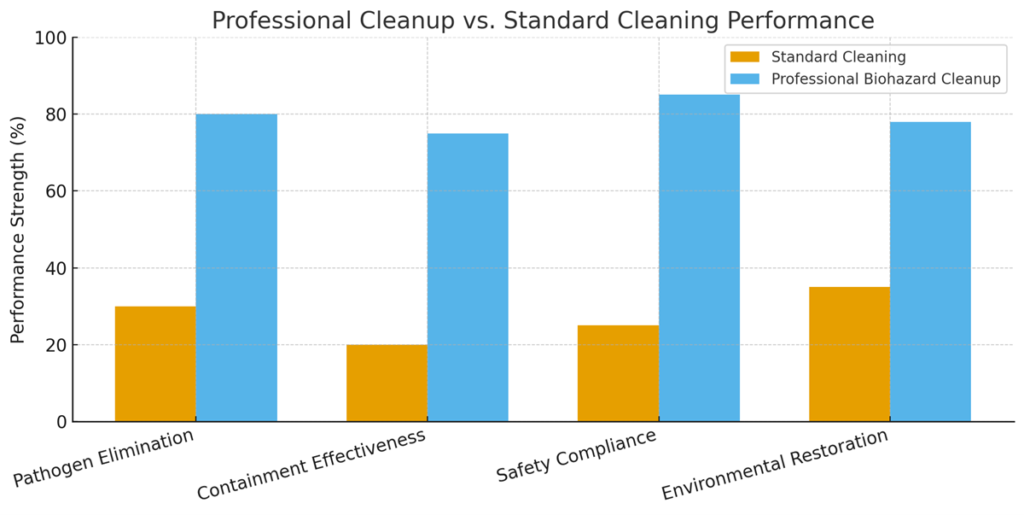
- Professional biohazard cleanup outperforms standard cleaning in every category.
- Biggest gap is in Safety Compliance (professional far higher).
- Pathogen Elimination is much stronger with professional services.
- Standard cleaning scores low on Containment Effectiveness.
- Professional cleanup also leads clearly in Environmental Restoration
Instances make it clear that professional remediation is necessary for safety. For example, bacteria that are harmful may remain after a sewage backup even if the area has been visually checked for cleanliness. Trauma scenes, which may be related to the release of infectious fluids, have to be treated with medical-grade disinfectants only.
It is more safe and owners of properties will have more tranquillity of mind if they decide to entrust the job to certified experts instead of trying a hazardous cleanup by themselves. Professionals follow the regulations and thus create a safe environment for the users of the space and, at the same time, they prevent the occurrence of damages that can be of a long-term nature.
Practical Tips for Choosing a Reliable Biohazard Cleanup Company
Most importantly, double-check these qualifications. The workers should firmly be acquainted with the situation handling of dangerous substances, pathogen mitigation, and waste management following the regulations. Secondly, evaluate the company’s experience. Those firms which are deeply involved in the remediation industry for a long time are fully aware of the ways to handle the scenes of a traumatic event, exposure to chemicals, and environmental cleanup.
Below is a brief list summarizing important selection elements:
- First of all, try figuring out the ones who not only have a certificate but have also been trained for the same and this should be stated in their papers.
- Confirm that the company is using the right methods for the disposal of the waste which are in accordance with the laws and regulations.
- Staff members’ knowledge and experience in case of a traumatic event, sewage, chemicals, or microbial contamination should be thoroughly checked.
- Verify that the issuer is providing you with the post-decontamination restoration services.
The decision of choosing a trained professional will lead to a proper cleanup, compliance with the regulations, and a safe restoration of the property.
The Essential Role of Professional Biohazard Cleanup
Biohazard contamination is a health and environmental hazard of the utmost seriousness. If it is a result of trauma, sewage, chemical spills, or microbial growth, biohazard materials are in need of an expert response. Americon Restoration is all about the combination of special training, control containment, and disposal in accordance with regulations to get rid of the threats in an efficient way.
Trying to clean up biohazards without having the right knowledge will increase the risks and may even make the contamination worse. Professional remediation teams on the other hand, are always up to date with industry best practices, they thoroughly assess the level of contamination, and they remove the hazards in a responsible manner.
Biohazard cleanup is much beyond cleaning, it is about giving back the lost trust and making the environment safe for the families, employees, and communities. By hiring the services of trained specialists, property owners can be sure that hazards will be taken care of with accuracy, safety, and in accordance with the law.
 Loading...