
Flooding occurs fast and without warning. Homes suffer mold and rot. Quick action if water gets inside the home restricts these lasting results. Professional Emergency Flood Repair services assess, stabilize, and reverse damage from floodwater that contains contaminants and excess moisture, affecting walls, floors, insulation, and electrical systems. Prompt removal and drying helps to prevent further consequences from a flooded environment.
How fast water can fill the space in practice is not always realized by homeowners. Waterlogged building materials can cause rot, mold, and structural weakness inside. Emergency flood specialists will arrive. They will extract water. They will treat the surfaces to kill germs. They will repair the building. The article explains what flood repairs are, how they work, the differences between professional flood repairs and DIY flood repairs, essential tips for hiring a flood repair service for homeowners, and a summary of flood repair.
Understanding Flood Damage and the Importance of Immediate Restoration
Flood damage problems are complicated. Porous materials allow flood waters to travel through them as the waters spread across long distances. Emergency Flood Repair is important for moisture can severely damage structural systems, wiring, and indoor air quality. If the water stays around, mold may start within about 24 to 48 hours, and foundations, floors and drywall can suffer damage.
A storm of some kind could cause the flood. A plumbing leak could cause the flood. An appliance failure could cause the flood. A sewer backup could cause the flood. Water in a broken pipe is clean, potable water. Water from the flood outside is dirty. Professional restoration contractors know these differences and deal with them.
Types of Floodwater and Associated Risks
Flood Category | Description | Health & Structural Risks |
Clean Water | Broken pipes, supply line leaks | Minimal health risk but high structural damage |
Gray Water | Appliance leaks, used water backups | Bacteria exposure, material contamination |
Black Water | Sewer backups, outdoor floodwater | Severe contamination, mold, hazardous pathogens |
The pattern in which an area is drained, type of materials used in construction and layout of homes can affect the spread of damage. Understanding of floods can help homeowners understand about when to call for professional help.
Essential Components of Emergency Flood Repair
A professional flood restoration process works through stages that remove moisture. It prevents contamination. It restores the structure to a pre-flood condition.
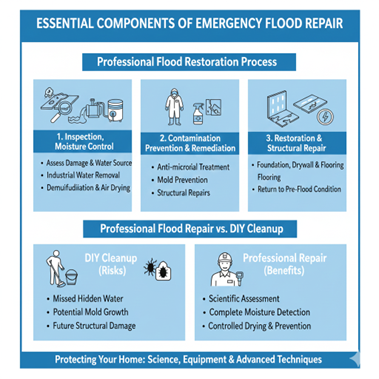
Inspection, Water Extraction & Moisture Control
Inspection begins the process. Specialists assess how water entered the property, the first step is to assess the damage at once. Experts examine the water’s origin, contamination level, and affected substances in detail. Moisture meters, thermal imaging and other tests locate the damage from behind walls and from under floors, and water is removed. Industrial pumps, wet vacuums and other high capacity water removal equipment are commonly used to remove standing water quickly to prevent warping, mold and decay.
Quickly extract to reduce mold because you must control moisture. Dehumidifiers and air movers are needed to dry the studs, subflooring, and insulation.
Professionals measure humidity levels in order to locate humidity pockets and ensure that the necessary materials have had time to stabilize after moisture intrusion.
Remediation is completed with structural repairs. Foundation, drywall, flooring, and electrical systems of the home have all been affected by flooding. The structural experts determine the materials for salvage, the items for replacement, and make the house safe again. Therefore, an appropriate Emergency Flood Repair should combine scientific assessment with specialized equipment and remediate using advanced techniques, aiming at preventing permanent damage to the home.
Comparing Professional Flood Repair vs. DIY Cleanup Approaches
Many homeowners can respond to these flood events themselves. Quick floods can be cleaned with common household cleaning products, while severe floods require professionals to respond. Performing DIY treatments often misses some of the water that may be hiding, leading to mold and structural damage at a later date. Certified Emergency Flood Repair has the tools and training for complete water damage solutions.
You can dry up the water, but professionals have moisture detectors and meters, that are used to find moisture in walls and floors. They also control the drying of materials to avoid warping and mold.
DIY Cleanup vs. Professional Emergency Flood Repair
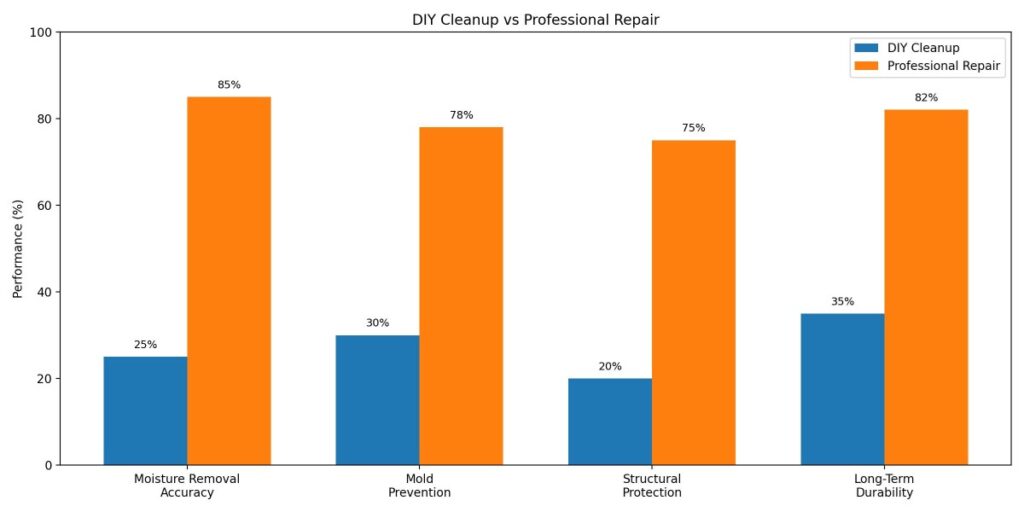
- Professional repair is much more accurate at removing moisture (85%) than the do-it-yourself cleanup (25%).
- Mold is more effectively prevented by professionals (78%) than by DIY work (30%).
- Do-it-yourself (DIY) cleanup provides only 20% of protection provided by professional repairs.
- In addition, pro work lasts much longer than DIY (82% vs.35%) according to Master Brand.
- DIY solutions do not address hidden moisture that can lead to mold regrowth.
In reality, water has a way of migrating behind baseboards and under floors to be undetected for months. Soft spots warp. Areas warp. Odors linger long after the water goes away. A professional water restoration company can dry and inspect to prevent those things.
Practical Tips for Choosing an Emergency Flood Repair Service
To choose the right restoration service is critical to recover, as not all service providers can experience or equip themselves to handle the complications of more severe flooding. Homeowners may want to think about credentials response times and service operation.
To start, ensure all technicians are IICRC certified in Water Damage Restoration, which covers safety, moisture control, and structural repair fundamentals. Experience: A provider’s working with multiple types of flooding shows knowledge of how various materials react to flooding.
Second, look for a company with a guarantee of a quick emergency response. Flood damage can worsen at a fast pace. A good Emergency Flood Repair company will work in a quick way to reduce long-term damage regardless of the weather or time of day.
- Choose certified water restoration specialists with proven experience.
- Confirm they use advanced moisture detection and drying equipment.
- Evaluate their emergency response availability and service transparency.
- Ensure the service includes sanitization, structural repair, and content restoration.
Technicians communicate about what they are doing. They communicate about how much it will cost. They keep the homeowner informed of progress. This lends transparency and trust during a stressful situation.
Why Professional Flood Repair Is Essential for Home Safety
At Americon Restoration, flooding immediately damages homes when it soaks through them or compromises their structure and creates long-term problems when it molds. Professional Emergency Flood Repair can eliminate this. Using specialized equipment they can extract the water, reduce hidden moisture, sanitize the area and restore the affected building.
Though people try hard, DIY remediation might not restore everything as professionals do. Professionals know how to handle moisture problems to stop mold from returning initially. This reduces health risks, property loss, and uncomfortable conditions.
To restore something promptly is indeed the best way to respond to the consequences of flooding. This allows homeowners to recover peace of mind in order to sense long-term stability for their property. Emergency flood repair aids protect your home by providing a safe living environment while assisting with recovery from an unexpected flood.
 Loading...