
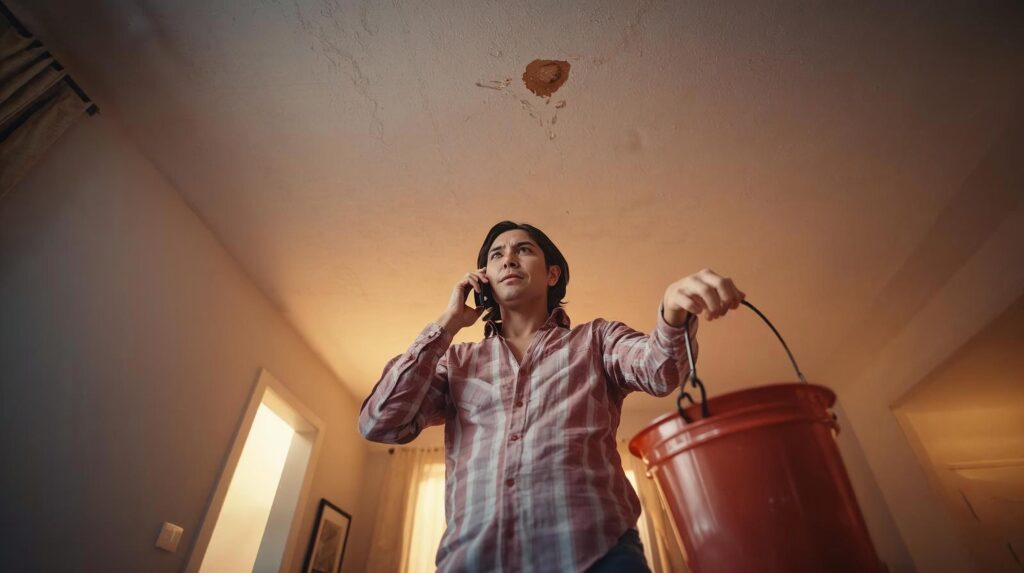
Owning a home in the Ohio Valley comes with its share of maintenance challenges, and few are as alarming as the sight of water leaking through your ceiling. What may appear to be a minor stain or small drip can quickly point to a serious underlying problem that, left unaddressed, can escalate into severe structural damage.
This raises an important question every homeowner should know the answer to: can a leaking ceiling collapse? And what are the most common causes of ceiling water damage that Ohio Valley homeowners in Warren, Niles, Youngstown, Howland, Austintown, Lordstown, Canfield, and Cortland should be watching for?
Why a Leaking Ceiling Can Collapse
Ceilings are engineered to support a specific amount of weight and can tolerate low levels of dampness in the short term. However, when water accumulates over time, it adds significant and increasing pressure to the structure from above.
As water saturates ceiling materials like drywall, plaster, and wood framing, their strength and structural integrity begin to break down. The added weight from absorbed water can exceed the ceiling’s load-bearing capacity, leading to a sudden and dangerous collapse without much visible warning beforehand.
If you have been dealing with a ceiling leak for any length of time, identifying and addressing the source is critical. The longer damp conditions are allowed to persist, the greater the likelihood of a partial or full ceiling collapse. In the Ohio Valley, where harsh winters, heavy snowmelt, and spring storms create frequent moisture pressure on residential structures, this risk is particularly real.
Common Causes of Ceiling Water Leaks and Water Damage
There are several potential causes behind ceiling leaks and ceiling collapse. Understanding the most common sources helps Ohio Valley homeowners make faster, better-informed decisions when water damage appears.
1. Roof Leaks
The roof is one of the first places to investigate when a ceiling leak develops. Roof leaks are among the most frequent causes of ceiling water damage in Ohio Valley homes, and the region’s weather makes this risk especially pronounced.
Heavy rain, high winds, ice, and snow batter roofs throughout the year in Warren, Youngstown, and surrounding communities. Problems like cracked, missing, or damaged shingles allow water to seep into the roof structure, where it travels downward through layers of roofing material until it reaches the ceiling below. Clogged gutters and blocked downspouts make things worse by preventing proper drainage and causing water to pool and back up against the roof edge.
2. Plumbing Leaks
Networks of pipes run inside the walls and ceilings of virtually every Ohio Valley home. When pipes or fixtures in these hidden spaces begin to leak, the surrounding structure can be affected quickly and significantly.
In multi-story homes, plumbing leaks on upper floors commonly result in water dripping through the ceiling of the floor below. Burst pipes, faulty plumbing joints, and leaking supply lines serving bathrooms, kitchens, or laundry rooms are frequent culprits. Because these leaks often go unnoticed for extended periods, homeowners should stay alert to warning signs like water stains, sagging ceiling sections, and peeling or bubbling paint. Contacting a water damage restoration professional at the earliest signs of a plumbing-related ceiling leak is the most effective way to limit the damage and protect your home’s structure.
3. HVAC Condensation
HVAC systems, particularly central air conditioning units, produce significant condensation during normal operation. Under normal circumstances, this condensation is collected and drained safely away from the home’s interior.
When the drainage system becomes clogged or malfunctions, excess moisture accumulates and begins leaking into surrounding areas. When this occurs near the attic or ceiling, it creates damp spots around vents and near the unit itself. Over time, persistent HVAC condensation causes water damage, staining, and material breakdown in the ceiling below the affected equipment.
4. Attic Insulation Problems
Proper attic insulation plays a critical role in regulating a home’s temperature and preventing unwanted moisture buildup. Insufficient or improperly installed insulation is a common and often overlooked cause of ceiling water damage in older Ohio Valley homes throughout Trumbull and Mahoning County.
When insulation is inadequate, warm and moist air from living spaces rises into the attic, where it condenses on cooler surfaces like the underside of the roof deck. That condensation drips down onto the attic floor and eventually penetrates the ceiling below. Over time, this cycle causes water stains, mold growth, and progressive structural damage to ceiling materials throughout the home.
5. Flashing Failures
Flashing is the thin waterproof material installed around roof joints, chimneys, skylights, and vents. Its purpose is to create a watertight seal at the points where different roof elements meet. When flashing is damaged, improperly installed, or has deteriorated with age, it fails to keep water out, allowing it to enter the roof structure and travel down to the ceiling.
Flashing problems are commonly caused by severe weather events, poor initial installation, or the natural aging process over many years. Ohio Valley winters are particularly hard on roof flashing, with ice, freezing temperatures, and repeated freeze-thaw cycles accelerating deterioration. Regular roof inspections are the best way to catch flashing issues before they produce significant ceiling water damage.
Warning Signs Your Ceiling Is at Risk of Collapse
Knowing what to look for helps Ohio Valley homeowners act before a dangerous situation becomes a catastrophic one. Watch closely for these warning signs that a water-damaged ceiling may be approaching failure:
- Visible sagging or bowing in any section of the ceiling
- Water stains that are growing larger or changing color over time
- Paint that is bubbling, cracking, or peeling along the ceiling surface
- Damp or soft spots that give slightly when touched
- Sounds of dripping water inside the ceiling cavity
- Musty odors suggesting hidden moisture and early mold growth
Any of these signs should be treated as an urgent warning. Do not wait to see if the problem resolves on its own, because water damage inside ceiling structures almost never improves without intervention.
What to Do When You Have a Leaking or Sagging Ceiling
Acting quickly is the single most important thing an Ohio Valley homeowner can do when ceiling water damage is discovered. Here are the immediate steps to take:
- Step 1: Move furniture and valuables out of the affected area to prevent additional property loss if the ceiling continues to fail.
- Step 2: Place buckets or towels to collect dripping water and reduce floor damage while you address the situation.
- Step 3: Do not press on a sagging ceiling section. A bulging or sagging ceiling may be holding a significant volume of water and can collapse suddenly with additional pressure.
- Step 4: If a large bulge is visible, carefully puncture the lowest point with a screwdriver to allow water to drain in a controlled way rather than collapsing all at once.
- Step 5: Identify and stop the water source if it is safely accessible, such as shutting off the main water supply for a plumbing leak.
- Step 6: Contact a professional water damage restoration company immediately. Ceiling water damage requires professional assessment to identify the full extent of moisture inside the structure, address hidden damage, and prevent mold growth that can begin within 24 to 48 hours.
The Longer You Wait, the Greater the Risk
The connection between time and damage severity cannot be overstated when it comes to ceiling water leaks. Moisture that has been present for days or weeks does not simply dry out on its own inside a ceiling cavity. It continues to weaken structural materials, promote mold colonization, and increase the total cost and complexity of the restoration work required.
For Ohio Valley homeowners, the region’s climate adds additional urgency. Humid summers create conditions where hidden ceiling moisture promotes rapid mold growth. Cold winters mean that unaddressed roof or plumbing leaks can freeze and expand, causing far greater structural damage before spring arrives.
Addressing ceiling water damage quickly is always less expensive and less disruptive than waiting until the problem forces a more extensive repair.
When You Need Professional Ceiling Water Damage Restoration
Fixing a ceiling leak is not only about stopping the water. It also means accurately assessing the full extent of damage that water has caused to the ceiling structure, the materials above and below it, and any adjacent walls or flooring affected by moisture migration. Complete restoration ensures your home remains structurally sound, safe, and free from mold following any water intrusion event.
Americon Restoration of The Ohio Valley provides professional water damage restoration services for ceiling leaks, structural water damage, and mold remediation throughout Warren, Niles, Youngstown, Howland, Austintown, Lordstown, Canfield, Cortland, and all surrounding Trumbull and Mahoning County communities. Our certified technicians are available 24/7 to respond to emergencies, assess damage accurately, and carry out complete restoration from the first call through final repairs.
If your ceiling is showing any signs of water damage, do not wait for the situation to worsen. Find us on Google or contact us through our website to get expert help from your local Ohio Valley restoration team right now.
Frequently Asked Questions
Can a water-damaged ceiling collapse suddenly?
Yes. A ceiling that has absorbed significant water can collapse without much warning. Especially if the damage has been accumulating over time. Sagging, bulging, or soft spots are urgent warning signs that a ceiling may be close to failure and should prompt immediate action.
How much water does it take to collapse a ceiling?
There is no fixed amount, as it depends on ceiling material, age, and construction. Drywall ceilings are particularly vulnerable because drywall absorbs water quickly and loses structural strength rapidly.
Can I repair ceiling water damage myself?
Minor cosmetic repairs may be manageable for experienced DIYers, but ceiling water damage almost always involves hidden moisture inside the structure that requires professional moisture detection equipment to locate and address. Attempting to paint or patch over water-damaged ceiling materials without first ensuring the structure is fully dry leads to recurring problems and potential mold growth.
How do I know if my ceiling has mold from a water leak?
Visible dark spots or discoloration, a persistent musty odor, and worsening allergy symptoms. Indoors are common indicators of mold growth inside a water-damaged ceiling. Professional mold testing and inspection is the only reliable way to confirm presence and extent.



 Loading...