
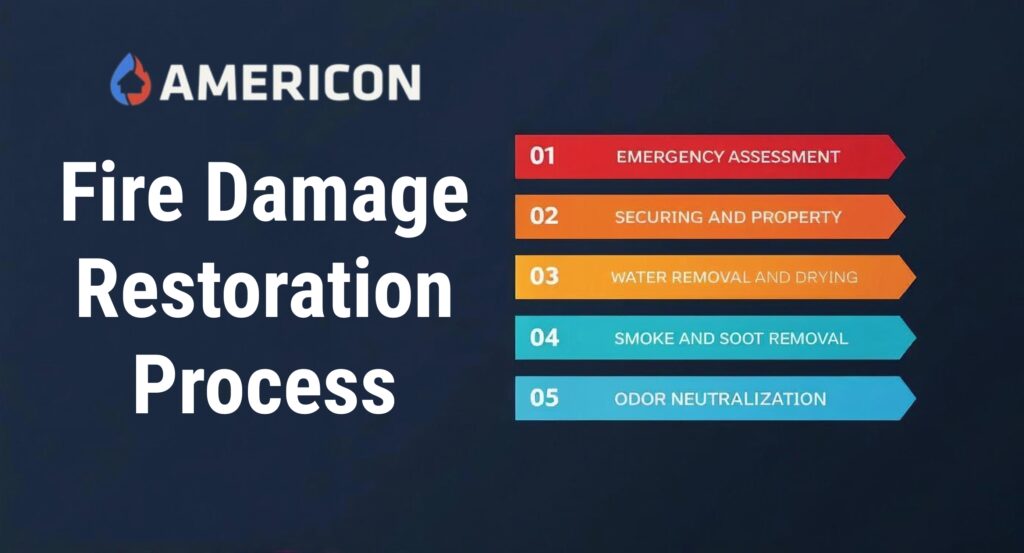
Summary: The fire damage restoration process includes a professional safety assessment, property stabilization, water removal and drying, smoke and soot cleanup, odor neutralization, deep sanitization, and full structural repairs or reconstruction to safely restore your home to its pre-loss condition.
Experiencing a fire in your home is one of the most overwhelming events a family can face. Once the flames are out, many Ohio Valley homeowners are left standing in the aftermath wondering what comes next and who to call. Understanding the fire damage restoration process brings clarity during an otherwise chaotic and stressful time.
Professional restoration is not simply about cleaning up visible damage. It is a structured, step-by-step process designed to protect your health, preserve your property, address hidden hazards, and fully restore your home.
For immediate professional fire damage restoration throughout the Ohio Valley, contact Americon Restoration of The Ohio Valley now. Find us on Google or reach out through our website for 24/7 emergency response.
Fire Damage Restoration Process Overview
The complete fire damage restoration process follows these core steps in order:
- Emergency assessment and safety evaluation
- Property stabilization and securing the structure
- Water removal and structural drying
- Smoke, soot, and odor removal
- Deep cleaning and sanitization
- Content restoration and pack-out
- Repairs and full reconstruction
Each step is critical. Skipping or rushing any phase creates serious risks including persistent odors, hidden mold growth, structural deterioration, and ongoing health hazards. Every step must be completed thoroughly before the next one begins.
Step 1: Emergency Assessment and Safety Evaluation
The fire damage restoration process begins with a thorough professional assessment. Before any work starts, certified technicians evaluate the full scope of damage throughout every part of the property.
During the assessment, restoration professionals inspect the structural integrity of load-bearing walls, floors, and ceilings. They identify all fire, smoke, soot, and water damage throughout the home, including areas far from the fire’s origin where smoke has migrated. Electrical and HVAC systems are checked for safety and contamination. All immediate hazards are identified and documented, and a comprehensive restoration plan is developed based on the actual severity and scope of damage found.
This evaluation forms the foundation of the entire restoration project. Americon Restoration of The Ohio Valley creates a customized restoration plan for every property because no two fire damage situations are identical. The assessment also produces the detailed documentation your insurance adjuster will need to process your claim accurately and efficiently.
Step 2: Securing and Stabilizing the Property
Fires frequently leave homes structurally exposed and vulnerable to additional damage from weather, unauthorized entry, and ongoing deterioration. Property stabilization is completed immediately following the initial assessment to protect the structure while the full restoration process gets underway.
Property stabilization for Ohio Valley homes commonly includes emergency board-up of broken windows and damaged door frames, roof tarping to prevent rain, snow, and cold air from entering compromised areas, temporary structural supports where load-bearing elements have been weakened, and debris removal from entry points and stairways to allow safe access for restoration crews.
In the Ohio Valley, acting fast on this step is particularly important. Ohio winters are unpredictable, and an unsecured fire-damaged home can sustain significant additional damage from a single rainstorm or cold snap within hours of the fire being extinguished. Stabilization protects your investment and keeps restoration costs from escalating beyond what the fire itself caused.
Step 3: Water Removal and Structural Drying
This step surprises many homeowners, but firefighting efforts routinely cause significant water damage throughout properties. In many cases, the water damage from fire suppression can be just as extensive as the fire damage itself, affecting rooms and floors that were never touched by flames.
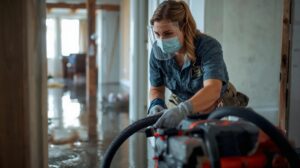
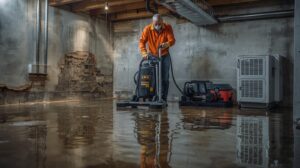
Water mitigation following a fire includes standing water extraction using industrial pumps and truck-mounted systems, deployment of commercial dehumidifiers and high-velocity air movers throughout all affected areas, daily moisture monitoring using thermal imaging cameras and moisture meters to track drying progress, and continued drying operations until all structural materials reach acceptable moisture levels.
Completing this step thoroughly is essential before smoke and soot cleanup begins. Attempting to clean smoke-damaged surfaces while underlying materials are still saturated leads to incomplete results and creates the ideal conditions for mold growth within 24 to 48 hours. For Ohio Valley homes, where winter firefighting can leave structures cold and damp, professional structural drying is a step that cannot be rushed or underestimated.
Step 4: Smoke and Soot Removal
Smoke is one of the most pervasive and destructive elements of any fire event. It does not stay in the room where the fire originated. Smoke travels throughout the entire property following air currents, migrating through wall cavities, HVAC ducts, and floor openings, depositing acidic residues on every surface it contacts.
The fire damage cleanup process for smoke and soot involves removing soot from all walls, ceilings, and floors throughout the property, cleaning furniture, contents, and fixtures with appropriate specialized methods for each surface type, treating porous materials including drywall, insulation, and wood framing that have absorbed smoke residue, and giving HVAC systems comprehensive cleaning to remove smoke contamination from ductwork that would otherwise continuously recirculate odors and particles throughout the home.
Soot is acidic and causes permanent staining, corrosion, and material breakdown if not professionally removed within the appropriate timeframe. Different surface types require different cleaning approaches, and using the wrong method on any surface can cause additional irreversible damage. This is one of the most technically demanding phases of the fire restoration process and one where professional expertise makes the greatest difference in the final outcome.
Step 5: Odor Neutralization and Air Quality Restoration
Lingering smoke odors are not just unpleasant. They are a sign of embedded chemical contaminants that have penetrated deep into porous materials throughout the structure. Masking smoke odors with air fresheners or surface sprays does nothing to address the actual source and provides only temporary relief at best.
Professional smoke odor removal uses multiple proven methods to address odors at their molecular source. Thermal fogging replicates the behavior of smoke, allowing deodorizing compounds to penetrate the same materials and pathways the original smoke traveled. Ozone treatments oxidize odor-causing molecules directly, eliminating them permanently rather than covering them up. Hydroxyl generators provide continuous air purification throughout the structure during the restoration process. HEPA air filtration captures fine airborne particles and spores, restoring healthy indoor air quality throughout the entire property.
For Ohio Valley homeowners, complete odor neutralization is especially important in older homes with plaster walls, original wood flooring, and complex framing where smoke residues can penetrate deeply and prove very difficult to address without the right equipment and protocols.
Step 6: Deep Cleaning, Sanitization, and Content Restoration
Once all contaminants have been removed and treated, the focus shifts to deep cleaning and sanitization of every surface throughout the affected areas. This phase also addresses the personal belongings, furniture, and contents that were exposed to fire, smoke, soot, and firefighting water.
Deep cleaning and sanitization includes disinfecting all treated surfaces with appropriate antimicrobial solutions, cleaning salvageable belongings using methods matched to each item type, restoring textiles and fabrics through professional laundering and dry cleaning processes, and treating electronics through specialized decontamination to prevent corrosion and restore function where possible.
Content restoration often involves a pack-out process where items are carefully inventoried, removed from the property, cleaned and restored in a controlled off-site facility, securely stored during the structural restoration phase, and returned to the home once reconstruction is complete. The goal throughout this entire phase is to return as many items as possible to their pre-fire condition while ensuring every surface the family will live with is genuinely clean and safe.
Step 7: Repairs and Full Reconstruction
The final phase of the fire damage restoration process addresses all structural repairs and rebuilding. The work required to return the home to its pre-loss condition. The scope of this phase varies considerably depending on fire severity. But it always represents the completion of a comprehensive and fully coordinated restoration project.
Reconstruction services commonly include drywall replacement and finishing, flooring repair or full replacement, interior painting throughout affected areas, cabinetry and trim work, window and door frame repairs or replacement.
Americon Restoration of The Ohio Valley manages the entire reconstruction process from start to finish. Ohio Valley homeowners do not have to coordinate multiple separate contractors during an already difficult time. One point of contact handles everything from the initial emergency response through the final walkthrough, ensuring continuity, accountability, and a complete restoration that meets both your expectations and current building codes throughout Trumbull and Mahoning County.
Why the Fire Restoration Process Cannot Be Rushed or Skipped
Skipping steps, cutting corners, or delaying professional fire restoration consistently leads to outcomes that cost significantly more to fix later than getting it right the first time. Specific consequences of incomplete or delayed restoration include ongoing health risks from toxic smoke residue and mold, permanent structural damage from uncorrected water infiltration and material breakdown, persistent smoke odors that make the home unlivable even after repairs, and repair costs that multiply the longer underlying damage goes unaddressed.
Certified restoration professionals bring the training, specialized equipment, and documented protocols necessary to restore your property safely and completely.
The difference between a thorough professional restoration and an incomplete one often becomes clear months later when odors return, mold appears, or structural issues surface that could have been prevented.
What to Expect Working with Americon Restoration of The Ohio Valley
Understanding the fire damage restoration process helps Ohio Valley homeowners know what to expect and ask the right questions throughout recovery. You should not have to navigate this alone or coordinate the process yourself.
From the moment you call, Americon Restoration of The Ohio Valley is with you every step of the way. We provide 24/7 emergency response throughout Warren, Niles, Youngstown, Howland, Austintown, Lordstown, Canfield, and Cortland.
Our certified technicians arrive quickly with specialized equipment and begin the assessment and stabilization process immediately.
When fire damage disrupts your life and your home, trust Americon Restoration of The Ohio Valley to restore it safely, thoroughly, and with genuine care for you and your family. Find us on Google or contact us through our website to get started right now.
Frequently Asked Questions About the Fire Damage Restoration Process
1. How long does the fire damage restoration process take?
Timelines depend on fire severity and reconstruction scope. Minor fire damage affecting a single room may restore in 2 to 4 weeks. Moderate damage typically requires 1 to 3 months. Major fires requiring extensive reconstruction can take 6 to 12 months or longer. Americon Restoration of The Ohio Valley provides accurate timeline estimates after the initial on-site assessment.
2. Can I stay in my home during fire damage restoration?
In most cases, no. Fire-damaged homes contain toxic smoke residues, compromised air quality, and structural hazards. Your insurance policy’s loss of use or additional living expenses coverage typically provides hotel or rental accommodations.
3. Will insurance cover the full fire damage restoration process?
Most standard homeowners insurance policies provide comprehensive coverage for fire damage. It includes structural repairs, content replacement, temporary housing, and professional restoration services. Review your specific policy and contact your insurer immediately following any fire. Americon Restoration works directly with insurance adjusters and provides full documentation to support your claim.
4. What is the most important step in the fire restoration process?
Every step matters, but the assessment is foundational because it determines the scope and plan for everything that follows. Equally critical is the smoke and soot removal phase, as acidic soot residue causes permanent damage to surfaces and materials.
5. Why can’t I just clean up fire damage myself?
Toxic smoke residues require specialized safety equipment and professional-grade cleaning agents. Structural safety assessments require expertise beyond what any homeowner can safely perform on their own after a fire.


 Loading...