
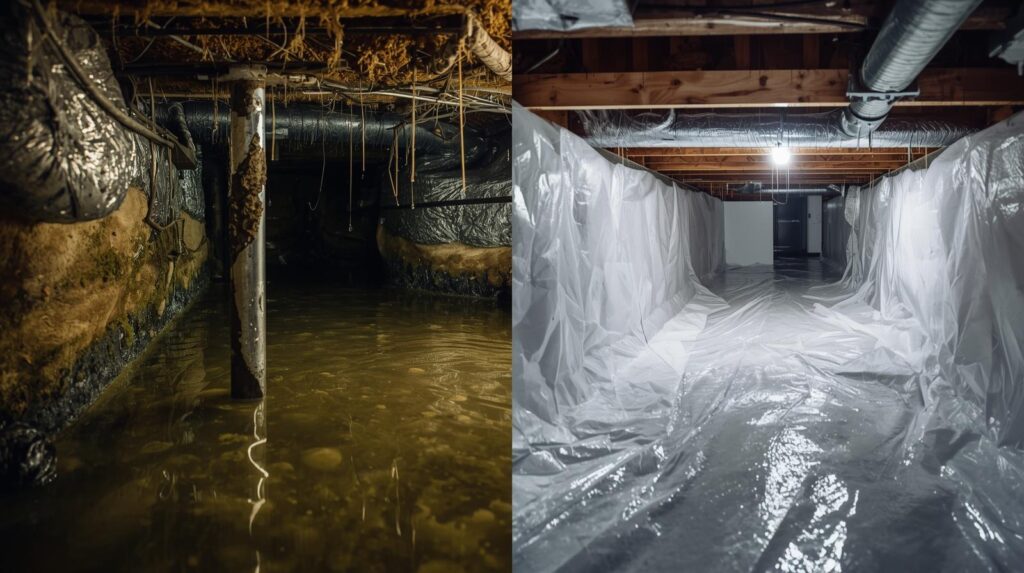
A crawl space is the narrow area beneath a house, typically less than three feet high. It provides access to essential utility infrastructure including plumbing, electrical wiring, and HVAC components. A properly maintained crawl space acts as a protective barrier against moisture, soil gasses, pests, and the elements, keeping the rest of your home structurally sound and healthy.
However, crawl spaces are vulnerable to water damage and sewage problems. When these issues occur, addressing them immediately is critical. Sewage contamination in a crawl space poses serious health risks to everyone in the household and can cause significant structural damage if left unaddressed.
This guide walks you through the causes of crawl space sewage problems, the dangers they create, and the steps involved in safely cleaning them up. If you are dealing with this situation right now in Warren, Niles, Youngstown, Howland, Austintown, Lordstown, Canfield, or Cortland, contact Americon Restoration of The Ohio Valley immediately. Find us on Google or reach out through our website for 24/7 emergency response.
What Causes Sewage Problems in Crawl Spaces?
Even the most well-maintained homes can experience sewage issues in the crawl space. Many of these causes are outside a homeowner’s direct control. Understanding them helps you identify the problem faster and take the right action.
Cracked or Deteriorating Sewage Pipes
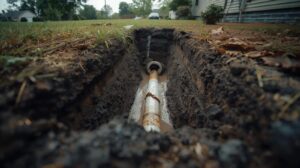
Sewage pipes that run beneath or through your crawl space can crack over time from corrosion, age, or ground movement. Once a crack forms, sewage begins leaking directly into the crawl space below your home. In older Ohio Valley homes throughout Mahoning and Trumbull County, aging sewer pipes are one of the most common causes of crawl space contamination.
Tree Root Intrusion
Invasive tree roots seek out moisture and can grow into underground sewage pipes over time. As roots expand inside the pipe, they block normal flow, cause backups, and eventually break the pipe entirely. When this happens near the foundation, sewage can enter the crawl space quickly.
Clogged Municipal Sewer Lines
Blockages or overloads in the city sewer system can force sewage to back up through connected pipes and into your crawl space. This type of sewage backup is classified as Category 3 black water, the most dangerous level of contamination, and requires immediate professional intervention.
Heavy Rainfall and Flooding
Extreme weather events can overwhelm both private and municipal sewage systems, causing backups that push sewage into crawl spaces through drains, pipes, and foundation gaps. The Ohio Valley experiences heavy spring rainfall, severe storms, and significant snowmelt events that regularly stress drainage infrastructure throughout the region.
Why Sewage in a Crawl Space Is Dangerous
Sewage contamination in a crawl space is not just an unpleasant problem. It is a genuine health and safety emergency. These confined spaces can harbor hazardous gasses, harmful bacteria, dangerous pathogens, and rapidly growing mold that directly affects the air quality throughout your entire home.
Because air circulates upward from the crawl space into the living areas above, contaminated crawl space air reaches your family even if no one ever enters the space directly. Exposure to sewage-contaminated air causes respiratory irritation, illness, and worsening symptoms for household members with asthma or allergies.
Beyond health risks, prolonged sewage exposure damages your home’s structural materials. Wood framing and floor joists absorb moisture and begin to rot. Insulation becomes saturated and loses its effectiveness. Mold colonizes rapidly in the dark, damp environment a crawl space provides, and once mold takes hold, remediation becomes significantly more complex and costly.
Ohio Valley homeowners should treat any sewage in a crawl space as an urgent emergency requiring same-day professional attention.
How to Clean Up Sewage in a Crawl Space
Cleaning raw sewage from a crawl space is not a simple DIY task. It requires specialized knowledge, professional-grade equipment, and strict safety protocols to complete safely and effectively. The following steps outline what the cleanup process involves.
Step 1: Put On Full Protective Gear
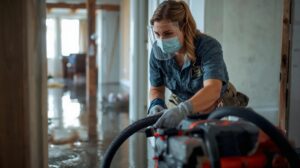
Before anyone enters a sewage-contaminated crawl space, full personal protective equipment is essential. This includes rubber gloves, rubber boots, safety goggles, and a properly fitted respirator rated for biological contaminants. Standard dust masks are not adequate for sewage cleanup. Skin and eye contact with Category 3 black water can cause serious illness, and the gasses present in a contaminated crawl space create additional respiratory hazards.
Step 2: Remove All Standing Water
Before any cleaning can begin, all standing water must be extracted from the crawl space. A submersible pump or industrial wet vacuum removes the bulk of the water. Every gallon removed at this stage reduces contamination spread and shortens overall drying time. This step requires professional equipment to complete thoroughly in the confined space of a crawl space.
Step 3: Remove Debris and Contaminated Materials
Remove all debris, damaged insulation, and porous materials contaminated by sewage. Materials such as insulation, vapor barriers, and wood that have absorbed sewage cannot be properly cleaned. Bag these materials, remove them from the crawl space, and dispose of them using proper biohazard procedures to prevent further contamination.
Step 4: Clean and Sanitize All Affected Surfaces
After removing all contaminated materials, thoroughly clean every affected surface using detergent and water. Then apply a commercial-grade disinfectant to eliminate any remaining bacteria, viruses, and parasites. This process requires EPA-registered antimicrobial solutions and proper professional application methods. Household cleaners do not work effectively for Category 3 sewage contamination.
Step 5: Dry the Crawl Space Completely
After cleaning and sanitizing the area, dry the crawl space completely before starting any repairs or reinstalling materials. Use high-powered fans and commercial dehumidifiers to circulate air and remove moisture. Complete this step carefully because even small amounts of leftover moisture can cause mold to grow within 24 to 48 hours in a dark, enclosed crawl space.
Step 6: Repair Damaged Areas and Prevent Future Issues
Once the crawl space is completely dry and clear, inspect all structural materials and replace anything that has been damaged. Install new insulation, repair or replace damaged wood framing, and add a new vapor barrier to protect the area from future moisture problems. Finally, fix the original cause of the sewage issue, whether it is a cracked pipe, root intrusion, or a drainage failure, before closing the crawl space to prevent the problem from returning.
Why Professional Sewage Cleanup Is Always the Right Choice
Attempting to clean raw sewage from a crawl space without professional training and equipment consistently leads to incomplete results. Improper cleanup leaves behind pathogens and moisture that cause mold, structural damage, and ongoing air quality problems inside the home. The confined space, limited visibility, and serious contamination involved make this one of the most hazardous restoration situations a homeowner can face.
Professional restoration companies bring the right protective equipment, industrial extraction and drying tools, EPA-registered antimicrobial treatments, and the technical expertise to verify that cleanup is genuinely complete. They also handle biohazard disposal correctly and document everything for your insurance claim.
Call Americon Restoration of The Ohio Valley for Crawl Space Sewage Cleanup
Americon Restoration of The Ohio Valley provides professional crawl space sewage cleanup throughout Warren, Niles, Youngstown, Howland, Austintown, Lordstown, Canfield, Cortland, and all surrounding Trumbull and Mahoning County communities.
Do not attempt to handle sewage contamination in your crawl space on your own. The health risks are serious and the consequences of incomplete cleanup are costly. Find us on Google or contact us through our website for immediate professional crawl space sewage cleanup available 24/7 throughout the Ohio Valley.
Frequently Asked Questions
1. Is sewage in a crawl space a health emergency?
Yes. Sewage is classified as Category 3 black water, the most dangerous level of contamination. It contains harmful bacteria, viruses, and parasites that cause serious illness. Because air moves upward from the crawl space into living areas, contaminated crawl space air affects everyone in the home even without direct contact.
2. Can I clean sewage in my crawl space myself?
For minor, contained situations involving clean water, limited DIY cleanup may be possible. Sewage contamination is a different matter entirely. Without the right protective equipment, professional-grade disinfectants, and industrial drying equipment, DIY cleanup of raw sewage almost always leaves behind pathogens and hidden moisture that cause mold and ongoing health hazards. Professional cleanup is strongly recommended for any sewage event.
3. How long does crawl space sewage cleanup take?
Timeline depends on the extent of contamination, the volume of water involved, and the condition of the crawl space materials. Most professional cleanup and drying processes take between 3 and 7 days. Structural repairs and reinstallation of insulation and vapor barriers add additional time depending on what needs replacement.
4. Will mold grow in my crawl space after a sewage backup?
Yes, if the space is not professionally dried and treated within 24 to 48 hours. Crawl spaces are dark, confined, and poorly ventilated, which makes them ideal environments for rapid mold colonization following any moisture event. Professional antimicrobial treatment and thorough drying are essential for preventing mold after sewage cleanup.
5. Does homeowners insurance cover crawl space sewage cleanup?
Coverage depends on the cause of the sewage backup and your specific policy. External flooding typically requires separate flood insurance. Contact your insurance provider immediately and document all damage before any cleanup begins.

 Loading...