
Winter in the Ohio Valley is no easy season for homeowners. In Warren, Niles, Youngstown, Howland, Austintown, Lordstown, Canfield, and Cortland, temperatures regularly drop well below freezing for extended stretches, putting residential plumbing under serious and sustained stress. Frozen pipes do not just disrupt water flow. They can burst without warning and cause devastating water damage throughout your home.
Learning how to recognize and recover from frozen pipes is one of the most important things an Ohio Valley homeowner can do before winter arrives. This guide covers why pipes freeze, the warning signs to watch for, how to tell if a frozen pipe has already burst, and exactly what to do at each stage to protect your home and limit damage.
If you are already dealing with a burst pipe emergency, contact Americon Restoration of The Ohio Valley right now. Find us on Google or reach out through our website for 24/7 emergency water damage response.
Why Do Pipes Freeze?
Pipes freeze when water inside them is exposed to temperatures below 32 degrees Fahrenheit for a sustained period. Pipes in unheated or poorly insulated areas are the most vulnerable. These include attics, basements, garages, crawl spaces, and exterior walls with minimal insulation. Cold air circulates around these pipes more freely, causing the water inside to drop to freezing temperature much faster than pipes inside conditioned living spaces.
In the Ohio Valley, sustained overnight temperatures below 20 degrees Fahrenheit are common throughout December, January, and February. During polar vortex events, temperatures can drop into the single digits and stay there for days. This is exactly the kind of sustained freeze that creates the most serious pipe failure risk for homeowners across Trumbull and Mahoning County.
Why Frozen Pipes Are Dangerous
The immediate consequence of a frozen pipe is a loss of water flow. The real danger, however, is what happens when ice expands inside the pipe wall.
Water expands significantly as it freezes. That expansion creates internal pressure that builds until the pipe wall cracks or ruptures entirely. A single burst pipe can release hundreds of gallons of water into your home within hours. The resulting water damage can saturate drywall, flooring, insulation, and structural framing throughout multiple rooms. In severe cases, homeowners return to find ankle-deep water spreading through their lower level.
The good news is that frozen pipes show warning signs before they burst. Catching these signs early gives you the opportunity to act before the situation becomes a full water damage emergency.
Frozen Pipe Warning Signs To Watch For
1. Little to No Water Flow From Faucets
The most obvious sign of a frozen pipe is a sudden drop or complete loss of water flow when you turn on a faucet. If only a trickle comes out or nothing flows at all, water is likely frozen solid somewhere inside the line feeding that fixture. During cold snaps in the Ohio Valley, check your faucets first thing in the morning when overnight temperatures have been at their coldest.
2. Cracked or Bulging Pipes
Inspect any visible pipes in your basement, crawl space, or under sinks for physical changes. Expanding ice inside a pipe causes visible cracks, bulges, or distortions along the pipe wall. Catching these early gives you a chance to address the situation before the pipe fully bursts and water begins flowing into your home.
3. Frost or Condensation on the Outside of Pipes
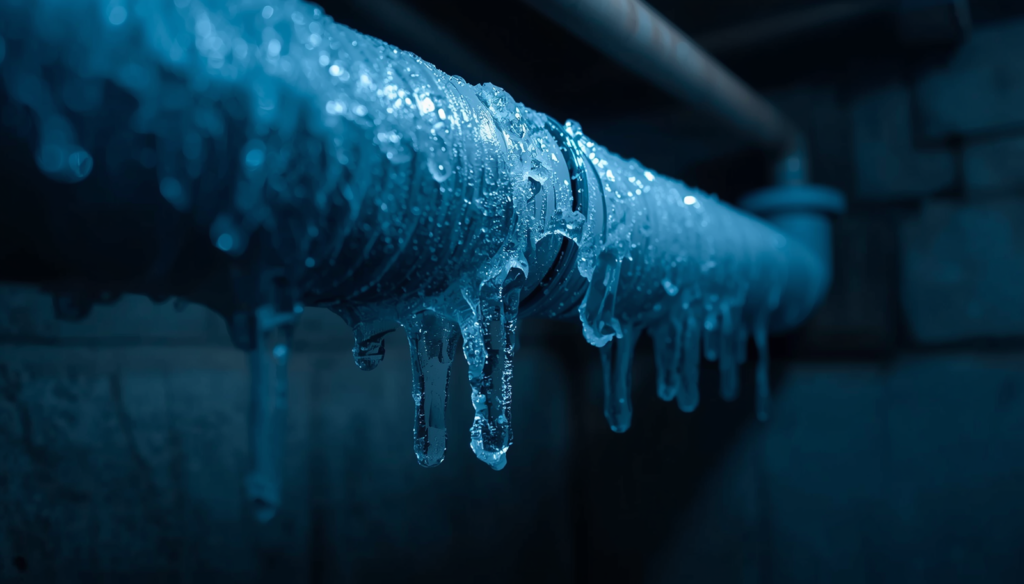
Frost or condensation forming on the exterior surface of a pipe is a clear visual signal that the pipe is extremely cold and may already be freezing inside. Check exposed pipes in your basement, crawl space, garage, and along exterior walls during cold weather. Visible frost on a pipe means the interior temperature has dropped to or below freezing.
4. Gurgling or Bubbling Sounds From Pipes
Unusual sounds coming from your plumbing when you use a faucet or flush a toilet are a sign worth investigating. Gurgling or bubbling noises suggest that chunks of ice are partially blocking water flow inside the line. Do not ignore these sounds during cold weather. They indicate a developing freeze that can progress to a full blockage and burst if not addressed.
5. Foul Odors From Drains or Faucets
Frozen pipes interfere with the normal flow of wastewater through your drainage system. When drainage backs up due to a freeze, trapped wastewater creates unpleasant odors that come up through drains or faucets. If you notice sewage-like or musty odors during a cold spell, a frozen drain line is likely involved.
6. Water Stains on Walls or Ceilings
Water stains, discoloration, bubbling paint, or warped drywall on walls and ceilings can indicate that a pipe has already frozen and cracked. By the time these signs appear, water has likely been leaking for some time. Act immediately. The longer water sits inside your walls and floors, the greater the structural damage and the higher the risk of mold growth within 24 to 48 hours.
What To Do When You Suspect Frozen Pipes
If you suspect a pipe has frozen but has not yet burst, you may be able to thaw it safely on your own. Apply gentle heat to the affected section using a hair dryer, heat tape, or a portable space heater kept at a safe distance. Work slowly and steadily from the faucet end back toward the frozen section to allow water to escape as the ice melts.
Never use open flames, propane torches, or any direct fire source to thaw a pipe. This is a serious fire hazard and can damage the pipe further.
If you cannot locate the frozen section, the thawing process is not working, or you have any reason to believe the pipe has already cracked, stop and call a professional immediately. Attempting to force a thaw on a damaged pipe can trigger a sudden burst and rapid water release inside your walls.
How To Tell If a Frozen Pipe Has Already Burst
Knowing how to identify a burst pipe quickly helps you limit the total damage to your Ohio Valley home.
1. Check for Water Stains and Damage Inside the Home
Water stains on walls, ceilings, or floors are a direct indicator of a burst pipe. Look for discoloration, warping, bubbling paint, or wet spots in areas near where pipes run. The earlier you spot these signs, the sooner you can stop additional damage from developing.
2. Check for Unusual Water Smell or Discoloration
Turn on a faucet and let water flow. Rusty, discolored, or foul-smelling water suggests that a pipe breach has allowed contaminants to enter your water supply. If water looks or smells abnormal, do not use it for drinking or cooking. Contact a restoration professional immediately.
3. Check Your Water Meter
Turn off all water sources in your home and watch the water meter. If it continues registering usage after everything is off, water is actively flowing somewhere inside your system. This is a strong indicator of a burst pipe and requires immediate action.
Also watch for low water pressure throughout the home. A sudden drop in pressure across multiple fixtures points to a compromised section of pipe somewhere in the system.
4. Look for Unusual Water Buildup Outside
Check the exterior of your property for unexpected water pooling in the yard, driveway, or along the foundation. A burst underground line can push water up toward the surface in ways that are visible from outside the home even when no interior damage is yet apparent.
5. Watch for New Mold Growth
Mold develops fast in moisture-rich environments and can begin colonizing inside walls and under flooring within 24 to 48 hours of a water event. If you notice mold appearing in new locations, especially near floors or at the base of walls, a burst pipe may be introducing hidden moisture that you have not yet located. Address both the pipe and the mold together for a complete resolution.
What To Do When a Frozen Pipe Bursts
Acting quickly and calmly limits the total damage to your home. Follow these steps in order.
Step 1: Shut Off the Main Water Supply
Locate your home’s main water shutoff valve and close it immediately. In most Ohio Valley homes, this valve is in the basement, garage, or near the foundation where the main line enters the structure. Closing this valve stops the flow of water and prevents additional flooding.
Step 2: Open Faucets to Relieve Pressure
Turn on faucets connected to the burst pipe section to allow remaining water and pressure to drain from the lines. This reduces the volume of water continuing to escape through the break point.
Step 3: Shut Off Electricity in Affected Areas
If water has reached or may reach any electrical outlets, appliances, or your breaker panel, cut power to those areas immediately at the breaker box. Water and electricity together create a deadly hazard. Do not enter standing water in a room where electricity may still be active.
Step 4: Remove Standing Water
Once water flow is stopped and electricity is confirmed safe, begin removing standing water immediately. Use mops, towels, and a wet vacuum to clear the visible water. The faster you remove standing water, the less it absorbs into flooring and walls.
Step 5: Move Personal Belongings to Dry Areas
Move furniture, rugs, electronics, documents, and any valuables out of the affected area as quickly as possible. The longer these items remain in contact with water, the less likely they are to be salvageable.
Step 6: Ventilate and Begin Drying
Open interior doors and windows where conditions allow. Set up fans and dehumidifiers if it is safe to use electricity. Airflow and dehumidification slow the spread of moisture into adjacent structural materials.
Step 7: Call a Professional Restoration Team
Even after you stop the visible water, hidden moisture remains trapped inside walls, floors, and structural cavities. This hidden moisture causes progressive structural damage and triggers mold growth that continues long after the surface appears dry. Americon Restoration of The Ohio Valley provides 24/7 emergency water extraction, structural drying, moisture detection, and complete restoration to fully address all damage from a frozen or burst pipe event.
Americon Restoration of The Ohio Valley Is Ready To Help
Ohio Valley winters pose a real and recurring threat to residential plumbing throughout Warren, Niles, Youngstown, Howland, Austintown, Lordstown, Canfield, and Cortland. Recognizing the signs of frozen pipes early and knowing exactly what to do when a pipe bursts gives you the best possible chance of limiting damage and protecting your home through every cold season.
When a frozen or burst pipe has already caused water damage, do not wait. Americon Restoration of The Ohio Valley has a certified local team ready to respond 24 hours a day, 7 days a week, no matter how extensive the damage is. Find us on Google or contact us through our website to get your home back to normal as quickly as possible.
Frequently Asked Questions
1. At what temperature do pipes freeze in Ohio Valley homes?
Pipes can begin freezing when outdoor temperatures drop below 20 degrees Fahrenheit, particularly in unheated or poorly insulated areas. During Ohio Valley polar vortex events when temperatures fall into the single digits and remain there for multiple days, the freeze risk across exposed and exterior pipes is extremely high.
2. How long does it take for pipes to freeze?
Pipes in unheated spaces can begin freezing within a few hours of sustained temperatures below 20 degrees Fahrenheit. The longer temperatures remain below freezing, the deeper the ice formation grows inside the pipe and the greater the pressure buildup becomes.
3. Can I thaw frozen pipes myself?
You can attempt to thaw a frozen pipe using a hair dryer, heat tape, or a portable space heater for pipes you can access safely. Never use open flames. If you cannot locate the frozen section or the pipe appears damaged, stop and call a professional to avoid triggering a burst during the thawing process.
4. How do I prevent pipes from freezing in Ohio Valley winters?
Insulate pipes in unheated spaces, keep your thermostat set to at least 55 degrees Fahrenheit even when away, allow faucets on exterior walls to drip slightly during extreme cold, open cabinet doors under sinks to allow warm air to circulate, and seal drafts around your foundation and exterior walls.
5. Does homeowners insurance cover frozen pipe damage?
Most standard homeowners insurance policies cover sudden and accidental damage from frozen pipes that burst. However, damage resulting from a failure to maintain adequate heat inside the home or negligence in pipe insulation may face coverage exclusions. Contact your insurer immediately after any frozen pipe event and document all damage with photos and video before cleanup begins.

 Loading...