
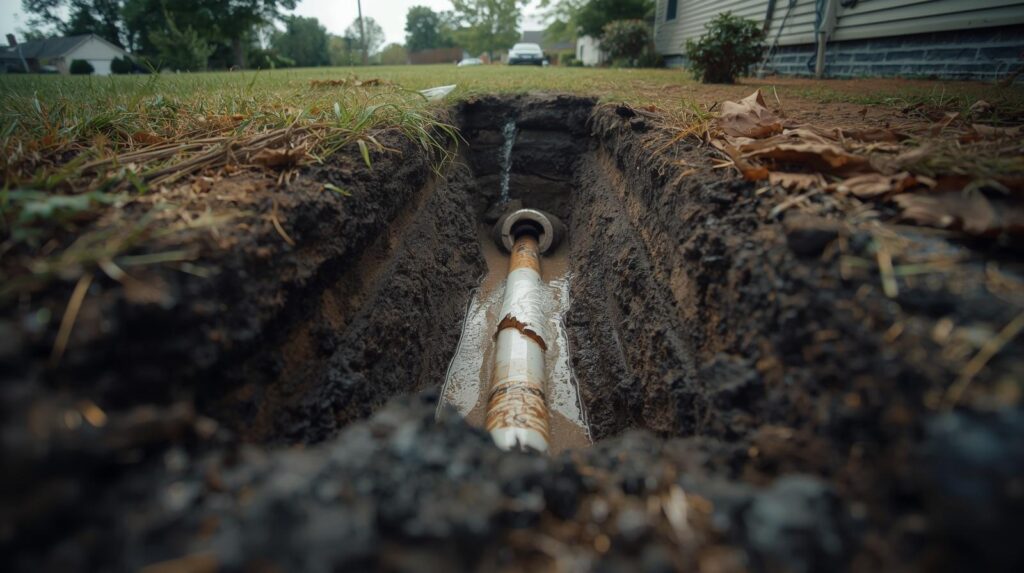
Water lines are one of the most essential parts of any Ohio Valley home. They run beneath your yard and foundation, completely out of sight. Over time, these pipes can break down from corrosion, shifting soil, root intrusion, or freezing temperatures. Eventually, they can burst without any obvious warning.
Knowing how to tell if a pipe burst underground is one of the most valuable things a homeowner can learn. The sooner you catch the problem, the faster you can act. Early action protects your property and prevents the kind of serious water damage that builds up quietly over days or weeks.
Why Underground Pipe Bursts Are Common in the Ohio Valley
The Ohio Valley’s climate is hard on underground pipes. Repeated freeze-thaw cycles throughout winter put enormous stress on buried water lines. This is especially true in older homes across Mahoning and Trumbull County where pipes have already been weakened by years of corrosion.
When soil freezes, it shifts and contracts. This puts mechanical pressure on underground pipes from the outside. At the same time, ice expanding inside the pipe applies pressure from within. The combination is a common cause of underground pipe failure every winter throughout Warren, Youngstown, Niles, and surrounding communities.
Spring thaw brings its own risks. Saturated soil and rapid temperature swings often expose weaknesses that developed silently during the colder months. Staying alert to warning signs during late winter and early spring is especially important for Ohio Valley homeowners.
7 Signs of a Burst Underground Pipe
Identifying a burst underground pipe is difficult because the damage is hidden beneath the surface. However, your home and yard will usually show clear warning signs. Here is what to look for.
1. An Unexplained Spike in Your Water Bill
A sudden jump in your water bill is one of the most common early signs of an underground pipe problem. If your usage has not changed, something is moving water through your system that should not be.
Check your water meter regularly. Dramatic month-to-month increases in usage are a clear signal to call a professional before the damage grows.
2. Low or Inconsistent Water Pressure
A drop in water pressure throughout your home can point to a burst underground pipe. If your water provider has not reported any local pressure issues, the problem is likely on your side of the connection.
Run your shower for one full minute. Then flush the toilet. If the shower slows down or stops during the flush, reduced pressure from a damaged underground line is likely the cause.
3. Murky, Discolored, or Cloudy Water
Water from your faucets should always run clear. If it appears brown, murky, or cloudy, a burst underground pipe may be allowing soil and debris into your water supply through the break point.
This is a health concern and should be treated urgently. Stop using the water for drinking or cooking until the issue is professionally assessed and resolved.
4. Sinkholes, Soft Spots, or Depressions in Your Yard
Your yard can reveal a lot about what is happening underground. Sinkholes or unexplained depressions in your lawn often mean a leak is eroding the soil beneath the surface.
Water pooling in one spot without recent rainfall is another strong indicator. If a section of your yard stays wet during dry weather, an underground water line is very likely leaking into the surrounding soil.
5. Unusually Lush or Fast-Growing Grass
Healthy grass is always a good sign. But patches that are noticeably greener, taller, or growing faster than the rest of the lawn should raise a concern. That section may be getting a steady underground water supply from a burst pipe.
This sign is easy to spot in spring and summer when growth patterns are most visible. In the Ohio Valley, a section that grows significantly faster than its surroundings stands out clearly after winter recovery.
6. Sewage Odors or Unpleasant Smells
A working plumbing system keeps wastewater moving away from your home at all times. A burst underground pipe can disrupt this process. When that happens, sewage odors or the smell of stagnant water can linger around specific areas of your yard, basement, or near floor drains.
If you notice unexplained odors with no obvious source, an underground pipe failure may be the cause. This situation needs prompt professional evaluation before contamination spreads further.
7. Mold on Walls, Ceilings, or Floors
Mold grows fast wherever moisture is present. A burst underground pipe can saturate your foundation and the materials around it without producing any visible surface water. If mold appears in unexpected areas near the floor level or in your basement, a hidden underground leak may be responsible.
Even without visible mold, a persistent musty odor inside your home is a warning sign. Mold can develop inside walls and under flooring within 24 to 48 hours of water exposure. Early detection is critical.
How To Test for an Underground Water Leak Yourself
There are a few simple steps you can take to check for an underground leak before calling a professional.
Step 1: Turn off all water fixtures inside your home. This includes your water heater, dishwasher, washing machine, and any irrigation systems.
Step 2: Go outside and check your water meter.
For a digital meter, look for a flashing number on the flow indicator. Any reading above zero confirms that water is actively moving through the system somewhere.
For an analog meter, watch the small red triangle or silver flow wheel. If either is spinning with all fixtures off, water is flowing somewhere it should not be.
Step 3: Locate your home’s main water shutoff valve. In most Ohio Valley homes, this is in the basement, garage, or on an exterior wall near where the main line enters. Turn it off to cut the water supply to the interior of the home.
Step 4: Check the meter again. If the meter stops, the leak is inside the home. If the meter keeps moving, the leak is most likely in the underground line between the house and the meter.
What to Do If You Suspect a Burst Underground Pipe
Acting fast is essential once you suspect an underground pipe burst. Here is what to do right away.
First, shut off your main water supply. This stops the flow and prevents further saturation of the surrounding soil and structure. Then document all visible damage. Take photos of wet areas, discolored water, yard depressions, and any mold or staining inside the home.
Next, contact a professional water damage restoration company immediately. Underground pipe bursts often cause hidden damage to foundations, flooring, and interior walls. Specialized equipment is needed to locate and fully assess that damage.
Do not attempt to dig up or access an underground pipe yourself. Digging near underground utilities is dangerous. It can also damage other lines nearby. Leave the pipe repair to a licensed plumber and the water damage restoration to a certified professional.
Get Professional Help for Underground Pipe Bursts in the Ohio Valley
Knowing how to tell if a pipe burst underground can save Ohio Valley homeowners from extensive damage and costly repairs. Catching the problem early and acting fast always limits the impact on your home. It also prevents serious secondary damage like mold growth and foundation deterioration.
Americon Restoration of The Ohio Valley is available 24 hours a day, 7 days a week. We serve homeowners throughout Warren, Niles, Youngstown, Howland, Austintown, Lordstown, Canfield, Cortland, and all surrounding Trumbull and Mahoning County communities.
Find us on Google or contact us through our website to get expert water damage restoration help right now.
Frequently Asked Questions
1. How do I know if a pipe burst underground or inside my house?
Shut off your main water valve. Then check the meter. If the meter stops, the leak is inside the home. If it keeps moving, the leak is in the underground line between the house and the meter.
2. Can an underground burst pipe cause mold inside my home?
Yes. Water from a burst underground pipe can seep through basement walls and enter the structure. It does this without producing visible surface water. That hidden moisture creates ideal conditions for mold growth. Mold can begin forming inside walls and under flooring within 24 to 48 hours.
3. How long can a burst underground pipe go undetected?
In some cases, weeks or even months. Slow leaks may not produce obvious symptoms right away. This is especially true in yards with naturally high soil moisture. Check your water bill monthly and inspect your meter periodically. These are the best ways to catch underground leaks early.
4. How much damage can a burst underground pipe cause?
The damage grows with every hour the leak continues. A burst underground pipe can erode soil beneath your foundation. It can saturate basement walls and flooring. Contaminate your water supply and create mold growth inside the structure. It can also cause sinkholes or ground settling in your yard.
5. Will homeowners insurance cover a burst underground pipe?
It depends on your policy and the cause of the burst. Sudden and accidental pipe failures are typically covered. Gradual leaks from deferred maintenance often are not. Contact your insurance provider right away. Document all damage thoroughly before any cleanup begins.




 Loading...