Mold Remediation After a Wet Basement: A Youngstown Homeowner's Guide
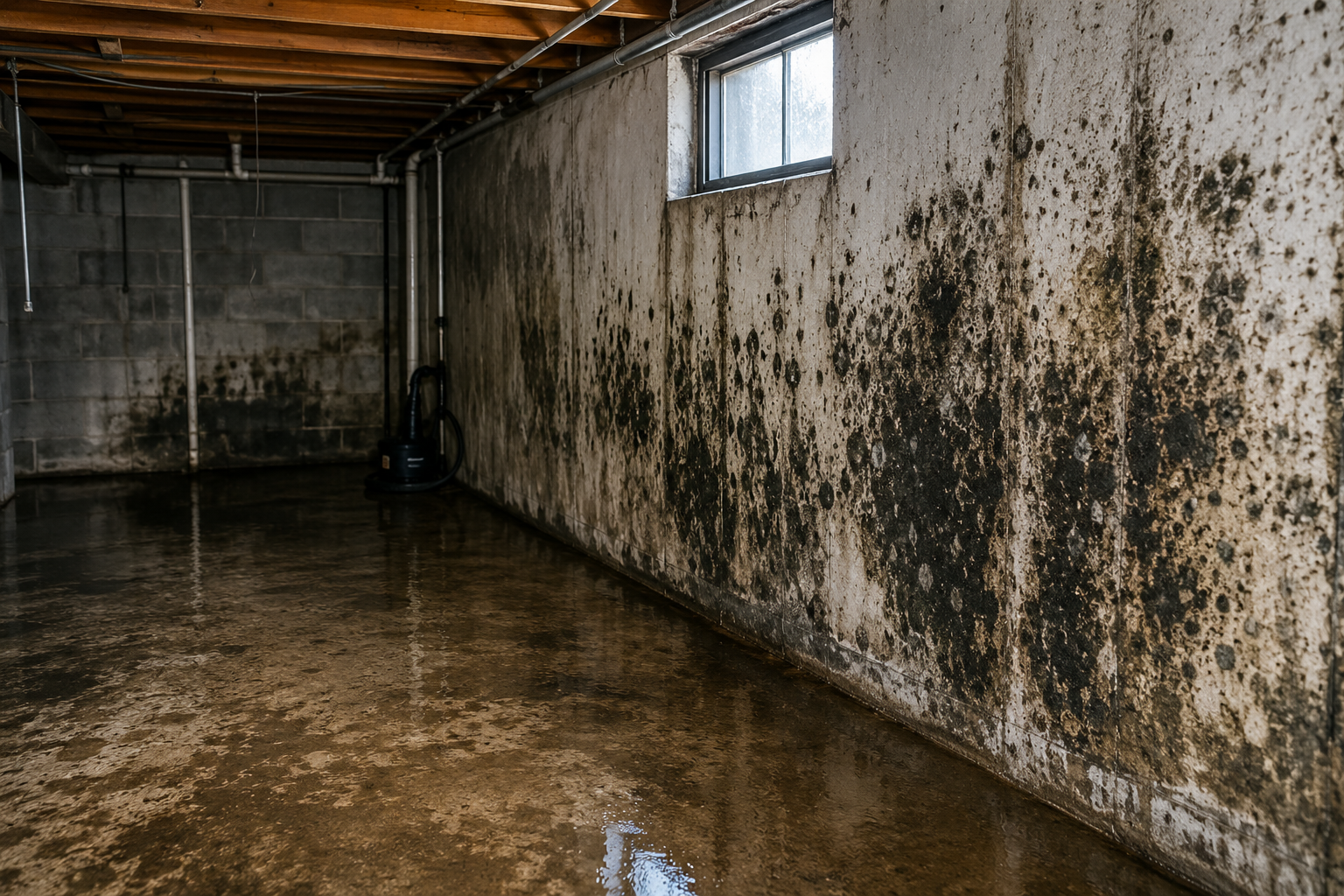
A damp Ohio Valley basement can grow mold in as little as 24–48 hours. Here is how to spot it early, why DIY scrubbing often fails, and what professional mold remediation actually involves.
Why a Wet Basement Becomes a Mold Problem Fast
If your Youngstown-area basement has taken on water — from a summer downpour, a sump pump failure, or a slow foundation seep — the clock is already running. Mold spores are everywhere in the air, and they only need moisture and an organic surface to take hold. According to the U.S. EPA, it is important to dry water-damaged areas and items within 24 to 48 hours to prevent mold growth.
Basements in the Mahoning Valley are especially vulnerable. Many are below grade, poorly ventilated, and finished with exactly the materials mold loves: drywall, carpet, padding, and stored cardboard. Once moisture lingers, what started as a wet floor can become a hidden colony behind the walls within days.
The hard truth: by the time you smell that musty odor, mold is usually already established.
Warning Signs You Have Basement Mold
Mold is not always visible. Watch for these red flags:
- A persistent musty or earthy smell, even after the basement has dried
- Discolored spots — black, green, gray, or white — on drywall, joists, or baseboards
- Warped, bubbling, or peeling paint and wallpaper near the floor
- Visible water staining on walls or the bottom edge of drywall
- Worsening allergy or asthma symptoms when family members are in the basement
The CDC notes that exposure to damp, moldy environments can cause a stuffy nose, coughing, wheezing, burning eyes, or skin rash — and that people with asthma or mold allergies may have severe reactions. That is reason enough to take basement mold seriously and not simply paint over it.
Why DIY Mold Removal Often Backfires
A bottle of bleach and a sponge feels like an easy fix. In reality, surface scrubbing rarely solves a basement mold problem, and it can make things worse.
Here is why:
- You only treat what you can see. Mold loves to hide behind drywall, under carpet padding, and inside wall cavities — places a sponge never reaches.
- Disturbing mold spreads spores. Scrubbing dry, moldy material sends thousands of spores airborne, where they settle and colonize new areas.
- You haven't fixed the moisture. The EPA is clear: you must clean up the mold and fix the water problem. Skip the moisture source and the mold simply returns.
- Bleach can be dangerous. Never mix bleach with ammonia or other cleaners — it produces a poisonous gas.
Professional remediation exists because mold is a structural and air-quality problem, not just a cosmetic stain.
What Professional Mold Remediation Actually Involves
Reputable restoration companies follow the ANSI/IICRC S520 Standard for Professional Mold Remediation — the industry's procedural benchmark. At Americon Restoration, our Ohio Valley team uses a proven, code-aligned process:
1. Inspection and Moisture Mapping
We identify the source of the water and use moisture meters and infrared cameras to find hidden dampness behind walls and under floors.
2. Containment
We seal off the affected area with plastic sheeting and negative air pressure so spores cannot spread to clean parts of your home during the work.
3. Air Filtration
HEPA air scrubbers and filtration capture airborne spores throughout the remediation.
4. Removal of Affected Materials
Porous materials that cannot be saved — moldy drywall, carpet, and padding — are removed and disposed of properly. The EPA confirms that absorbent or porous materials may have to be thrown away if they become moldy.
5. Cleaning and Antimicrobial Treatment
Hard surfaces are scrubbed, HEPA-vacuumed, and treated to discourage regrowth.
6. Drying and Moisture Control
We dry the structure completely and address the root cause — whether that is a sump pump, foundation crack, or drainage issue — so the problem does not come back.
7. Post-Remediation Verification
We confirm the area is dry and clean before any rebuild begins.
What Does Basement Mold Remediation Cost in the Ohio Valley?
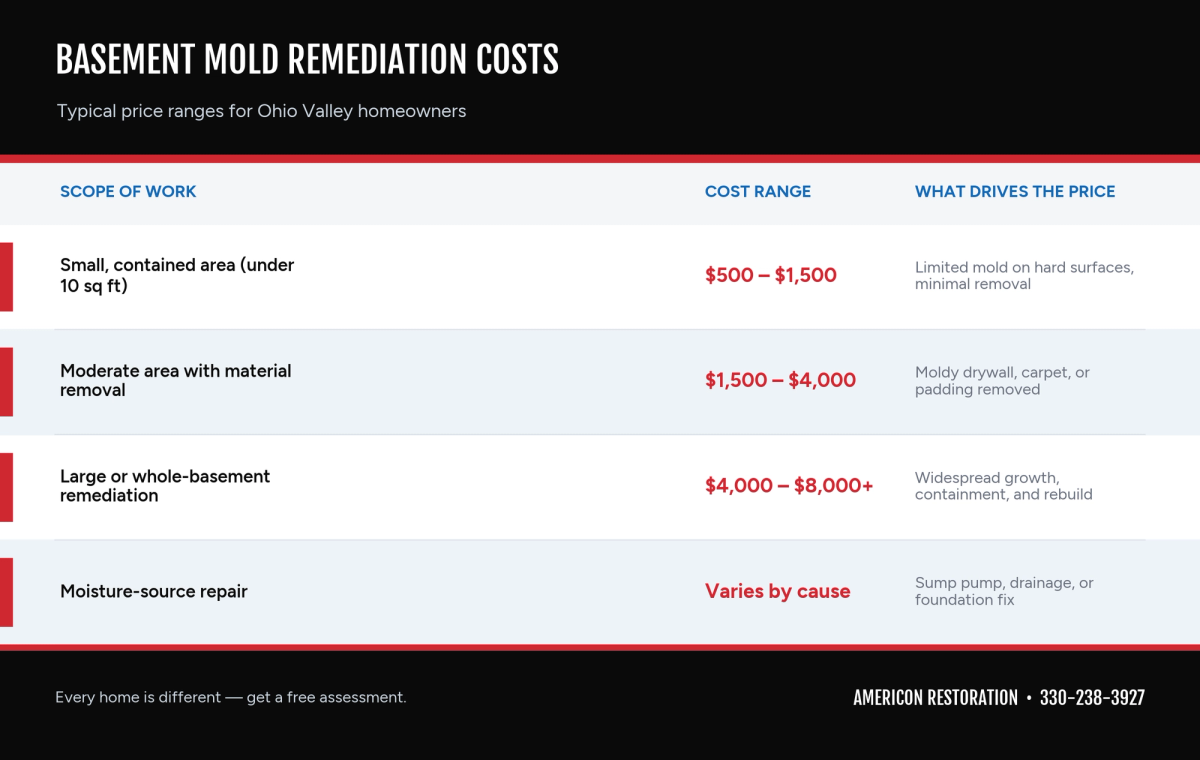
Costs vary with the size of the affected area, how far the mold has spread, and whether materials need to be removed and rebuilt. Here is a general guide for area homeowners:
- Small, contained area (under 10 sq ft): $500 – $1,500
- Moderate basement area with material removal: $1,500 – $4,000
- Large or whole-basement remediation: $4,000 – $8,000+
- Plus moisture-source repair (sump pump, drainage): Varies by cause
Figures are general estimates for planning. Every home is different — we provide a clear, written assessment before any work begins.
The most important number, though, is the cost of waiting. Mold spreads, damages structure, and can affect your family's health the longer it goes untreated.
How Americon Restoration Helps Ohio Valley Families
Americon Restoration has been family-owned since 1912, and we bring that same century-deep commitment to every basement we walk into. Our 24/7 emergency response team serves Youngstown, Austintown, Boardman, Canfield, Warren, and the surrounding Mahoning Valley with the white-glove care your home deserves.
When water shows up where it shouldn't, fast action is everything. Our certified technicians dry, contain, and remediate — then help you prevent it from happening again.
Call our Ohio Valley team 24/7 at 330-238-3927 or 1-833-HERE-4-US.
Learn more about our Ohio Valley restoration services.
Frequently Asked Questions
How quickly does mold grow after a basement floods?
Mold can begin growing in as little as 24 to 48 hours after materials get wet, which is why fast drying is critical, per the EPA.
Can I just paint over basement mold?
No. The EPA specifically warns against painting or caulking moldy surfaces. You must remove the mold and dry the surface first, or it will keep growing through the paint.
Is basement mold dangerous to my health?
It can be. The CDC links damp, moldy environments to respiratory symptoms, and people with asthma or allergies may react severely. Remove mold promptly.
Do I need mold testing before remediation?
The CDC does not recommend routine mold testing — regardless of the type, mold needs to be removed. Professional inspection focuses on finding the moisture source and the full extent of the growth.
Will my homeowners insurance cover basement mold?
It depends on the cause. Mold from a sudden, covered water event is more likely to be covered than mold from long-term seepage or neglected maintenance. We can help document the loss for your claim.