Fire Damage Restoration Process Explained Step by Step
Summary: The fire damage restoration process includes a professional safety assessment, property stabilization, water removal and drying, smoke and soot cleanup, odor neutralization, deep sanitization, and full structural repairs or reconstruction to safely restore your home to its pre-loss condition. Experiencing a fire in your home is one of the most overwhelming events a family can face. Once the flames are out, many Ohio Valley homeowners are left standing in the aftermath wondering what comes next and who to call. Understanding the fire damage restoration process brings clarity during an otherwise chaotic and stressful time. Professional restoration is not simply about cleaning up visible damage. It is a structured, step-by-step process designed to protect your health, preserve your property, address hidden hazards, and fully restore your home. For immediate professional fire damage restoration throughout the Ohio Valley including Youngstown, Austintown, Canfield, Cortland, Columbiana, Poland, and Boardman contact Americon Restoration of The Ohio Valley now. Find us on Google or reach out through our website for 24/7 emergency response.
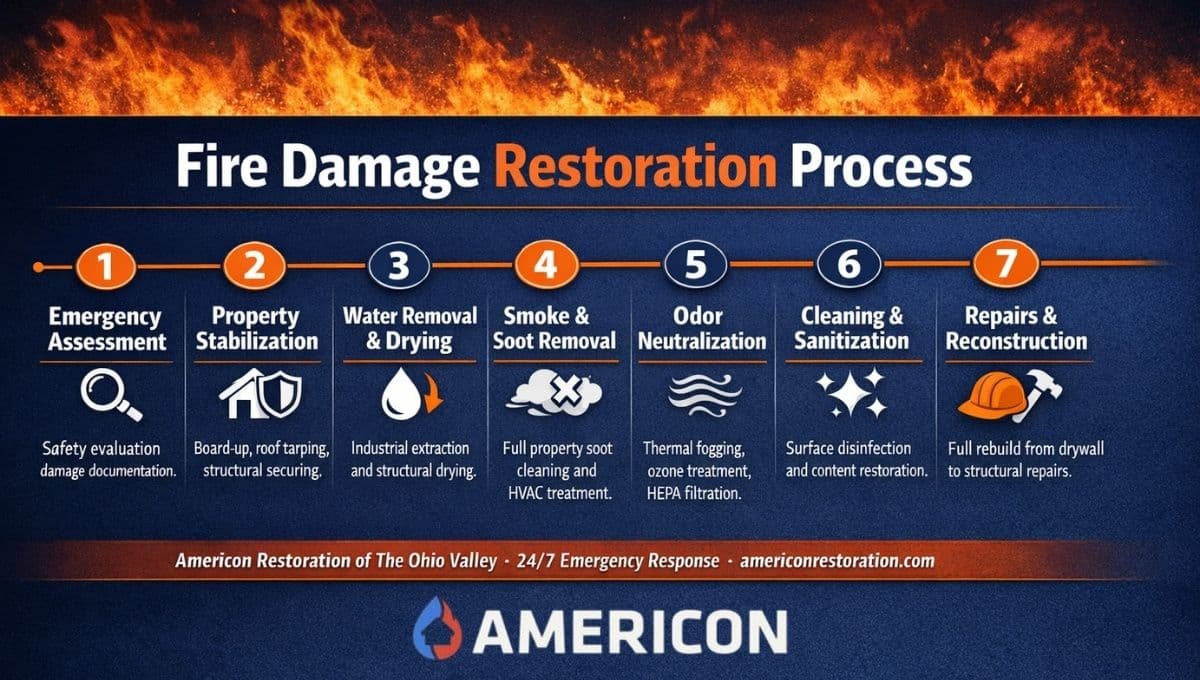
The complete fire damage restoration process follows seven core steps in order: emergency assessment, property stabilization, water removal and drying, smoke and soot removal, odor neutralization, deep cleaning and content restoration, and finally repairs and reconstruction.
Each step is critical. Skipping or rushing any phase creates serious risks: persistent odors, hidden mold growth, structural deterioration, and ongoing health hazards. Every step must be completed thoroughly before the next one begins.
Step 1: Emergency Assessment and Safety Evaluation
The process begins with a thorough professional assessment. Certified technicians evaluate the full scope of damage throughout every part of the property: structural integrity of load-bearing walls, floors, and ceilings; all fire, smoke, soot, and water damage including areas far from the fire's origin; electrical and HVAC systems for safety and contamination. All immediate hazards are documented, and a comprehensive restoration plan is developed. This assessment also produces the documentation your insurance adjuster needs.
Step 2: Securing and Stabilizing the Property
Fires leave homes exposed to weather, unauthorized entry, and ongoing deterioration. Stabilization happens immediately after assessment: emergency board-up of broken windows and doors, roof tarping against rain and snow, temporary structural supports where load-bearing elements are weakened, and debris removal for safe crew access. In Ohio, an unsecured fire-damaged home can take significant additional damage from a single storm within hours, so fast stabilization keeps costs from escalating.
Step 3: Water Removal and Structural Drying
Firefighting routinely causes water damage as extensive as the fire damage itself, reaching rooms the flames never touched. Industrial pumps and truck-mounted extractors remove standing water; commercial dehumidifiers and high-velocity air movers dry everything out; thermal imaging and moisture meters track progress daily until materials reach safe moisture levels. This step must finish before soot cleanup begins, because cleaning smoke-damaged surfaces while materials are still wet drives contaminants deeper and invites mold within 24 to 48 hours.
Step 4: Smoke and Soot Removal
Smoke travels through the entire property on air currents, through wall cavities, HVAC ducts, and floor openings, depositing acidic residue on every surface. Cleanup means removing soot from all walls, ceilings, and floors; cleaning furniture and fixtures with methods matched to each surface; treating porous materials like drywall and framing that absorbed residue; and deep-cleaning HVAC ductwork so it does not recirculate odors and particles.
Professionals match the method to the surface: dry cleaning (chemical sponges) for flat painted walls, wet cleaning for washable surfaces, HEPA vacuuming for textured ceilings, and soda blasting for heavy char on wood and masonry. Soot is acidic and causes permanent staining and corrosion if not removed promptly, and the wrong method on the wrong surface causes irreversible damage.
Step 5: Odor Neutralization and Air Quality Restoration
Lingering smoke odor signals embedded chemical contaminants deep in porous materials. Professional odor removal works at the molecular source: thermal fogging sends deodorizing compounds through the same pathways the smoke traveled; ozone treatments oxidize odor molecules permanently; hydroxyl generators purify air continuously during restoration; HEPA filtration captures fine airborne particles. In older Ohio Valley homes with plaster walls and original wood floors, this step needs the right equipment to reach deeply penetrated residue.
Step 6: Deep Cleaning, Sanitization, and Content Restoration
Once contaminants are removed, every surface gets deep-cleaned and sanitized with antimicrobial solutions. Personal belongings get item-matched treatment: textiles through professional laundering, electronics through specialized decontamination, salvageable contents through ultrasonic cleaning. A pack-out process inventories items, moves them to a controlled off-site facility for restoration, stores them during structural work, and returns them after reconstruction.
Step 7: Repairs and Full Reconstruction
The final phase rebuilds what the fire destroyed: drywall replacement and finishing, flooring repair or replacement, interior painting, cabinetry and trim work, window and door repairs. One contractor managing the whole project from emergency response to final walkthrough keeps accountability clear and the work up to current building codes.
How Long Does Each Phase Take?
Timelines depend on fire severity, but typical phase durations are: initial assessment under a day; smoke and soot removal about 2 days; water extraction and drying about 3.5 days; deodorization and air filtration about 1.5 days; repairs and reconstruction about 14 days for moderate damage. Minor single-room fires may restore in 2 to 4 weeks total; moderate damage takes 1 to 3 months; major fires with extensive reconstruction can take 6 to 12 months.
Why the Process Cannot Be Rushed or Skipped
Skipping steps or delaying professional restoration leads to toxic smoke residue and mold health risks, permanent structural damage, persistent odors that make the home unlivable, and repair costs that multiply the longer damage sits. The difference between thorough and incomplete restoration often shows months later, when odors return or mold appears.
Home Fire Prevention Tips
You cannot eliminate fire risk, but these steps meaningfully reduce it:
- Install smoke detectors on every floor and test batteries regularly. Detectors are the cheapest fire protection you can buy.
- Maintain electrical systems. Have a licensed electrician inspect wiring, especially in older homes, and replace damaged circuits before they overload.
- Keep fire extinguishers handy. Place appropriate extinguishers in kitchens, garages, and utility rooms, and make sure everyone knows how to use them.
- Clean chimneys and inspect HVAC annually. Fireplace and wood-stove chimneys need yearly cleaning; heating systems need annual inspection to run safely.
Frequently Asked Questions
What is the fire damage restoration process?
It is the seven-phase professional sequence of assessment, stabilization, water removal, soot and smoke cleanup, odor neutralization, deep cleaning with content restoration, and reconstruction that returns a fire-damaged property to its pre-loss condition.
How long does fire damage restoration take?
Minor single-room fires: 2 to 4 weeks. Moderate damage: 1 to 3 months. Major fires with extensive reconstruction: 6 to 12 months. An on-site assessment gives the accurate timeline for your situation.
Can I stay in my home during fire damage restoration?
Usually not. Fire-damaged homes contain toxic smoke residues, compromised air quality, and structural hazards. Most insurance policies cover temporary housing under loss-of-use coverage.
Will insurance cover fire damage restoration?
Most standard homeowners policies cover fire damage comprehensively: structural repairs, content replacement, temporary housing, and professional restoration. Contact your insurer immediately after a fire and document everything.
Why can't I just clean up fire damage myself?
Toxic smoke residues need professional safety equipment and cleaning agents, and structural assessments require expertise no homeowner can safely apply. DIY cleanup also risks driving soot deeper into surfaces and voiding insurance coverage.