
Mold enters homes and businesses. It spreads fast. It causes health issues. It causes structural damage. It grows on damp surfaces and can start to colonize within one to two days after moisture exposure. Professional Mold Remediation Services in Lakewood OH specialize in identifying, removing, and preventing mold from infesting properties to create a safe and healthy environment for their clients.
The presence of small, normally surface-level mold growth on the wall or ceiling indicates a meaningful moisture problem exists behind the wall, ceiling or floor. This requires the services of a professional mold remediation expert trained and equipped with equipment and knowledge to detect and filter such contaminants.
Understanding Mold Growth and Its Impact
Mold is a type of fungus with its spores carried by the wind that grow in warm damp conditions. Mold may grow on wood drywall carpets and insulation.
It can be any of the many species of mold that can grow in the home. Aspergillus, a common mold of the HVAC system and walls, can cause respiratory disease and allergies. Black mold (Stachybotrys) occurs in the presence of water. It has been associated with toxicity and serious disease. Cladosporium is a household mold on carpeting, clothing and other fabrics for eye and skin irritation. Penicillium grows on wallpaper, wood, and insulation. It can damage walls and rafters.
Health and Structural Risks
Airborne exposures to mold may cause allergic reactions with respiratory problems, chronic fatigue, increase infection risks in those having weakened immune systems, also cause structural damage to buildings through time.
Causes of Mold Growth
- Water leaks come from roof, from pipes, or from basement.
- High Humidity: Poor ventilation affects bathrooms or kitchens.
- Flood Damage: Standing water creates ideal growth conditions in this case.
- Condensation: temperature difference between walls and air.
Identifying these sources early in an event can minimize impact and repair costs.
The Mold Remediation Process Explained
Professional remediation goes beyond simply removing to include detection, containment, and prevention.
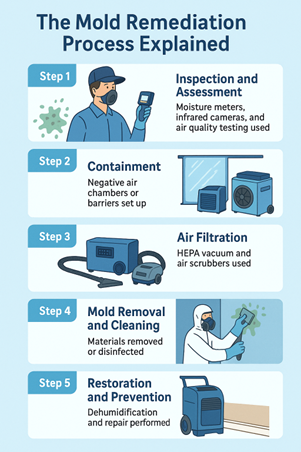
Step 1: Inspection and Assessment
Professionals can use moisture meters, infrared cameras, and air quality testing for hidden mold detection.
Step 2: Containment
Based on this, negative air chambers or barriers can be used for the purpose of helping to contain the spores during cleaning efforts.
Step 3: Air Filtration
HEPA vacuum cleaners and HEPA filter air cleaning devices may also help capture microscopic spores and improve air quality.
Step 4: Mold Removal and Cleaning
To remediate mold, workers can remove moldy materials, discard them, disinfect nonporous materials (such as metal and plastic), and replace porous materials (such as drywall)…
Step 5: Restoration and Prevention
The area is then sealed, or dehumidification systems are installed, to minimize the chances of recurrence of the problem.
Professional Mold Removal Services in Lakewood Ohio are completed safely and according to EPA and IICRC (Institute of Inspection, Cleaning and Restoration Certification) standards.
DIY Mold Removal vs. Professional Remediation
Aspect | DIY Mold Removal | Professional Remediation |
Scope | Surface cleaning only | Full detection and removal |
Safety | Exposure risk without protection | Certified, safe handling |
Effectiveness | Temporary results | Long-term elimination |
Equipment | Household cleaners | Industrial-grade filtration and dehumidifiers |
Effectiveness of DIY vs. Professional Mold Removal
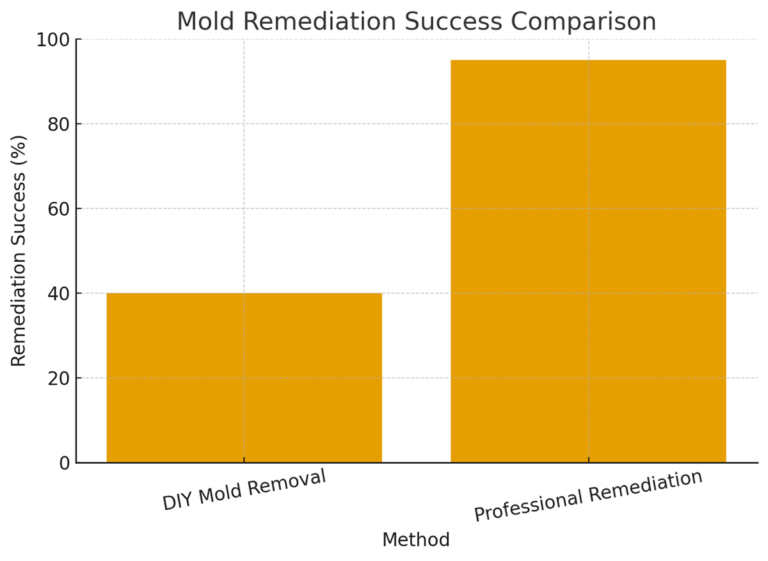
- I.Y. mold removal frequently fails as it does not remove mold growing deep inside structural materials, with a 40% failure rate.
- Professional remediation can eliminate visible mold and moisture sources with a 95% success rate.
- The large gap in performance also shows the difficulty of controlling regrowth and spores with DIY products.
- Teams working professionally use industrial HEPA filtration and dehumidifiers, which have been found to greatly improve long-term results.
- Safety is another advantage because certified professionals are trained to reduce health risks.
Overall, the graph shows professional remediation removes mold for the long-term in a way that is effective and reliable.
Case Study: Mold Remediation in a Lakewood Home
There was also a case in Lakewood, OH in which a plumbing leak led to a musty odor and staining of the basement walls before major damage to the structure was done.
When professionals went behind the wall, wide-ranging black mold growth was discovered; the team used HEPA filters, antimicrobials and humidity control systems to reduce the issue in a matter of days. The homeowner avoided complete rebuilds to create a safe space to live.
It highlighted that one must act when mold is suspected along with trusting the experts to remediate it.
Key Signs You Need Mold Remediation
Mold may start slow but the damage happens very quickly.
Common Warning Signs:
- Rooms or basements may smell musty
- Patches that discolor walls or ceilings
- Symptoms from allergies or the respiratory tract irritates.
- Soft, warped flooring under or drywall
If a professional identifies any of these symptoms early, the professional can prevent worsening at a later stage.
Preventive Strategies for Mold Control
People should take steps to prevent mold to avoid recurrence despite remediation.
Effective Prevention Tips
- Keep Indoor Humidity Below 50%: Use dehumidifiers inside basements, bathrooms, also in other places about.
- Ventilation Improvement: Exhaust fans are helpful within areas prone to moisture buildup.
- Fix Leaks Promptly: Inspect pipes, roofs, and gutters for damage on a regular basis at times now.
- Wet areas dry in 24 or 48 hours.
Task | Frequency | Purpose |
Inspect plumbing and HVAC | Every 6 months | Detect leaks or condensation |
Clean gutters and downspouts | Quarterly | Prevent water seepage |
Monitor indoor humidity | Monthly | Reduce moisture buildup |
How to Choose the Right Mold Remediation Company
Choose a restoration partner that can provide safe, complete and permanent solutions.
What to Look For
- We recommend that individuals get certified through IICRC or EPA.
- Experience: Find professionals that know residential work and that know commercial work.
- Technology: Use HEPA filters, air scrubbers, and moisture detection devices in mitigation.
- Pricing must be transparent. Request written estimates. Request breakdowns of services.
- Customer Reviews or Testimonials: Search throughout for positive or professional reviews.
Quick Tips
- Do not trust contractors that promise immediate results.
- Ask for post-remediation air quality testing.
- Services performed should be covered by warranty.
- Following these steps will help ensure you receive quality service and will help avoid mold recurrence.
Why Professional Mold Remediation Matters in Lakewood OH
Lakewood’s humid environment in combination with an abundance of older homes has led to a common concern about mold. Local experts are familiar with building materials and environmental conditions which lead to mold infestation.
Advantages of Professional Services
- Thorough Inspection: Identify hidden sources of mold and moisture within.
- Safely contain items in order to prevent cross-contamination as one cleans.
- Restoration Expertise: It repairs structural damage, and it restores property aesthetics.
- Health Protection: Removes toxins for the degradation of air quality.
Protecting Homes with Expert Mold Remediation
In summary, Americon Restoration offer a critical pathway toward maintaining safe, healthy, and livable spaces within properties. Mold may seem inconspicuous and its rapid growth can damage homes also it can create health risks for inhabitants.
Certified professionals complete safe remediation for homeowners. They can provide up-to-date technology, techniques, and systems to prevent future growth for effective remediation. To act early and to prevent remains the best defense.
Professionals not only clean up in Lakewood, but also restore, protect, and provide security to residents.
 Loading...