Understanding the Insurance Process
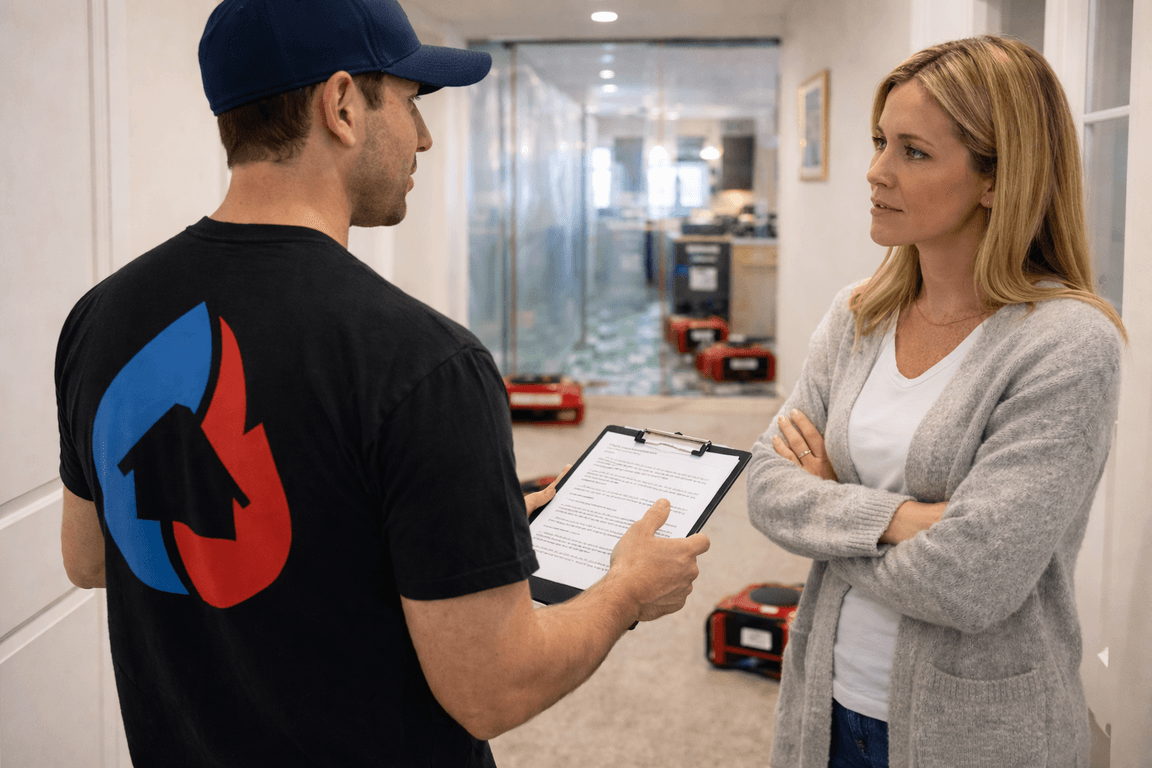
Americon Restoration helps you navigate the restoration side of the process while working with your insurance company and adjuster to provide the documentation they need to evaluate your claim.
How Americon Restoration, Your Insurance Company and You Work Together
Property damage is stressful, but you don’t have to manage the recovery process alone.
When fire, water, storm, or another covered event damages your property, two things often need to happen quickly: the damage needs to be controlled, and an insurance claim needs to begin.
Americon Restoration helps you navigate the restoration side of the process while working with your insurance company and adjuster to provide the documentation they need to evaluate your claim.
Fast response. Clear communication. No surprises.
First Things First: What Happens After Property Damage?
When damage occurs, your first priority should be protecting the property from additional damage.
Americon Restoration can inspect the affected areas, identify immediate risks, document the damage, and begin necessary emergency mitigation.
At the same time, you will typically report the loss to your insurance carrier and receive:
- A claim number
- An assigned insurance adjuster
- Instructions regarding the next steps in your claim
If you need help getting the claim started, our team can help you make that initial call.
Your insurance company ultimately determines whether the loss is covered under your policy.
Three Parties. One Recovery Process.

Every insurance restoration project involves three important parties.
You, the Property Owner
You own the insurance policy and make the decisions regarding your property.
Your responsibilities may include:
- Reporting the claim
- Providing your claim information
- Choosing the restoration company you want to work with
- Communicating with your insurance carrier
- Paying your policy deductible
Your Insurance Company
Your insurance carrier reviews your claim and determines what is covered under your policy.
The insurance company typically:
- Assigns an adjuster
- Reviews your policy and coverage
- Evaluates the cause and extent of the damage
- Reviews restoration documentation and estimates
- Determines covered damages
- Issues payment for approved portions of the claim
Americon Restoration
Our job is to protect your property, document the loss, perform the restoration work, and keep the process moving.
Americon Restoration can:
- Inspect and document the damage
- Perform emergency mitigation
- Take photos and moisture readings
- Maintain equipment and drying records
- Prepare scopes and estimates
- Provide documentation to your adjuster
- Answer questions regarding the restoration work
- Coordinate mitigation and reconstruction
- Help you understand what happens next
Detailed documentation is an important part of the process because it helps the insurance adjuster understand what happened, what work was necessary, and what repairs may be required.
What Does the Insurance Adjuster Do?
After your claim is reported, your insurance company will typically assign an adjuster.
The adjuster evaluates the claim and may review:
- The cause of the damage
- Your insurance coverage
- Photos and documentation
- The scope of damage
- Work that was performed
- Repairs that may be necessary
- Restoration estimates
The adjuster may also visit your property or request additional documentation.
This is a normal part of the insurance claims process.
Americon Restoration works with the adjuster by providing documentation and answering questions related to the damage and restoration work.
Why Documentation Matters
Insurance restoration requires more documentation than a typical home repair.
Depending on the type of loss, Americon may provide your insurance company with:
- Before and during photos
- Moisture readings
- Equipment logs
- Drying reports
- Damage documentation
- Scope of work
- Repair estimates
- Other information related to the restoration
This documentation helps provide a clear record of the damage and the work necessary to restore your property.
Mitigation vs. Reconstruction
One of the biggest points of confusion for homeowners is that an insurance restoration project is often divided into two separate phases.

Phase 1: Mitigation
Mitigation is the emergency work performed to stop or limit additional damage.
Depending on the loss, mitigation may include:
- Water extraction
- Structural drying
- Dehumidification
- Removal of damaged materials
- Cleaning
- Containment
- Emergency board-up
- Temporary protection of the property
The goal of mitigation is simple:
Stop the damage from getting worse.
Phase 2: Reconstruction
Once mitigation is complete, repairs can begin.
Reconstruction may include:
- Drywall replacement
- Flooring repair or replacement
- Painting
- Cabinet replacement
- Carpentry
- Roofing repairs
- Other necessary repairs
The repair scope is typically prepared and reviewed as a separate portion of the claim before reconstruction moves forward.
How Does Insurance Payment Work?
Once your insurance company reviews the claim, it will determine what damage is covered under your specific policy.
Payment can depend on factors including:
- Your insurance coverage
- The cause of the loss
- Your deductible
- The approved scope of work
- Other terms and conditions of your policy
If the loss is covered, the carrier will issue payment for the approved portion of the claim.
Insurance May Pay Americon Directly
In some cases, the insurance company may send payment directly to the restoration company for approved work.
Insurance May Pay You
In other cases, insurance proceeds may be issued to the homeowner.
When that occurs, you are responsible for using those funds to pay the restoration company for the work performed.
Payment procedures vary by insurance carrier and policy.
What About My Deductible?
Your deductible is the portion of the covered loss that you are responsible for paying under your insurance policy.
For example:
Approved mitigation work: $10,000
Insurance deductible: $1,000
Insurance portion: $9,000
Homeowner responsibility: $1,000
This is simply an example. Actual coverage, payment amounts, deductibles, and claim settlements depend on your individual insurance policy and the carrier's coverage determination. The example mirrors the payment explanation in Americon's current insurance guide.
Your Property Damage Recovery Timeline
I would make this section a visual horizontal or vertical timeline on the website.
1. Damage Occurs
Fire, water, storm, or another property loss occurs.
↓
2. Americon Assessment
We inspect the property, identify immediate risks, and document the affected areas.
↓
3. Claim Filed
You contact your insurance company and receive a claim number and adjuster.
Need help? We can help you make the call.
↓
4. Mitigation Begins
Americon performs the emergency work necessary to control the damage, such as water removal, drying, cleanup, or property protection.
↓
5. Insurance Review
Your adjuster reviews the claim, documentation, damage, and scope of work.
↓
6. Mitigation Payment
Once reviewed and approved, your carrier processes the covered mitigation portion of the claim, subject to your deductible and policy terms.
↓
7. Repair Planning
Americon develops the reconstruction scope and works through the review process with your adjuster.
↓
8. Reconstruction
Once the repair scope is ready to move forward, repairs are scheduled and Americon begins putting your property back together.
This follows the eight-step recovery timeline from your current customer guide.
We Help Keep Everyone on the Same Page
One of the most frustrating parts of a property damage claim can be simply understanding what is happening and what comes next.
Americon Restoration helps keep the restoration process moving by:
- Providing documentation
- Responding to adjuster questions
- Coordinating restoration activities
- Explaining the next steps
- Keeping you informed throughout mitigation and reconstruction
Our goal is to reduce confusion and make an already difficult situation easier to manage.
Common Insurance Restoration Questions
Do I have to use the restoration company my insurance company recommends?
You generally have the ability to choose the restoration company you want to work with. Your insurance carrier determines coverage under your policy, while you choose who performs the work on your property.
Can Americon help me file my claim?
Yes. If you haven't reported the loss yet, Americon can help you make the initial call and provide the information you may need regarding the damage.
Does Americon determine whether my damage is covered?
No. Your insurance carrier determines coverage based on your policy and the circumstances of the loss.
Will an adjuster need to visit my property?
Possibly. Depending on the claim, your adjuster may visit the property, review documentation remotely, request estimates, or ask for additional information.
Why is mitigation performed before insurance finishes reviewing everything?
Emergency mitigation is intended to prevent additional damage to the property. Waiting can allow water, moisture, contamination, or other conditions to cause further damage.
Are mitigation and reconstruction billed separately?
They often are handled as separate phases of an insurance restoration claim. Mitigation addresses the immediate damage, while reconstruction covers the repairs needed afterward.
Who receives the insurance check?
It varies. Payment may be made directly to the restoration company, to the homeowner, or sometimes involve other parties depending on the policy and property. Your insurance carrier can explain exactly how payment will be issued for your claim.
What am I responsible for paying?
The homeowner is generally responsible for the deductible as well as any work or costs that are not covered by the insurance policy.
Have Property Damage? Start Here.
When the unexpected happens, you don't need to figure everything out before calling us.
Americon Restoration can respond to the property, assess the damage, document the loss, begin necessary mitigation, and help you understand the restoration process from start to finish.