Staying In A House With Black Mold
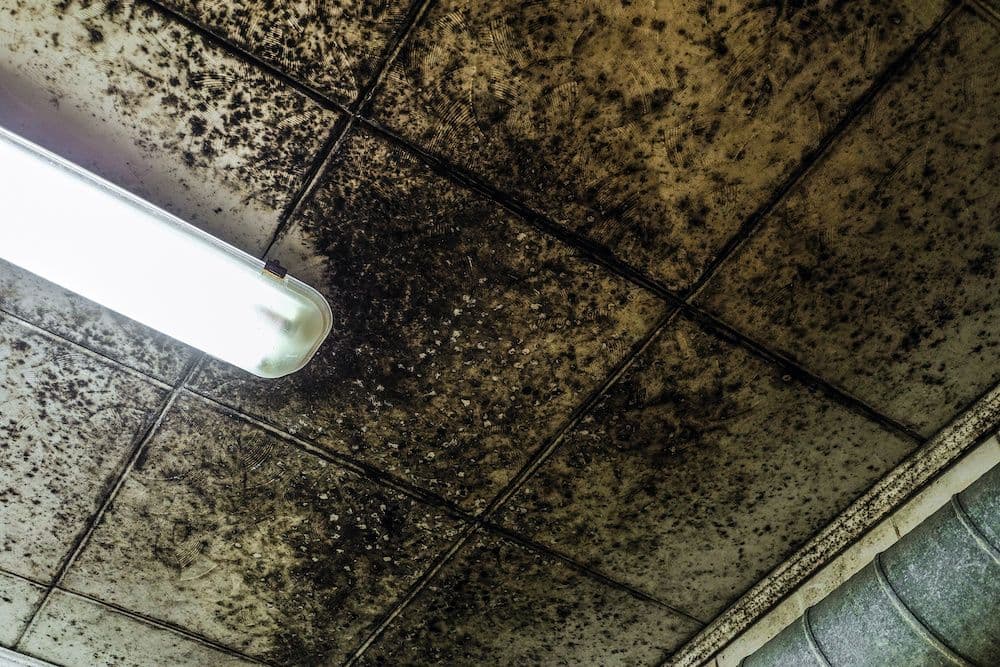
Black mold has a scary reputation — but is it actually safe to stay in your home while it's present? Here's what the science says.
Black mold has a scary reputation, but the practical question most homeowners face is simpler: you found it, remediation is not happening today, so can you stay in the house in the meantime? The honest answer is that it depends on how much there is, where it is, and who lives with you. This guide covers what black mold is, how dangerous it really is, how to identify it, how to live with it safely for the short term, and what professional removal involves.
What Is Black Mold?
Black mold (Stachybotrys chartarum) is a blackish-green mold that grows on cellulose-rich materials like drywall, fiberboard, wood, and paper. It needs consistent moisture, which is why it shows up in places with water damage, leaking pipes, and past flooding. When active it looks slimy or wet; dried out, it turns fuzzy. It produces a strong musty, earthy odor.
Not every dark mold in a home is Stachybotrys. Several common household molds look black, and only testing can confirm the species. The practical point is the same either way: no mold belongs in a home, and all of it should be removed.
Is Black Mold Dangerous?
Less dramatically than its reputation, but seriously enough to act on. Mold is an allergen, and people react to it at very different levels. According to the CDC, mold exposure commonly causes cold-like symptoms: stuffy nose, wheezing, coughing, and skin and eye irritation. Longer exposure can bring fever, shortness of breath, and nausea in more sensitive people.
The risk concentrates in specific groups: people with asthma or respiratory allergies, people with weakened immune systems, infants and young children, the elderly, pregnant women, and people with chronic lung disease. For them, black mold exposure is a more serious problem and removal is more urgent.
One useful pattern to know: mold symptoms often get worse when you are inside the home and ease when you leave. If your household's coughing and congestion follow that pattern, mold is a likely cause. Our full guide to the health risks of mold exposure covers symptoms and health effects in depth.
Can You Stay in the House?
For a small, contained patch (a bathroom corner, a spot under a sink) and a household of healthy adults, staying is usually reasonable while you arrange removal, provided you follow the safety steps in the next sections. The case for leaving temporarily gets stronger as any of these apply:
- The mold covers a large area, or several rooms.
- It is inside the HVAC system, which can spread spores through the whole house.
- Anyone in the home is in a high-risk group above.
- Household members are having symptoms that keep getting worse.
- The mold is in a bedroom, so exposure runs all night.
During professional remediation, whether you can stay depends on the job size. Remediation areas are sealed under containment, so for small and medium jobs most families stay in the home while work happens in the closed-off area. For large jobs, or when the only bathroom or the bedrooms are inside the work zone, a few nights elsewhere is usually the practical answer.
How to Identify Black Mold
What it looks like: dark greenish-black or gray patches on walls, ceilings, or floors, often in corners and edges and spreading outward from a moisture source. Actively growing colonies look slimy or wet; older growth looks fuzzy or velvety.
What it smells like: a strong musty, earthy odor that is worst in enclosed spaces. A persistent musty smell with no visible mold usually means hidden growth inside a wall, under flooring, or in another concealed space.
Where it grows: bathrooms (steam and weak exhaust fans), basements (humidity, seepage, high water tables), attics (roof leaks and ice dam damage, a real Ohio winter problem), crawl spaces, kitchens (sink and dishwasher leaks), window frames (condensation), behind walls (hidden pipe leaks), and inside HVAC systems. Ohio's humid summers, wet springs, snowmelt, and winter condensation give mold its moisture for much of the year, and older homes across Cleveland and the Ohio Valley, Warren, Niles, Youngstown, Canfield among them, often have the chronic damp that lets it take hold.
Testing: a professional inspection can confirm what you are dealing with. Inspectors use moisture meters and thermal imaging to find hidden damp, and take air and surface samples for laboratory analysis when species identification matters, for example for an insurance claim or a household with high-risk members.
How to Live With It Safely Until It Is Removed
- Find all of it. Check the growth locations above, including inside cabinets, behind appliances, and in the basement and attic. Treating one patch while another grows unseen does not solve the problem.
- Small patches on hard surfaces (tile, glass, sealed countertops) can be cleaned yourself with a mold-removing spray or a solution of 1 cup of bleach to a gallon of water. Wear gloves and a mask, and ventilate the room. This only works on small areas of non-porous material.
- Do not rely on DIY for porous materials. Mold grows roots into drywall, wood, and insulation that surface cleaning cannot reach, and bleach does not fix that. Disturbing a large colony without containment also releases spores into the rest of the house. Areas larger than about 10 square feet, anything inside walls or HVAC, and anything that keeps coming back need professionals.
- Cut the moisture. Fix the leak or seepage feeding the mold, run a dehumidifier to keep indoor humidity low, and ventilate showers, kitchens, and laundry rooms. Mold removed without fixing the moisture is mold that returns.
What Professional Black Mold Removal Involves
Assessment and testing. An expert inspects the home, maps the moisture with meters and thermal imaging, and samples when needed to confirm the extent of the problem, including growth you cannot see.
Containment. The work area is sealed off with plastic sheeting and kept under negative air pressure, so spores released during removal cannot drift into the rest of the house. The area stays closed until remediation is complete.
Removal. Contaminated porous materials (drywall, insulation, carpet) are removed and bagged for disposal. Mold on hard surfaces like glass, metal, and sealed wood is cleaned and treated. This is the step that decides whether the mold comes back.
Air filtration. HEPA air scrubbers run during and after removal to capture airborne spores and leave the indoor air clean.
Repairs and prevention. Damaged materials are repaired or replaced, and the moisture source is fixed, so the conditions that grew the mold are gone. A company that skips the moisture fix is scheduling its own return visit.
What Does Black Mold Removal Cost?
Professional mold remediation typically runs $1,100 to $3,400 for a contained problem (the range published by Angi and HomeAdvisor data), with large or multi-room contamination costing more, especially where drywall and flooring must be replaced. Homeowners insurance sometimes covers mold removal when it results from a covered water event, like a burst pipe, which is one more reason to document the water damage that caused it.
Frequently Asked Questions
Can you sleep in a room with black mold?
If the mold is in the bedroom, it is better to sleep elsewhere until it is removed, especially if you wake up congested or coughing. A small patch in a bathroom down the hall is a different situation from growth on the wall beside your bed. When in doubt, move rooms, not houses.
Is black mold from water damage dangerous?
It deserves prompt removal, like any mold growing from water damage. The bigger issue is usually the water damage itself: mold following a leak or flood means materials have been wet long enough to grow it, and the same moisture is damaging the structure. Fix the water source and remove the mold together.
How long can you stay in a house with black mold?
There is no universal safe number of days, because it depends on the amount of mold and the people exposed. Healthy adults with a small patch can usually stay while arranging removal over days. High-risk households, large contamination, or worsening symptoms mean leaving until remediation is done. Treat it as something to resolve in days, not months.
Can you stay in the home during mold remediation?
Often, yes, for small and medium jobs, because the work area is sealed under containment with its own air filtration. If the remediation covers your bedrooms or only bathroom, or the job is large, plan on a few nights away. Your remediation company will tell you which case yours is after the assessment.
When to Call a Mold Removal Company
If the mold covers more than a small patch, keeps coming back, sits inside walls or the HVAC system, or anyone at home is in a high-risk group, it is time for professionals. Americon Restoration removes mold across Cleveland and the Ohio Valley, starting with an assessment that finds all of it, including the growth you cannot see. Learn more about mold removal in Cleveland. Call (216) 221-5200 to schedule an inspection. The sooner the moisture source is fixed and the mold is out, the smaller the job stays.