Emergency Water Removal in Cleveland, OH: What to Do Right Now
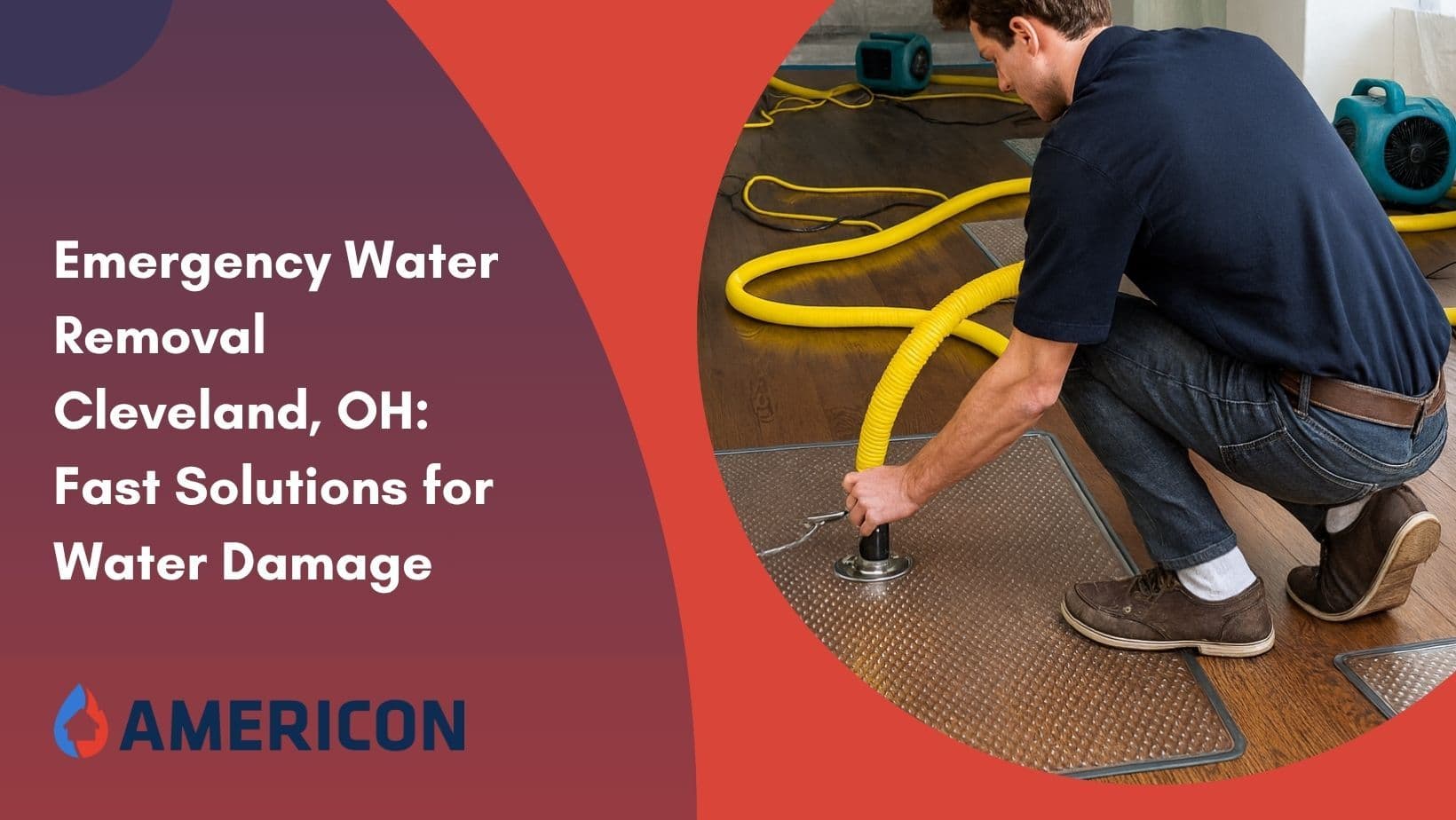
Every minute counts once water starts spreading through a property. See how emergency water removal services in Cleveland respond and what's involved.
FIRST: Your 15-Minute Action Checklist (Do This Now)
Water is spreading and the clock matters more than the cleanup. Work this list in order:
Stop the source if you safely can. Close the fixture valve or the main water shutoff. If the source is a failed appliance, its supply valve is behind or beneath it. Cut power to wet areas, from dry ground only. Use the breaker panel if you can reach it without standing in water. If water is near outlets, panels, or appliances and you cannot reach the panel dry, stay out and let the crew or the utility handle it. Do not walk through sewage or gray water. If the water came from a toilet, drain backup, or outside flooding, keep people and pets out entirely. Photograph everything before moving anything. Wide shots of each room, close shots of the source, the waterline on walls, and damaged belongings. These photos are your insurance record. Move what water ruins fastest, if the water is clean and the area is safe: documents, electronics, photographs, and small valuables up and out. Put aluminum foil or wood blocks under furniture legs to stop staining and rust marks. Call for extraction. Standing water is not a mop problem: household tools remove surface water while the water inside walls, under floors, and in padding stays. Call Americon's Cleveland line at (216) 221-5200 or 1-833-HERE4US (1-833-437-3487).
Do NOT: use a household vacuum on standing water (shock risk, and it is not built for it); run your HVAC if the water is contaminated or ducts are wet; tear out drywall, carpet, or flooring before it is photographed and moisture-mapped; apply bleach to large wet areas and call it handled; wait until morning to "see if it dries."
Is This Actually an Emergency? The Triage Call
Not every water event needs a truck tonight, and the honest answer saves you money in one direction and damage in the other. When requesting help, useful triage questions include: Is the source stopped? What kind of water is it? How large and deep is the affected area? Has water reached walls, flooring systems, or electrical? Is anyone in the home medically vulnerable? The answers land in one of three outcomes: Dispatch now: the source is active or unstoppable; water is standing or spreading; the water is gray or black category; water has reached walls, cabinets, or a second room; a basement is filling; or the property would sit wet overnight. Time is damage in all of these. Arrange assessment promptly: the source is stopped, the area is small and contained on a hard surface, the water is clean, and you can keep it from spreading. It still needs professional drying verification, because surface-dry is not structure-dry, but it is not a 2 AM job. Safe to handle yourself, with monitoring: a small clean-water spill on tile or sealed flooring, caught immediately, fully extracted, with no wall or cabinet contact. Dry it completely and watch the spot for odor or discoloration over the next week; either sign means water got somewhere you could not see.
When in doubt, call and describe it: describe the conditions and ask about urgency, availability, and any consultation charges.
What Happens During the Initial On-Site Response
A typical professional response begins with safety checks, identifying the water source, and evaluating potential contamination. Next comes assessment and moisture mapping. Meters and thermal imaging find where the water actually went, which is routinely beyond where it is visible; the affected materials are identified and the scope is set, with photographs throughout. Extraction can then begin when conditions are safe and equipment is ready. Truck-mounted or portable extractors pull standing water; furniture is blocked, moved, or worked around; carpet and padding are assessed for the save-or-remove call; and the drying plan (equipment placement, containment if needed) is set before extraction finishes, so drying starts the moment extraction ends. Ask the crew when you can expect a written scope, drying plan, and documentation. Exact sequencing and timing vary by job.
The Cleveland Basement Playbook
Cleveland-area basements can flood for several different reasons; identifying the source matters. Foundations: some homes have hollow concrete-block foundations that may retain moisture; a block wall can look surface-dry while the cores are still draining for days, which is why moisture readings are taken at the wall base, not the face. Cracks or joints in poured-concrete foundations may also admit water; a professional should assess the cause. Soils and water table: Clay-rich soils, groundwater, and seasonal rain or thaw can contribute to pressure against foundations in some locations. Combined sewers: Some neighborhoods have combined sewer infrastructure; a sewer surcharge may cause contaminated backup that requires specialist assessment. Sump failures can occur during outages or equipment malfunctions. A battery backup and water alarm may help reduce risk.
One technique matters enough to state plainly, because it is often gotten wrong: do not pump a deeply flooded basement all at once. When the soil outside is saturated, groundwater pressure against the walls and floor is balanced partly by the water inside. Drop the inside level too fast and the pressure difference can crack walls or heave the floor. Do not attempt deep-basement pumping yourself when foundation stability or groundwater pressure is uncertain. Have a qualified professional assess structural risk and plan controlled dewatering.
The Water Removal Process, Step by Step
Assessment and moisture mapping. Category and class are set; the scope follows the meters, not the visible water. Extraction. Standing water is removed with extractors; weighted extraction pulls water from carpet and padding when they are salvageable. Selective removal. Materials that cannot be dried or cleaned (Category 3-soaked porous material, delaminated flooring, wet insulation) come out, documented first. Structural drying. Air movers and dehumidifiers run against daily moisture readings. Set realistic expectations here: some structural drying projects take around 3 to 5 days, but actual time varies. Claims of a whole structure dried in under a day should be questioned by any homeowner; materials give up deep moisture slowly, and the readings, not the calendar, say when equipment comes out. Cleaning and antimicrobial treatment of affected surfaces, with HVAC considerations if ducts were involved. Verification and documentation. Final moisture readings confirm targets are met; the file (photos, readings, logs) closes out for your insurance claim.
Water Categories: Why Clean, Gray, and Black Change Everything
Category decides safety, method, and what can be saved. Category 1 (clean): water from a sanitary source, such as an intact supply line; extraction and drying, most materials salvageable if reached fast. Category 2 (gray): water carrying contamination, from appliances, aquariums, or failed drains; porous materials are handled cautiously, carpet padding is usually removed, and conditions must be reassessed if water remains standing. Category 3 (black): sewage, rising surface water, and any water that has contacted contaminants; contaminated porous materials often require removal after professional assessment, crews work in protective equipment, and the DIY option disappears. Water categories do not change automatically on a fixed timetable. Contamination, exposure, and site conditions determine reassessment, making prompt action important.
What Emergency Water Removal Costs (and What Waiting Costs)
Honest pricing starts with what drives the bill: the area and depth, the water category, how much material must be removed, and the drying days required. Extraction alone for a contained clean-water event is the smallest version of this job. Add structural drying across several rooms and the equipment days add up. Wait, and the scope compounds: prolonged moisture can increase damage and microbial-growth risk, but salvageability and contamination depend on the materials and actual conditions rather than fixed 24-, 48-, or 72-hour cutoffs. Prompt, safe mitigation can help limit additional damage. Depending on the cause of loss and policy terms, emergency extraction and drying may be covered, which is why the documentation starts in the first hour; our guide to water damage remediation costs breaks down pricing factors, and our insurance guide explains how the claim file works when mold enters the picture.
How to Choose an Emergency Water Removal Company
In a panic market, verifiable criteria beat promises. Ask for: IICRC certification (the industry standards body for water restoration, whose S500 standard governs the work); moisturemapping proof in the scope, meaning the company measures rather than guesses; a written scope before major work beyond emergency extraction; confirmed emergency contact availability and an explanation of the intake process; insurance documentation as a standard deliverable; and local presence, and a realistic estimate of availability. Ask each provider to explain its safety, assessment, extraction, and documentation process.
Frequently Asked Questions
How fast do I need to act on standing water?
Now. Early safe extraction can reduce the risk of additional damage, but material salvage depends on contamination and conditions. If you do nothing else from this page, stop the source, photograph, and make the call.
Can I use a shop vacuum instead of calling?
For a small, clean-water spill on a hard surface, a wet-rated shop vacuum is reasonable. For standing water across flooring systems, any wall contact, or any contaminated water, no: household equipment cannot extract from padding and subfloor, and the moisture left behind is where the damage continues.
How long does drying really take?
Some structural drying jobs take approximately 3 to 5 days, with completion determined by moisture readings. Single-surface or very small events can finish faster; deep or Category 2 and 3 jobs run longer. Anyone promising a fixed short timeline before measuring your structure is guessing.
Does insurance cover emergency water removal?
Usually, for sudden and accidental events (burst pipes, appliance failures), as part of the waterdamage claim and the duty to mitigate. Slow leaks and flooding from outside are the common exclusions. The documentation in your claim file is what makes the coverage usable.
The water is from a sewage backup. What do I do?
Stay out of it, keep others out, do not run fixtures that drain to the same line, ventilate only if you can do so without entering, and call immediately. Category 3 cleanup requires suitable protective measures, with porous-material removal determined by contamination and professional assessment.
Should I tear out wet drywall or carpet myself to "help"?
Not before documentation. Insurers can dispute scope when materials are removed before being photographed and measured, and Category 2 or 3 material is a health exposure during removal. Photograph, extract water if it is clean and safe, and let the crew make removal calls on the record.
What should I tell the dispatcher when I call?
Five things: the source (and whether it is stopped), the water type if you know it, the rooms and approximate area affected, whether water reached walls or a lower floor, and whether power or safety is a concern. Those details help the provider assess urgency and appropriate equipment.
Last reviewed: November 2026. Cleveland emergency line: (216) 221-5200. Regional and afterhours: 1-833-HERE4US (1-833-437-3487). For the wider flood picture, see our flood damage restoration guide for Cleveland.
Related guide: water damage remediation costs.
Related guide: insurance guide.
Related guide: flood damage restoration.