
More than 820 fatalities were recorded in 2023 due to exposure to harmful substances in the United States. When you are in any situation where there is a slightest threat of getting exposed to hazardous materials, take the backseat and choose professionals for cleanups. Inadequate cleaning process exposes you to dangerous pathogens such as HIV, Hepatitis B, and C. So let’s discuss why you should choose decontamination services Cleveland over DIY cleaning methods.
Why Choose Professional Decontamination Services Cleveland?
Witnessing violent crimes, unattended deaths, industrial accidents or chemical spills, or infectious disease outbreaks is certainly not easy on anyone. While it comes with its emotional baggage, it can also risk your life by exposing you to various hazards, including bloodborne pathogens, toxic chemicals, or contagious diseases such as COVID-19.
Cleveland is already the 9th most polluted area in the US and exposure to harmful substances can aggravate the adverse effects on the human body. Choosing a professional decontamination service is much better option due to several reasons enlist below:
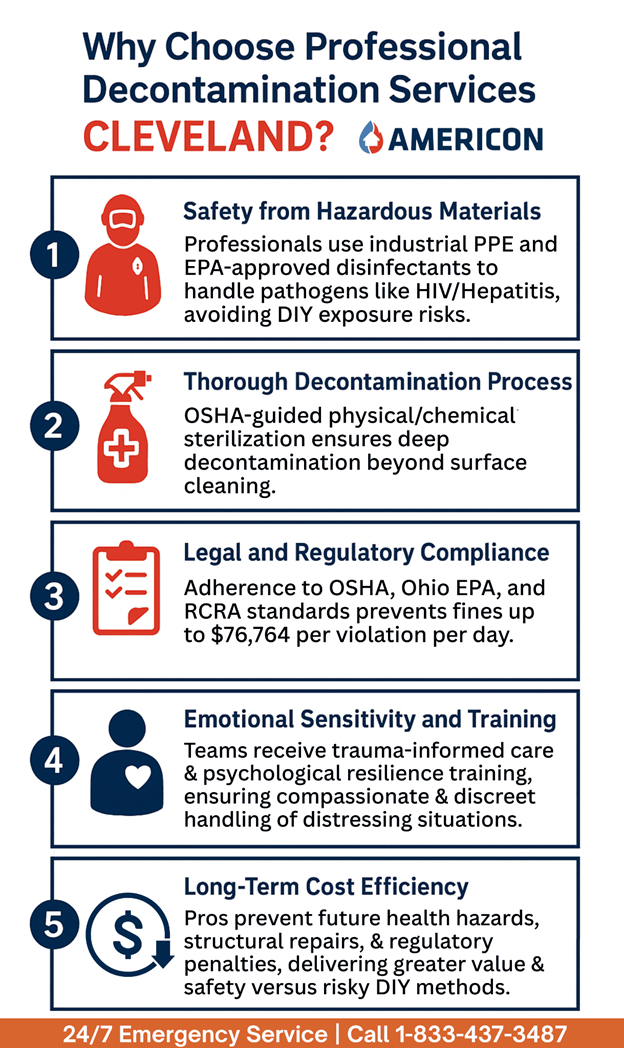
Safety From Hazardous Material
More than 18 million workers in the healthcare industry are at the risk of occupational exposure to bloodborne pathogens. These pathogens include Hepatitis B and C viruses and HIV. Even professional and trained healthcare experts with protective gear are not safe, indicating that regular people should be way more careful when exposed to such hazardous materials.
Blood, bodily fluids, and feces create a hazardous situation which requires proper cleaning products and techniques as these substances can:
- Seep deep into the wooden floors, carpets, or drywall
- Spread through air circulation systems
- Provide habitat to dangerous pathogens including Hepatitis, HIV, and MRSA
- Remain active and dangerous even after cleaning
Biohazard decontamination Cleveland sends professionals wearing personal protective gears and industrial grade cleaning products. Many DIY cleanup often involve inadequate personal protective equipment, leaving the inhabitants of the place vulnerable to many infections.
Not only that, improper equipment can put you at the risk of inhaling toxic fumes and chemicals. Hence proving professionals are better at handling biohazard than a DIY cleanup kit.
Thorough And Effective Decontamination
If you are cleaning biohazards at home or by yourself, chances are you will be using household cleaners such as bleaching agents to “clean” the surface and disinfectants that are supposed to kill the bacteria. Turns out, the US Environmental Protection Agency (EPA) has created a list of disinfectants effective against bloodborne pathogens, which is usually not used during the decontamination process in DIY cleanups.
Commercial decontamination Cleveland adds a deeper effect as compared to regular DIY cleaning by reducing the bacteria level to a considerably safe and habitable level. There are three different methods of decontamination, including:
- Physically methods for contaminants removal
- Chemical detoxification or sterilization
- Combination of physical and chemical methods
The purpose of commercial decontamination Cleveland services is to protect workers from hazardous substances that pose the risk of contaminating and permeating the protective clothing, tools, vehicles, respiratory equipment, and other equipment used on a commercial site.
OSHA has issued some necessary guidelines for professionals to come up with a decontamination plan considering:
- The number and layout of stations for decontamination
- List of decontamination equipment required
- Procedures to prevent contamination of the safe and clean sites
- Ways to minimize the exposure of workers with contaminants during the removal process
- Ways to dispose of clothes and PPEs properly post-decontamination
Legal And Regulatory Compliance
Professional biohazard decontamination Cleveland, Ohio services have to comply with legal and regulatory requirements to ensure your home or workplace remains a safer place.
| Regulation | When it is applied |
| OSHA Bloodborne Pathogen Standard (1910.1030) | If your situation involves bloodborne pathogens, the professional will have to protect workers from blood and other potentially infectious materials (OPIM) exposure. |
| OSHA Hazardous Waste Operations and Emergency Response (HAZWOPER) (1910.120) | It is another regulation applicable to professionals involving hazardous waste cleanups, emergency response operations, and decontamination activities. |
| Ohio EPA Hazardous Waste Management Regulations
● RCRA Organic Air Emission Standards ● Remedial Response Program |
These regulations govern the generation, treatment, storage, transportation, and disposal of hazardous waste with the air laws regulating volatile organic emissions from different sources and remedial response programs to deal with the hazardous substance including site discovery, assessment, and remediation. |
Emotional Trauma And Professional Sensitivity
Around 70% of the US adults have experienced trauma at some point in their life, which can lead to emotional vulnerability. Witnessing a hazardous event, such as a crime scene, infectious disease outbreak, or accident can deeply distress people leading to symptoms related to trauma, such as sadness, anger, fear, and sleep disturbance.
Whereas, the concerns about exposure to contaminated materials can trigger anxiety, fear, and a sense of vulnerability.
Professionals in the residential sanitization services Cleveland encounter such situations on a regular basis and attend debriefing sessions and peer support sessions to understand the trauma and not lose touch with professional sensitivity.
Why Professionals Residential Sanitization Services Cleveland Is More Preferred
Many professionals partake in empathy and compassion training, psychological resilience training, and trauma-informed care training to ensure they navigate the emotional demands of their work while demonstrating the high sensitivity levels and compassions for those who have witnessed trauma. This is somewhat an unlikely situation in DIY cleanups as people usually do not have the resources to mental health counseling services for themselves; the regular cleaning process can somehow affect their mental health in an adverse manner.
Long-term Cost Saving
With the US cleaning industry generating an annual revenue of $108.9 billion in 2025, it is evident that more and more people are preferring professional biohazard decontamination in Cleveland over DIY cleaning methods. It is safer and acts as a long-term cost-effective solution as it deals with significant repairs and damages at the time of cleanup. While DIY service may be cheaper, it could be less efficient and very time-consuming especially for bigger areas and complex situations.
Americon Restoration Offers Thorough and OSHA Compliant Decontamination 24/7:
Choosing professional services over DIY cleanups is highly recommended as it mitigates the potential risks and complexities involved. Americon Restoration can help you safely decontaminate your residential or commercial space while ensuring thorough tests after cleaning to ensure no residual contaminants are present.
Our experts bring specialized knowledge of laws and regulations required for hazardous waste disposal and carry all the necessary equipment suggested by the federal government while handling trauma events. You can call Americon Restoration at 1-833-437-3487 to get started ASAP.
Frequently Asked Questions:
What specific health risks in Cleveland homes (like mold from lake-effect humidity or post-flood contaminants) justify the investment in professional decontamination over DIY methods?
Cleveland homes face health risks like toxic mold from lake-effect humidity, sewage bacteria after floods, and lead or asbestos in older buildings. Professional decontamination removes airborne spores and pathogens with hospital-grade disinfectants, which DIY methods often miss. This reduces risks of respiratory illness, infections, and long-term property damage.
How do professional decontamination services in Cleveland ensure compliance with Ohio health regulations and insurance requirements that DIY cleaning might miss?
Professional decontamination services in Cleveland comply with Ohio health regulations by following OSHA and EPA standards, maintaining documentation, and using licensed waste disposal. They also meet insurance requirements by providing certified cleanup reports. DIY cleaning lacks regulatory oversight and may void insurance coverage if hazards are not properly removed.
What specialized equipment and EPA-approved disinfectants do Cleveland restoration companies use that are more effective than store-bought DIY products?
Cleveland restoration companies use HEPA air scrubbers, industrial dehumidifiers, and ozone machines to remove contaminants. They apply EPA-approved disinfectants such as hospital-grade quaternary ammonium and hydrogen peroxide solutions. These penetrate porous materials and eliminate pathogens at levels DIY sprays cannot match, ensuring deeper decontamination and long-term protection.
Why is rapid 24/7 emergency response from local Cleveland decontamination teams critical for preventing long-term damage after a biohazard incident?
Rapid 24/7 emergency response in Cleveland prevents biohazards from spreading into walls, flooring, and HVAC systems. Immediate containment reduces mold growth, odor absorption, and structural corrosion. Local decontamination teams limit costly repairs by restoring safety quickly, while delayed DIY cleanup allows contamination to escalate into permanent damage.
How do professional decontamination services in Cleveland safely handle hazardous materials (like blood, chemicals, or sewage) that pose serious risks during DIY cleanup?
Cleveland decontamination services handle hazardous materials by using biohazard PPE, sealed waste containers, and OSHA-certified disposal sites. They neutralize pathogens in blood, sewage, and chemicals with EPA-approved disinfectants. DIY cleanup exposes people to infections, chemical burns, and toxic gases because it lacks protective gear and regulated disposal methods.
 Loading...