What to Do If Your Basement Floods (First-Hour Guide)
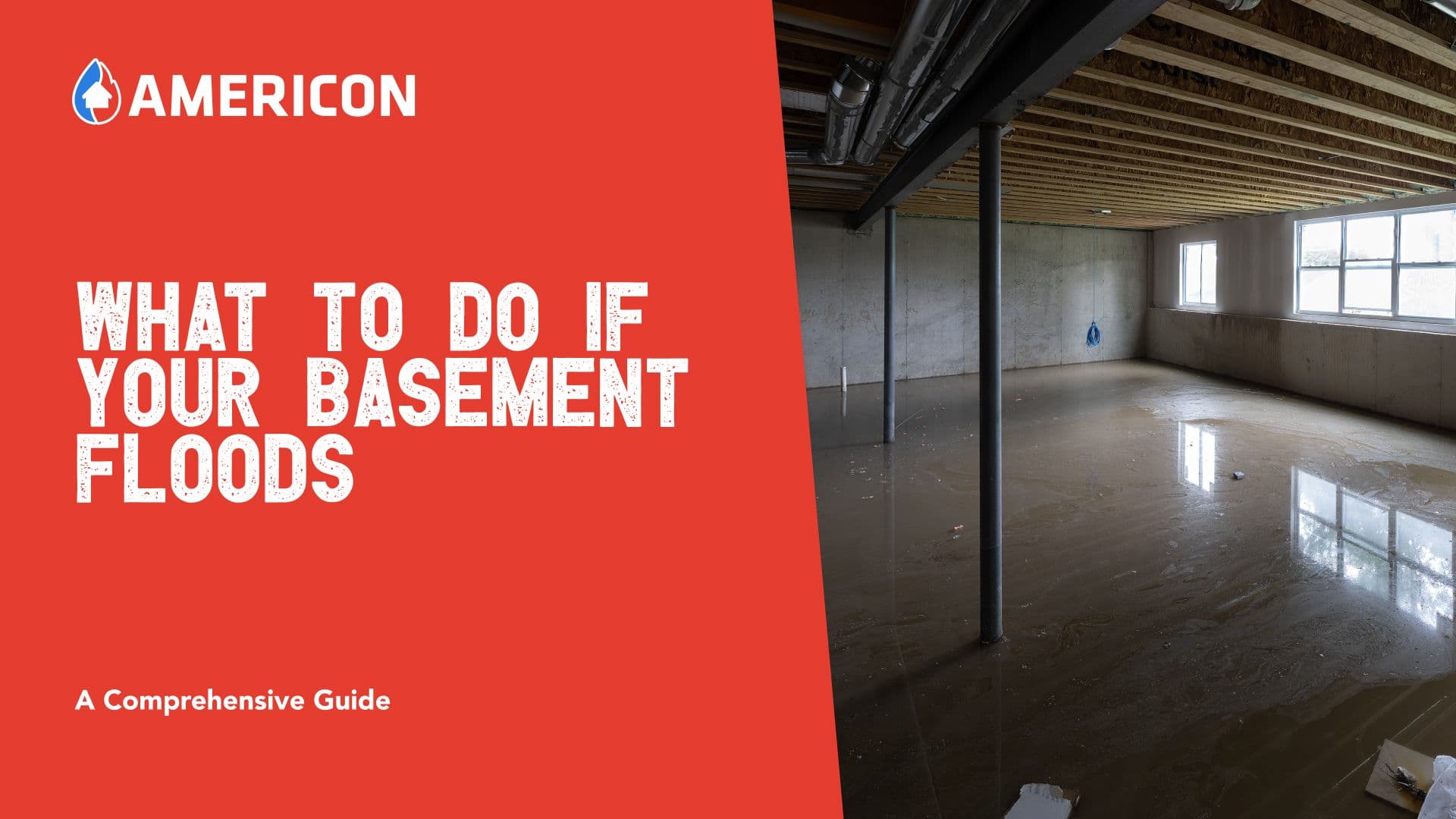
A flooded basement needs fast, correct action to avoid mold and structural damage. Here's what to do in the first few hours.
Is It Safe to Go Downstairs?
Before any step, assess four safety issues from the top of the stairs:
Power. Water conducts. If the water has reached outlets, appliances, or your electrical panel, or if you would have to stand in water to reach the breaker panel, do not go down; call an electrician or your utility first. Only if the panel and access route are completely dry and safe should you consider switching off affected circuits; otherwise wait for an electrician or utility. Switching off a circuit does not itself establish that floodwater is safe to enter. <PARSED TEXT FOR PAGE: 4 / 8> Gas. If you smell gas (a rotten-egg odor), hear hissing near the furnace or water heater, or either appliance is sitting in water with the pilot out, leave the house and call your gas utility or 911 from outside. Do not relight anything.
Contamination. Where did the water come from? Water from an intact supply pipe may initially be clean; rainwater, groundwater, and surface flooding must not automatically be treated as Category 1. Water from a floor drain, toilet, sewer line, or outside flooding can carry significant contamination: do not wade in it, keep children and pets away, and skip every DIY step in this guide. That is professional work with protective equipment.
Structure. A sagging ceiling, a bowed or freshly cracked foundation wall, or a floor that feels spongy means stay out until a professional looks at it.
Even when no obvious hazard is visible, avoid entry if the water source or electrical safety is uncertain. The DIY steps below apply only to a small, demonstrably clean-water event with no structural, electrical, gas, or other hazards.
Finished or Unfinished? The Fork That Decides Everything
One useful question when requesting assistance is whether the basement is finished, because the materials involved change the cleanup plan.
Unfinished basement (concrete floor and walls, exposed joists, storage and mechanicals): sometimes a simpler case, provided the water is clean and no utilities or structures are affected. A homeowner may be able to perform limited safe first-response work: extract water, move storage up, run fans and dehumidification, and clean hard surfaces. Risks can also include hidden moisture, foundation issues, and contaminated water.
Finished basement (drywall, insulation, carpet or flooring, a living space): the serious case. Water wicks up inside drywall and insulation where you cannot see it, carpet padding holds water against the subfloor, and drying means opening walls in places. Professional moisture assessment is often appropriate in finished basements, because the moisture you cannot reach is the moisture that becomes mold. Depending on moisture and contamination, selective material removal and monitored drying may be needed.
Your First-Hour Action Checklist
Stop the source if it is a plumbing source and you can reach the shutoff safely. Main valve for a burst pipe; fixture valve for a failed appliance. If the source is the sump pit or the ground, skip to extraction and the call. Photograph everything before moving anything. Water depth against a wall, the source, each room, stored items in the water. This is your insurance record, and it takes five minutes. Get extraction going. A wet-rated shop vacuum or rented pump handles an unfinished basement's shallow clean water. For a finished basement, deeper water, or any contaminated water, contact a professional extraction provider promptly: (216) 221-5200 in the Cleveland area, or 1-833-HERE4US (1-833-437-3487). Move what water destroys fastest, if the water is clean: cardboard boxes up first (they collapse and feed mold), then electronics, documents, photographs, textiles. Set items on foil or blocks, not on wet carpet. <PARSED TEXT FOR PAGE: 5 / 8> Start airflow. Fans across wet surfaces and a dehumidifier running, in an unfinished space. In a finished space, do not blast air at wet walls before assessment; extraction and a professional drying plan come first. Stop using water upstairs if the source might be a sewer backup. Every flush and drain cycle adds to a blocked line's basement load.
Do NOT: walk in water near a live panel or outlets; enter sewage water at all; mix cleaning chemicals (bleach and ammonia products together make toxic gas); tear out carpet or drywall before it is photographed; or leave a finished basement "to dry on its own." It will not, inside the walls.
Disinfecting Hard Surfaces (Clean-Water Floods Only)
In an unfinished basement after a clean-water flood, once surfaces are washed with detergent and rinsed, you can disinfect hard, non-porous surfaces (concrete, tile, metal) with a diluted bleach solution: about 1 cup of household bleach per 5 gallons of water. Wear gloves and eye protection, ventilate the space, and never mix bleach with ammonia or with acidic cleaners such as vinegar; the gases are dangerous. Bleach does not work through dirt, does not disinfect porous materials like drywall or wood effectively, and has no role at all in a sewage or graywater flood: those are disinfected professionally, after extraction, with protective equipment.
Information to Have Ready When You Call
Knowing the questions helps you gather the answers before you call. Is the water still rising, or is the source stopped? Where did it come from: pipe, sump, drain, or outside? How deep, and over how much of the floor? Finished or unfinished? Has water reached the furnace, water heater, or panel? Is anyone in the home medically vulnerable? These details help a provider assess urgency, appropriate equipment, and safety precautions; do not treat this as Americon's confirmed dispatch script or a guaranteed response schedule.
Sump-Pump Failure: A Common Basement Flood Scenario
Sump-pump malfunction is one possible cause of Cleveland-area basement flooding. Pumps fail four ways: power loss during the storm that is filling the pit; a stuck or failed float switch, the pump's only trigger; an overwhelmed pump in a deluge beyond its capacity; and a frozen or blocked discharge line in winter. If the pump stops during a storm: do not wade to the pump if the panel or outlets are in question; check the breaker and plug from dry footing if you safely can; if the pump is dead and water is rising, that is a dispatch-now call. Prevention, in order of value: a properly sized backup pump where appropriate, which may continue operating during a power outage; a high-water alarm that wakes you before the pit overflows; and a yearly test, pouring water into the pit to watch the float cycle, done in a calm month rather than discovered in a storm.
Furnace, Water Heater, Panel: Appliance Triage
<PARSED TEXT FOR PAGE: 6 / 8> Electrical panel. If water reached the panel or rose above outlet height, an electrician (and possibly the utility) inspects before circuits are re-energized. Never open a wet panel yourself; corrosion inside breakers is a delayed failure, not an immediate one. Furnace / air handler. If water reached the blower or controls, the unit stays off until an HVAC technician inspects it. Wet controls and saturated cabinet insulation make self-restart a fire and carbon-monoxide risk. Gas water heater. If water submerged the gas control valve or burner area, a plumber or gas technician inspects; submerged gas controls may require replacement in accordance with manufacturer and safety guidance. Electric water heater. Power off at the breaker until inspected; submerged elements and thermostats are an electrician's call. Washer, dryer, freezer in shallow clean water that never reached controls: usually salvageable after drying and a check.
The pattern across the list: water plus controls equals professional inspection before restart.
The Flood Cut: What the Crew Does to Your Drywall
Homeowners are often startled when the crew marks a line on the wall. Here is what it is. Drywall wicks water upward well above the visible waterline, and the insulation behind it holds that water against the studs. To dry the cavity, the bottom section is cut out, at a height selected from contamination assessment, material condition, and moisture measurements; 12 to 24 inches above the waterline is sometimes used but is not a universal rule, the wet insulation comes out, and air moves through the open cavity until readings verify dry. The height follows moisture-meter readings taken at intervals up the wall during assessment; it is not arbitrary. A flood cut may help remove unsalvageable material and expose wet cavities for drying; whether it is needed depends on the situation. Unfinished basements rarely need it, which is the fork again.
Drying Timeline: What to Realistically Expect
Extraction belongs in the first hours, the same day whenever possible. Structural drying may take around 3 to 5 days in some jobs, but can be shorter or substantially longer, verified by moisture readings in walls, floors, and cavities; shallow, clean, unfinished cases can finish sooner, deep or finished cases longer. Prompt drying matters because mold can develop quickly on wet materials, often within 24 to 48 hours under favorable conditions, but this is not a fixed deadline; which is why "this weekend" is not a drying plan. For the full process beyond the first hours, our flood damage restoration guide walks the complete Cleveland sequence, and our emergency water removal guide covers the extraction playbook, including why deep flooding may require professionally planned dewatering to account for groundwater pressure and structural risk.
Will Insurance Cover It? The Documentation That Matters
Coverage depends on the source, and the source must be documented. A sudden pipe failure may qualify as a covered event, depending on the policy. Sump overflow and sewer backup may require water-backup or other endorsements; availability, price, limits, and exclusions vary. Groundwater and surface flooding are often excluded from standard homeowners coverage, while separate flood insurance may address some losses. Gradual seepage may also be excluded; check the actual policy. What the claim needs from you: dated photographs before anything moved, proof of the source (the plumber's finding, the failed pump kept for inspection, <PARSED TEXT FOR PAGE: 7 / 8> the repair invoice), the mitigation timeline showing prompt action, and receipts for emergency work. Our guide to homeowners insurance and mold claims covers the claim file in full; the basement version of the rule is simple: photograph first, mitigate immediately, and keep the failed part.
Cleveland Basement Realities
Potential local contributors include moisture retained in some block foundations, clay-rich soils, groundwater, heavy rain, and sewer surcharge in certain neighborhoods. The causes vary by property and event. A Cleveland basement flood may have more than one contributing cause, so the inspection should look for the second pathway while the first is being dried. Our Cleveland basement playbook in the emergency water removal guide covers the foundation and pumping detail.
Frequently Asked Questions
Is it safe to go into a flooded basement?
Only after the four checks at the top of this guide pass: power isolated or unreachable by the water, no gas signs, no sewage contamination, and no structural warning signs. Any failure on those four means professionals first.
How long does it take to dry a flooded basement?
Arrange safe extraction promptly; drying may take several days or longer and should be verified with moisture readings. Finished basements and cavity drying sit at the longer end.
Can I save carpet in a flooded basement?
Sometimes, in the narrow case: clean water, extraction within hours, and carpet that can be treated in place or lifted and cleaned. The padding underneath may need replacement (it holds contamination and dries too slowly), and carpet exposed to sewage or contaminated floodwater often requires removal after professional assessment.
Will insurance cover a sump-pump failure flood?
The pump itself may not be covered, while resulting water damage may qualify under an applicable water-backup or sump-overflow endorsement, subject to its limits and exclusions. Check that endorsement on your declarations page today, calmly, before you ever need it.
Should I pump the water out all at once?
Do not attempt to pump a deeply flooded basement without assessing exterior groundwater pressure and foundation stability. A qualified professional should determine the safe dewatering method and rate; no fixed one-third rule applies to every building. <PARSED TEXT FOR PAGE: 8 / 8>
When is a flooded basement a DIY job?
Unfinished, shallow, clean water, source stopped, appliances untouched, and extraction already done: limited DIY cleanup may be possible if electrical safety, water quality, structural condition, and drying can be confirmed. Monitor moisture and seek professional assessment if uncertainty remains. Finished, deep, contaminated, rising, or appliance-involved: call.
Last reviewed: November 2026.
Related guide: flood damage restoration guide.
Related guide: emergency water removal guide.
Related guide: homeowners insurance and mold claims.