Choosing the Best Local Restoration Company for Fire, Flood, Mold & Storm Damage in Cleveland Metro
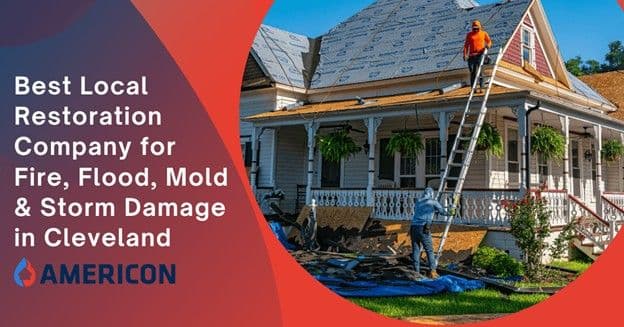
A quarter of small businesses never reopen after a disaster. Here's how to find the right local restoration company before you need one urgently.
A quarter of small businesses never reopen after a disaster, and homeowners who put off cleanup face long-term structural problems that cost far more than the original damage. The company you call in the first hours decides how fast life returns to normal, how much of your property is saved, and how smooth your insurance claim runs.
This guide covers both sides of that decision: how to vet a restoration company in Cleveland, and what good mold, water, and fire cleanup actually looks like once they arrive, so you can judge a company by its process, not its promises.
If you need help now, call Americon Restoration in Cleveland at (216) 221-5200. We respond 24/7.
How to Choose: The Vetting Checklist
Work through these checks in order. A company that passes all of them is rare; a company that fails the first three is not worth the call.
1. Call your insurance company first
Before you sign anything, report the damage and ask what your policy covers and which companies your insurer already works with. Choosing a company your insurer knows speeds the claim, because documentation formats and scopes already match. It also tells you immediately whether the loss is covered at all, before anyone starts work.
2. Confirm 24/7 emergency response
Disasters do not keep business hours. Storm water in an attic or basement can grow mold within a day, and soot and ash set permanently into walls and furniture the longer they sit. A responsible local company dispatches around the clock and aims to arrive within 1 to 2 hours in the Cleveland metro. Local providers reach you faster than statewide networks because they serve a smaller area; larger contractors have stronger name recognition but higher demand that stretches response times.
3. Verify license, insurance, and certifications
Check the Ohio Construction Industry Licensing Board, ask for proof of liability insurance and bonding, and confirm IICRC certification for fire, water, and mold remediation. EPA lead-safe certification and OSHA safety compliance are further proof the crew works to industry health and safety standards. Also check the company's BBB profile for accreditation and unresolved complaints. Never take certifications on trust: ask for proof of certification and of similar past work before hiring.
4. Check reputation the way customers actually leave it
Google Reviews is where customers leave feedback, and how a company responds to negative reviews tells you as much as the positive ones. Ask friends or family who have been through fire or water damage which company they hired and whether they would hire them again. Look for consistency on three questions: did they arrive quickly, did the team communicate clearly, and did they finish the job fully and on time.
5. Confirm specialized teams, not generalists
Restoration is not one-size-fits-all. Fire repair techniques differ entirely from flood or mold cleanup, and a company needs separate specialized teams: water damage units with moisture meters, drying chambers, and truck-mounted extractors; fire and smoke teams for soot removal, odor neutralization, and structural repair; mold experts trained in containment, HEPA vacuuming, and safe disposal; storm crews for board-up, roof tarping, and reconstruction; and biohazard teams for trauma cleanup and hazardous waste. A generic handyman approach is the opposite of what disaster restoration requires.
6. Confirm they own their equipment
Companies that own and maintain their own inventory, industrial dehumidifiers, HEPA air scrubbers, ozone machines, extractors, air movers, respond immediately instead of waiting on rentals, and maintain the same quality on every job. Equipment ownership is a practical proxy for whether a company is built for emergencies or for scheduled work.
7. Check screening and training
You open your doors during the worst week of your life. Reputable companies background-check technicians, review driving records, and run extended probationary periods before a technician works in a customer's home. Crews that value training also follow workplace safety regulations, which protects both workers and property owners.
8. Confirm insurance claim help
Restoration does not end when the property is dry. The most stressful part is the claim. A good company documents damage, submits paperwork, and corresponds with adjusters directly, which gets you paid faster and avoids months of back-and-forth. Property damage has cost owners an average of $15,747 per claim in recent Insurance Information Institute figures, so maximizing coverage is real money, not paperwork.
9. Talk to them before you commit
Once you have two or three candidates, call each one. Ask about their process for your specific damage, and choose the company that gives the most detailed answer at a clear, written price. Ask one question most people forget: can you stay in your home during the work? For contained jobs, usually yes, with the work area isolated; for sewage, whole-home damage, or loss of power and water, a short stay elsewhere may be necessary.
10. Avoid price gouging and fraud
Compare multiple written estimates, refuse cash-only deals, verify references and insurance before signing, and read BBB reviews. During declared emergencies, Ohio consumer protection law guards against excessive pricing. After a disaster, unqualified operators appear quickly to take fast money; the checks above are how you filter them out.
What Good Cleanup Actually Looks Like
A company that passes the checklist should be able to walk you through its process. Here is what each job involves, so you know what to expect and what to ask about.
Mold remediation: containment first, moisture source second
Cleveland's humid summers and heavy rainfall, about 41 inches a year across roughly 151 precipitation days, make mold a constant risk. Good remediation starts with containment: plastic sheeting seals the affected area and negative air pressure keeps spores inside the zone. HEPA filtration removes at least 99.97% of airborne mold spores. Technicians in PPE follow EPA protocols for removal and disposal, and materials that cannot be salvaged within 48 hours are removed, not dried and kept. After removal, antimicrobial treatment and thorough drying follow, and just as important, the company identifies and fixes the moisture source, or the mold returns and the expensive cycle repeats. Learn more about Cleveland mold remediation.
Water damage cleanup: classify, extract, dry, sanitize
Water cleanup is more than removing standing water. First comes assessment and classification by contamination level: Category 1 comes from clean sources like supply pipes and poses little risk; Category 2 comes from appliances like dishwashers, washing machines, and toilets and is a health hazard; Category 3 comes from sewage backups and poses the greatest health risk. Moisture meters and thermal imaging cameras find affected areas that are not visible. Then industrial extractors remove standing water, dehumidifiers and air movers dry trapped moisture from floors, walls, ceilings, and furniture over 3 to 5 days or more depending on extent, and antimicrobials sanitize and prevent bacterial growth and odor. Cleveland's flood exposure sharpens this: about 19% of the city's buildings face flood risk, and freeze-thaw cycles compound the threat every winter. See our Cleveland water damage restoration services.
Fire damage cleanup: stabilize, clean, deodorize
Fire cleanup is not just removing charred material. First, the property is stabilized: boarded up and tarped against weather and burglary, protecting against additional water damage. Then soot is removed according to smoke type, because each behaves differently: wet smoke from burning plastics or rubber leaves thick, sticky residue; dry smoke from fast, high-temperature burning leaves dry, powdery residue; protein residue from burning food leaves a thin, greasy film; and soot from chimney or large house fires leaves thick residue needing professional-grade equipment. Odor removal follows with thermal fogging, hydroxyl generators, and professional ozone generators, because air fresheners only mask smoke odor rather than neutralizing it. Cleanup also addresses water damage from firefighting efforts and prepares the property for reconstruction. See our Cleveland fire damage restoration services.
Restoration Company vs. General Contractor
Never hire a general contractor for disaster restoration. The two do different jobs:
Primary role: a restoration company restores damage from water, fire, or mold; a general contractor builds, remodels, or renovates structures.
Focus: restoration companies provide emergency response, cleanup, and repair; general contractors focus on planned construction and project management.
Expertise: restoration specialists assess damage, mitigate losses, and remediate contamination; general contractors coordinate designs and subcontractors.
Project type: restoration work is urgent and often insurance-driven; general contracting commonly covers home builds, additions, and remodeling.
Timeline: restoration companies respond immediately and work toward rapid mitigation; general contractors typically operate on scheduled projects with longer timelines.
A general contractor manages remodeling and construction; a restoration company restores disaster damage every day and offers emergency response. Hire for the job you actually have.
What Determines Cost
Fire and flood restoration cost depends on damage severity, square footage affected, how deeply water or smoke penetrated, materials needing replacement, and cleanup time. Mold remediation, structural repairs, and temporary housing add to the total, and insurance coverage influences your final out-of-pocket cost. Two cost drivers deserve emphasis: response speed, because the same job costs far more after a week of spread, and hidden moisture, because incomplete drying creates a second job months later. Get the scope in writing before work starts, and compare written estimates rather than verbal quotes. For more detail, see our water damage restoration costs guide.
Why Choose Americon Restoration in Cleveland
Americon Restoration combines over 100 years of experience with certified expertise, and the trust of Cleveland homeowners and businesses. What sets it apart:
- IICRC-certified crew specializing in water, fire and smoke, biohazard, reconstruction, mold, storm, and flood damage restoration
- Technicians vetted with criminal background and driving record checks, plus a trial period before working with clients
- A family-run company passed down for 10 decades, with generational expertise and hundreds of positive reviews
- A safety-first approach with full OSHA and EPA compliance on every project
- Owned equipment maintained in-house for faster, more reliable emergency response
- Rapid response when every minute counts
- Insurance support, including help with claims, adjusters, and negotiations; clients pay when insurers release funds
- A professional, compassionate, and respectful team
Disasters do not wait, and neither should recovery. Having a local, reliable team makes the difference in how quickly life returns to normal.
Frequently Asked Questions
How do I verify the license and insurance of a Cleveland restoration company?
Check the Ohio Construction Industry Licensing Board, ask for proof of insurance, and confirm IICRC certification. Also check the company's BBB profile for accreditation.
What certifications should a fire, flood, or mold restoration company in Cleveland have?
IICRC certification for fire, water, and biohazard remediation and restoration, plus EPA lead-safe certification and OSHA safety compliance. These show the technicians follow industry standards for health, safety, and quality.
How quickly can a local restoration company respond to emergency damage in Cleveland?
Expect a response within 1 to 2 hours from a responsible local company. With 24/7 service, crews are dispatched around the clock to arrive quickly, limit damage, and salvage as much as possible.
What factors determine the cost of restoration services after fire or flood damage?
Damage severity, square footage affected, water or smoke penetration level, materials needing replacement, and cleanup time. Mold remediation, structural repairs, or temporary housing add cost, and insurance coverage affects your out-of-pocket total.
How can I avoid price gouging or fraudulent contractors during Cleveland disaster restoration?
Check state contractor licenses, compare multiple written estimates, and refuse cash-only deals. Verify references, read BBB reviews, and confirm insurance before signing. During declared emergencies, Ohio consumer protection laws guard against excessive pricing.
How do Cleveland restoration experts contain and prevent mold spread during cleanup?
Containment barriers of plastic sheeting seal the area, negative air pressure keeps spores inside the zone, and HEPA vacuums and air scrubbers clean the air. The area is monitored continuously and disinfected thoroughly so spores do not escape into other areas.
What water damage cleanup methods do local Cleveland companies use to dry and restore properties?
Standing water extraction with heavy-duty pumps, then industrial dehumidifiers and air movers to dry the area, followed by cleaning and disinfection, continuous moisture monitoring, and restoration of damaged structures to pre-loss condition.
How is fire damage cleanup managed by restoration professionals in Cleveland?
Debris removal, soot cleaning with specialized equipment, smoke odor deodorization, salvage of restorable materials, structural repair, and indoor air safety checks. Cleanup also addresses water damage from firefighting and prepares the property for full reconstruction.
Can I stay in my home during fire damage restoration?
Often yes, for contained jobs, with the work area isolated. If the damage involves sewage, covers your only bathroom or bedrooms, or the home has no safe power or water, a short stay elsewhere may be necessary. Your restoration company will tell you after the assessment.
Protect Your Cleveland Home or Business
Choosing well takes an hour. Recovering from a bad choice takes months. If disaster has already struck, or you want a trusted local team on record before it does, contact Americon Restoration today at (216) 221-5200 for immediate disaster recovery in Cleveland, available 24/7. For more about the process, read What to Expect from a Cleveland Restoration Company Near Me.