Water Damage Restoration Costs
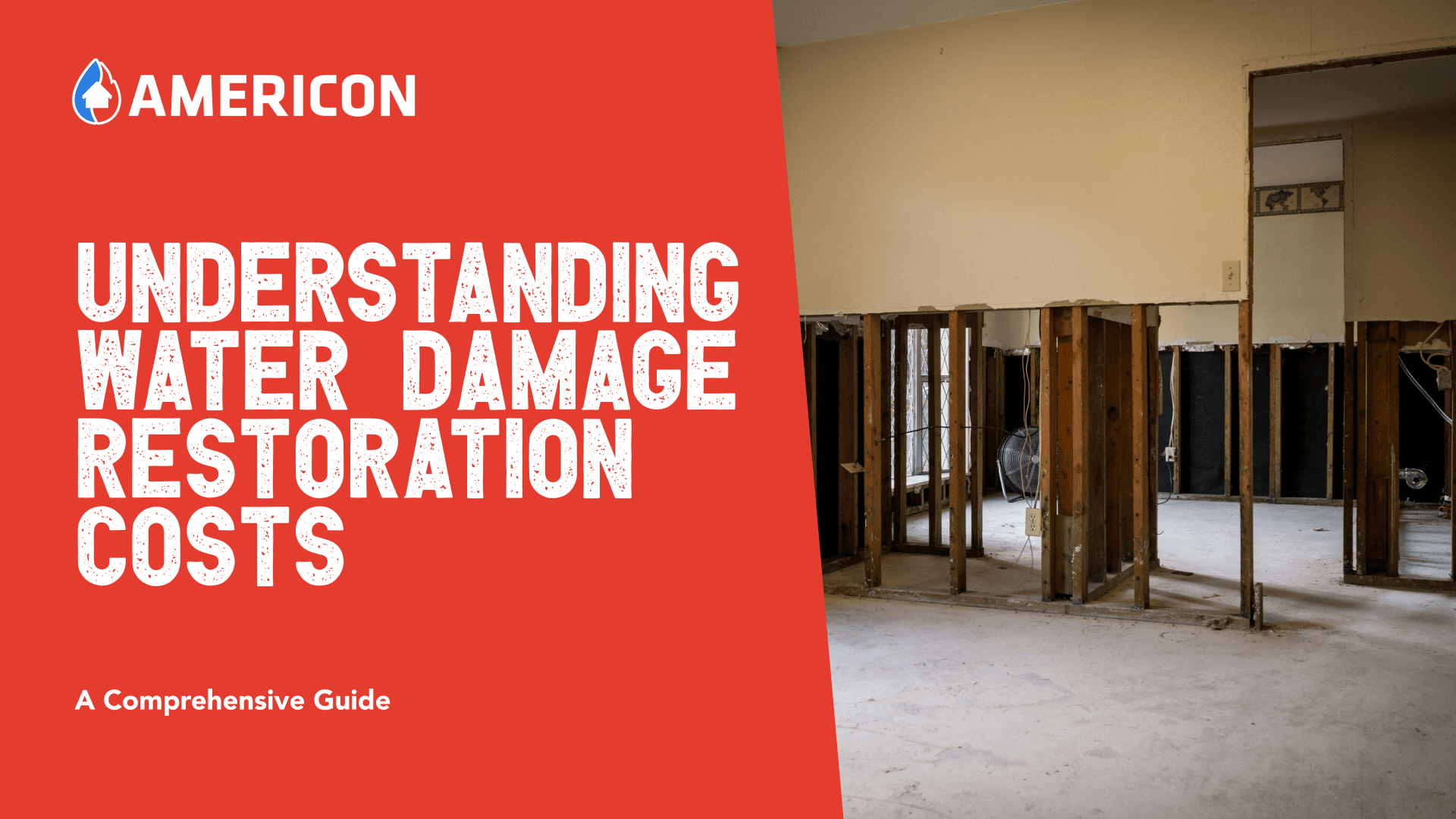
Restoration costs vary widely depending on the extent and source of damage. This guide breaks down what typically drives the price up or down.
Water damage can wreck a home fast, and the repair bill depends on how much water there is, where it came from, and how long it sits. This guide breaks down what water damage restoration actually costs: the per-square-foot rates by water type, the factors that push the price up or down, the extra costs homeowners forget to budget for, and the single biggest cost driver of all, waiting too long to act.
A note on the figures: Americon Restoration is not claiming these are the definitive costs of your project. The ranges in this guide are based on data collected by Angi, HomeAdvisor, and Fixr, and they reflect what typical jobs cost. Your price depends on your damage, confirmed by an on-site assessment.
Water Damage Restoration Costs at a Glance
Clean water: $3 to $4 per square foot. Typical sources: leaky faucets, burst pipes, faulty water heaters, rainwater.
Gray water: $4 to $6.50 per square foot. Typical sources: dishwashers, washing machines, toilet overflow with cleaning agents.
Black water: $7 to $8.50 per square foot. Typical sources: sewage, sewer backups, floodwater, severe toilet malfunctions.
For whole projects, water damage restoration averages around $2,900 in Ohio (per Angi). Nationally, city averages range from about $2,750 (Los Angeles) to $10,730 (Boise, Idaho), which shows how much location and job size move the total.
What Affects Water Damage Restoration Costs
Severity of Damage
The extent of the damage is the biggest factor. Water confined to one small area costs far less than water that has spread across multiple rooms or floors, soaked structural materials, or reached electrical systems.
Geographic Location
Restoration costs vary by city and town. Labor rates, demand after regional storms, and local disposal and permit costs all feed into the price, which is why the same job can cost twice as much in one city as in another.
Labor
Labor typically runs $70 to $200 per hour, depending on the complexity of the work and the type of water involved. Jobs that need several trades (restoration technicians, plumbers, electricians, carpenters) stack those rates together.
Why Waiting Raises the Bill: The Cost of Delay
The most expensive water damage is the water damage you wait on. Here is how a manageable job turns into a major one:
In the first hours, water spreads through flooring, baseboards, and drywall. Every hour of spread is more square footage at the per-square-foot rates above.
Within 24 to 48 hours, mold begins growing in the damp materials. Now the job needs mold remediation on top of restoration, typically another $1,100 to $3,400, and contaminated materials that could have been dried now have to be removed and replaced.
Over the following days, standing clean water degrades. Water that started as a clean-water job at $3 to $4 per square foot can become a gray or black water job at up to $8.50 per square foot as bacteria multiply, simply because it sat.
After a week or more, wood swells and warps, subfloors and framing weaken, and ceilings lose their firmness. Drying is no longer enough; the job becomes demolition and rebuilding, with drywall, flooring, and structural repairs priced in the sections below. Belongings left sitting in water, furniture, photographs, electronics, clothing, books, cross the line from cleanable to ruined, adding replacement costs no restoration can undo.
The pattern is consistent: the restoration process itself is the same, but delay adds line items to it. Acting in the first day keeps the bill closest to the per-square-foot rates. Acting in the second week pays for remediation, demolition, and replacement on top of them.
Additional Costs to Budget For
Mold Remediation
Mold that follows water damage usually needs professional removal: $1,100 to $3,400, including testing and a remediation plan. Check with your insurance agent whether your policy covers mold removal, since coverage varies.
Repairs
Restoring the damaged parts of the home is priced separately from drying and cleanup. Typical national ranges:
- Bathroom fixture repairs: $150 to $350
- Floor restoration: $200 to $500
- Drywall repairs: $300 to $800
- Ceiling repairs: $350 to $1,250
- Plumbing repairs and restorative services: $1,000 to $4,000
Emergency Fees
After-hours and emergency response may add a fee, from nothing (included in the quote) to $50 to $200.
Insurance and Warranty Coverage
Homeowners insurance coverage for water damage depends on the cause and your policy terms. Sudden, accidental water damage (a burst pipe) is commonly covered; flooding from natural disasters and damage from neglect typically are not. Home warranties may cover repairs to the appliance or system that caused the damage. Our guide to understanding the insurance process walks through how a claim works.
Costs by Type of Water Damage
Clean Water
Clean water poses no health risk at the start and comes from sources like leaky faucets, burst pipes, faulty water heaters, and rainwater. Drying and restoration run $3 to $4 per square foot. Swift action matters because clean water left standing does not stay clean.
Gray Water
Gray water carries contaminants from dishwashers, washing machines, and toilet overflows containing urine or cleaning agents. Restoration averages $4 to $6.50 per square foot. The work is more involved than clean water because of the health precautions and disinfection involved.
Black Water
Black water is the most hazardous class: sewage, pathogens, and dangerous substances from sewer backups, flooding, or severe toilet malfunctions. Removal runs $7 to $8.50 per square foot and requires immediate professional intervention, protective equipment, and disposal of contaminated porous materials.
Example: Adding Up a Small Bathroom Job
Homeowners often ask what a small bathroom remediation costs. Using only the ranges in this guide, a gray water leak under a bathroom (dishwasher or supply line) might break down like this: drying and disinfection of roughly 40 square feet at $4 to $6.50 per square foot ($160 to $260), drywall repair ($300 to $800), and bathroom fixture repairs ($150 to $350), for a total in the region of $610 to $1,410 before any mold work. If the leak ran for days before discovery, add mold remediation ($1,100 to $3,400) and the same small job can pass $4,000. This is an illustration from published ranges, not a quote; the point is how fast the line items stack.
Signs You Need Water Damage Restoration
- Damp or musty odors, especially in confined areas, which point to hidden water damage or mold.
- Visible mold growth, which should be addressed promptly before it spreads.
- Warped or buckling floors, a sign of excess moisture in the structure.
- Water sounds, unexplained running or dripping inside walls, which can mean an active leak.
- Staining or discoloration on walls, ceilings, or exteriors, which mark where water has been.
How to Keep Water Damage Restoration Costs Down
- Act promptly. The delay timeline above is the whole argument: fast action prevents the complications that add line items, and it keeps your options open.
- Clear the affected area. Move belongings out of the way (or let the crew pack them out) so technicians can work without delays.
- Discard what cannot be saved. Items that cannot be restored hold up the process and can pose health risks. Photograph them first for the insurance claim.
- Maintain your home. Plumbing, roof, and foundation maintenance prevents most water damage. Regular inspections catch the small leaks that become big bills.
- Review your insurance coverage. Flood insurance or a home warranty can supplement homeowners coverage and soften the cost when something does fail.
Frequently Asked Questions
What is the typical cost for water damage restoration?
Around $2,900 on average in Ohio (per Angi), with whole-project costs nationally ranging from under $1,000 for a small, single-room job to $10,000 or more for multi-room or black water damage. The per-square-foot rates by water type ($3 to $8.50) and the repair ranges in this guide are the building blocks of any quote.
How much does water damage restoration cost per square foot?
Clean water runs $3 to $4 per square foot, gray water $4 to $6.50, and black water $7 to $8.50. The class of water, not just the area, sets the rate, which is why letting clean water sit until it degrades can more than double the per-square-foot price.
Why are water damage restoration costs so high?
Three reasons: the work is time-critical, so it carries emergency labor rates ($70 to $200 per hour, sometimes several trades at once); it needs specialized equipment (extraction, industrial drying, moisture detection, containment); and most bills are not one job but several stacked together: extraction, drying, mold remediation, demolition, and repairs. Delay adds more of those line items, which is why fast jobs cost less than slow ones.
Does homeowners insurance cover water damage restoration?
Usually, when the cause is sudden and accidental, like a burst pipe or a failed water heater. Flooding from outside the home and damage caused by neglect are typically excluded unless you carry separate flood insurance. Document everything with photos before cleanup, and check your specific policy terms.
Get a Real Number for Your Job
Published ranges tell you what a job like yours usually costs; only an assessment tells you what yours will cost. Americon Restoration assesses water damage, documents it for your insurance claim, and gives you a scope before work begins. If you have water damage now, call 1-833-HERE4US. Every hour counts, and the cost section above shows exactly why.
Sources: Angi, HomeAdvisor, Fixr.