Disaster Restoration Services in Ohio: What Happens, Step by Step
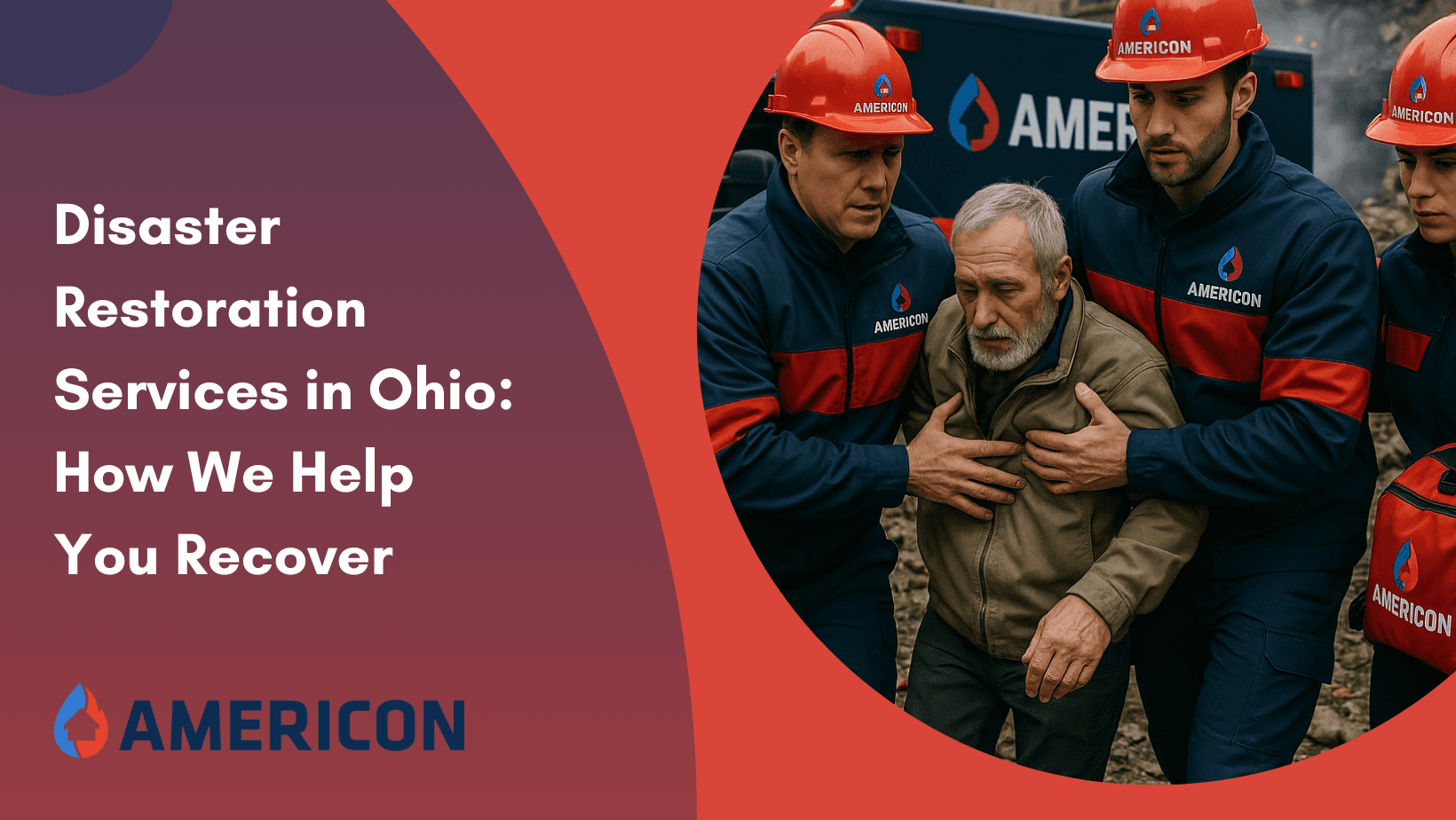
From flooding to fire to storm damage, Americon Restoration's Ohio team handles the full recovery process so you don't have to go it alone.
When a disaster hits an Ohio home or business, the first question is rarely "what is restoration" but "what happens now, how long will it take, and what will it cost." This guide answers all three in order: the disasters Ohio properties actually face, the full job process from first call to final walkthrough, what each service involves, how water categories change your bill, the 72-hour checklist that protects your claim, and how insurance actually works.
Americon Restoration's Ohio team handles the full recovery process, with specialists on call around the clock. If you need help now, call 1-833-HERE4US. We respond 24/7.
The Disasters Ohio Homes Actually Face
Related guide: Flood damage restoration
Ohio's damage patterns come from its climate and its ground, and crews see the same handful of incidents again and again.
Frozen pipe bursts lead NE Ohio winters. Water inside pipes expands as it freezes, ruptures the pipe, and floods walls, floors, and electrical systems, sometimes days after the cold snap, when thaw releases the blockage. Basement seepage follows from clay soils and high water tables: water presses against foundations instead of draining away, and older combined sewers back up into basements during heavy rain. Lake-effect storms bring heavy snow and ice that overload roofs and gutters, and spring thaws turn that snowpack into foundation water. Summer brings severe thunderstorms, flash flooding, and wind that tears roofing and siding and drives rain into attics. Tornadoes, though less frequent, cause the most concentrated structural damage of any Ohio event.
Knowing which pattern hit you matters because it decides the water category, the drying approach, and the insurance bucket, all covered below.
The End-to-End Job Process
A professional disaster restoration job follows one arc, whatever the cause. Competitors usually describe fragments of it; here is the whole sequence, first call to final walkthrough.
First call and dispatch. You report the damage, and the dispatcher triages by safety, water category, and spread: an active leak or sewage backup dispatches immediately, while a contained, dry situation schedules within hours. Expect a responsible local company to arrive within 1 to 2 hours for emergencies.
Assessment and inspection. Technicians confirm the property is safe to enter, map the damage, classify the water, and draw up an action plan. Moisture meters and thermal imaging cameras find hidden water inside walls and ceilings, and the crew documents everything with photos before any work starts, because that documentation becomes your claim evidence.
Stabilization. Board-ups, roof tarping, temporary power, or structural supports secure the property against further damage, weather, and unauthorized entry. This step stops a bad situation from becoming a worse one while the main work is organized.
Mitigation. Standing water is extracted, contents are moved or protected, and drying equipment goes in. This is the emergency phase: it stops damage from continuing. Mitigation is also an insurance term, and the distinction matters for payout, covered in its own section below.
Cleaning and decontamination. Soot, smoke residue, mold, and contaminants are cleaned with methods matched to the material and the damage type. Odor neutralization runs here too, with air scrubbers, hydroxyl systems, or thermal foggers, because masking an odor is not removing it.
Drying and monitoring. Industrial dehumidifiers and air movers run for days, with daily moisture readings tracking progress until readings reach the dry standard. A job is not finished when surfaces feel dry but when the structure tests dry.
Repair and reconstruction. Drywall, flooring, roofing, and paint are repaired or replaced, and contents are restored or documented as unsalvageable for the claim.
Final walkthrough and handover. A detailed post-restoration inspection confirms every area is restored and every system works before the property is handed back.
Service Lines: What Each One Actually Involves
Related guide: Types of restoration services
Related guide: Storm damage restoration
Water damage restoration. Remove standing water, then dry and disinfect affected areas. Typical timeframe: 2 to 4 days for mitigation, longer with reconstruction. It prevents mold and structural damage, and it is the most common Ohio job, from burst pipes to basement seepage.
Fire damage restoration. Clean soot, restore contents, and repair structural damage. Typical timeframe: 3 to 5 days for cleanup, longer with reconstruction. Fire damage is more than what meets the eye: smoke travels through walls, ceilings, and ductwork long after the fire is out, leaving odor and corrosive byproducts; soot is acidic and can permanently etch glass, corrode metal, and discolor surfaces within days; suppression water, foam, and chemicals soak materials and cause secondary damage like mold or rot; and extreme heat weakens metal supports and wooden beams and can crack concrete, so areas that look intact may still be unsafe without professional inspection. The fire flow runs: emergency response and inspection, stabilization,
debris and hazardous material removal, soot cleaning matched to soot type, odor neutralization, water extraction and drying, reconstruction, and final walkthrough.
Mold remediation. Remove mold and prevent future growth. Typical timeframe: 2 to 7 days. The work is containment first, plastic sheeting and negative air pressure keeping spores inside the zone, then HEPA-filtered removal, antimicrobial treatment, drying, and fixing the moisture source, or the mold returns. Claims about mold and health stay qualified: remediation addresses the growth and the moisture; it does not diagnose health effects.
Storm damage restoration. Repair roof, windows, siding, and water damage. Typical timeframe: 3 to 7 days for mitigation. Wind and water usually arrive together, so storm jobs combine boardup, tarping, water extraction, and structural repair in one scope.
Biohazard cleanup. Trauma cleanup and hazardous waste handling by trained teams following strict safety protocol, including sewage backup work where contamination rules out ordinary cleaning.
Contents restoration. Assessment item by item, specialized cleaning (including ultrasonic cleaning for hard contents and professional laundering for textiles), and documentation of anything that cannot be saved for the insurance claim. This guide keeps contents brief on purpose: the full contents guide lives in our contents restoration article, which covers what can be restored after fire and water damage.
Reconstruction. The rebuild phase after mitigation and cleaning: drywall, flooring, roofing, and finishes returned to pre-loss condition, managed under the same claim where possible.
Water Categories and What They Do to Your Bill
Every water job starts with one classification, and it decides safety, salvage, and cost.
Category 1, clean water, comes from supply pipes and rainwater intrusion. It poses little immediate health risk, most materials can be saved with fast action, and it is the cheapest category to remediate. Category 2, gray water, comes from appliances, sump-pump failures, and toilets without solid waste. It carries contaminants, becomes a health hazard the longer it sits, and converts to Category 3 within 48 hours if left standing; carpet pad usually comes out, and drywall gets flood-cut above the waterline. Category 3, black water, comes from sewage backups and rising river or flood water. It carries bacteria and pathogens, and everything porous it touches is removed, not dried, which is why black-water jobs cost the most: removal plus disposal plus sanitizing, instead of drying.
Two jobs with identical square footage can therefore carry very different bills, and any estimate that does not name the category is not an estimate you can compare.
The 72-Hour Homeowner Checklist
The first 72 hours decide the claim as much as the repair. Work through this framework in order.
Hours 0 to 4: safety and shutoff. Keep out of standing water while power is on. Shut off the water source if you can do it safely. Call emergency services if water levels are significant or the structure looks compromised. Photograph and video everything before moving or cleaning anything.
Hours 4 to 24: notify and document. Call your insurance provider and report the damage; ask what mitigation the policy requires and what your coverage includes for this cause. Move valuables and documents to a dry area. Do not discard damaged items until they are photographed; undocumented demolition is damage the claim cannot verify.
Hours 24 to 72: scope and start. Meet the restoration crew for assessment and moisture mapping, and confirm the scope in writing. Keep receipts for temporary lodging and essentials, because many policies reimburse those costs. Do not sign a full-repair contract before the adjuster has seen the damage, and do not let anyone pressure you into cash-only or upfront-fullpayment terms.
Insurance: The Claim Workflow, in Homeowner Terms
Related guide: Insurance claim help
Most homeowner policies cover fire and smoke damage, and many cover water and storm losses, but the claim moves faster when documentation is right from day one. The packet that gets paid fastest has four parts: your photos and video from before cleanup, the crew's moisture log with readings by room and by day, a line-item estimate and scope of work, and a clear timeline from discovery to dry.
Two distinctions decide many claims. Sudden versus gradual: a pipe that bursts is sudden and covered; a pipe that leaked for months is gradual and usually denied, which is why maintenance records help. Flood versus water backup: rising river or lake water falls under flood insurance (NFIP or a private flood policy), while a sump-pump failure or sewer backup falls under a homeowners endorsement, if you carry one. Pennsylvania policies differ by carrier and endorsement, so if your property or policy sits across the state line, confirm which state's rules and endorsements apply during the first adjuster call, not after the work is done.
Americon helps by photographing damage, building detailed scopes of work, producing insurerready estimates (many restoration estimates use Xactimate), and communicating directly with adjusters so nothing falls through the cracks. Our guide to understanding the insurance process explains each stage of a claim in full.
What It Costs (Cost Drivers, Honest Ranges)
Costs depend on type and severity, and every figure below is a published estimate to be confirmed by on-site assessment, not a quote.
Water damage averages around $2,900 in Ohio. Fire damage runs $4 to $6.50 per square foot nationally (per Fixr), covering labor, equipment, debris removal, and dump fees. Storm damage runs $3,000 to $7,000 in the U.S. depending on type and location. Mold remediation averages around $2,143 in Ohio (per Angi). Broken down by the parts of a fire job, published Ohio Valley estimates include: soot and smoke cleaning $1,500 to $5,000; odor removal and air treatment
$1,000 to $3,500; water extraction and structural drying $1,000 to $4,000; drywall, flooring, and repairs $2,500 to $10,000; major reconstruction $10,000 to $50,000 or more.
The DIY comparison is part of the honest math. A small dehumidifier rents for about $51 a day, an air mover about $15 a day, a moisture meter about $44 a day, a HEPA-filtered vacuum about $131 a day, and a submersible pump $60 to $225 a day, before disinfectants and safety gear, and a homeowner working alone typically takes weeks for mitigation work a crew finishes in days, while still leaving hidden moisture behind. Floodwater sitting for 72 hours or more causes damage far beyond cosmetic repairs, according to the U.S. Department of Homeland Security, which is why speed is the cheapest line item on any scope.
Mitigation vs Restoration vs Repair: Why the Label Matters
Insurers use these three words differently, and the label on a scope line can change what gets paid.
Mitigation is emergency work to stop damage from continuing: extraction, board-up, tarping, and initial drying. It is almost always covered when the underlying loss is covered, and policies usually require you to do it promptly. Restoration is returning the property to its pre-loss condition: cleaning, deodorizing, drying to standard, and restoring contents. Repair and reconstruction is rebuilding what cannot be cleaned or dried: replacing drywall, flooring, roofing, and finishes. Disputes usually come from scope lines sitting in the wrong bucket, such as a rebuild item billed as mitigation, or a cleaning item the insurer treats as betterment. Ask for the scope broken into these three buckets before work starts, and the claim conversation gets much simpler.
How to Choose a Disaster Restoration Company in Ohio
Related guide: What restoration companies do
Judge companies on verifiable facts. Confirm 24/7 emergency response and a real arrival time. Confirm IICRC certification for water, fire, and mold work, and ask to see it. Ask whether the crew maps moisture with meters and thermal imaging, and whether you will see the readings. Confirm the company owns its extraction and drying equipment rather than renting it. Confirm it documents damage for your insurer and communicates with your adjuster directly. Check reviews for patterns in punctuality, communication, and finished results. And ask the questions that filter out storm chasers: how fast can your team arrive, do you handle mold and odor removal or only visible damage, can you share before-and-after photos of recent projects, and will you work with my insurance company. Evasiveness on any of these is a red flag.
Frequently Asked Questions
What does fire damage restoration include?
Emergency board-up, soot and smoke cleanup, odor neutralization, water extraction from firefighting, structural drying, content cleaning, and reconstruction. It addresses visible damage plus hidden issues like smoke penetration and weakened structures.
What is the average cost of fire damage restoration services?
Fire damage runs $4 to $6.50 per square foot nationally (per Fixr). Water damage averages around $2,900 in Ohio, storm damage $3,000 to $7,000 nationally, and mold remediation around $2,143 in Ohio (per Angi). Minor smoke and soot cleanup can stay in the low thousands, while major structural restoration reaches tens of thousands. An on-site assessment is the only way to get an accurate figure for your situation.
Can smoke odor really be removed completely?
Surface cleaning alone will not eliminate odor, but professional techniques like thermal fogging and ozone treatment neutralize smoke molecules at the source, and sealing locks away anything left in porous surfaces. That combination is what makes the result last.
Will my belongings be salvageable?
Often, yes. Many items that look ruined can be restored through specialized cleaning, including ultrasonic cleaning for hard contents and professional laundering for clothing and bedding. A restoration crew assesses contents item by item and documents anything that cannot be saved for your insurance claim.
How long does disaster restoration take?
Water damage restoration typically takes 2 to 4 days, fire damage 3 to 5 days for cleanup, mold remediation 2 to 7 days, and storm damage 3 to 7 days. Full reconstruction after major events can take several weeks.
What are the red flags of a fraudulent restoration company?
Watch for storm chasers: demanding full payment upfront, no local office, out-of-state license plates after storms, vague contracts, no proof of insurance, and high-pressure sales tactics. Verify licensing, insurance, and local references before signing anything.
How do I choose a reliable disaster restoration service?
Check 24/7 response and arrival time, IICRC certification, moisture-mapping evidence, owned equipment, insurance documentation help, and review patterns. Ask for proof of certification and before-and-after photos of similar jobs before hiring.
What services should be restored first after a disaster?
Safety and stabilization first: shut off hazards, board up and tarp, and stop the water source. Then mitigation: extraction and drying to stop spread and mold. Cleaning and contents come next, and reconstruction last, once the structure tests dry.
Get Help Now
Disasters do not wait, and neither should recovery. Fast professional response limits damage, protects your claim, and gets life back to normal sooner. If a disaster has hit your Ohio property, contact Americon Restoration today at 1-833-HERE4US to get the restoration process rolling.