Storm Damage Restoration in Cleveland, OH: What to Do Now
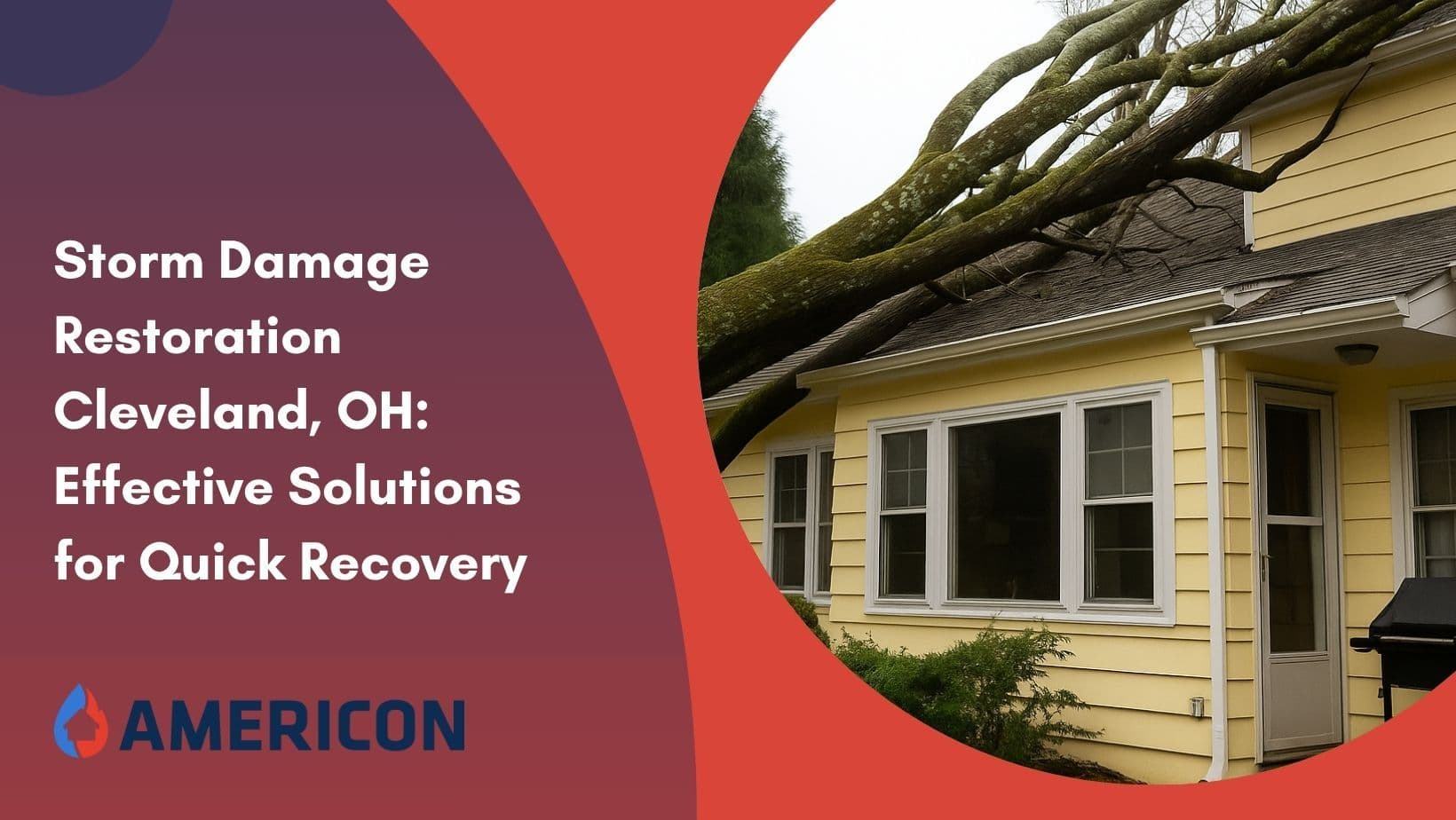
Wind, hail, and flooding can hit a property on every side at once. Here's how storm damage restoration helps Cleveland homes bounce back.
The First 24 Hours: Your Decision Checklist
The storm has passed. What you do today decides whether this becomes a contained repair or a season-long project. Work in this order:
Safety before property. Stay clear of downed power lines and any tree or structure under load. If you smell gas, leave and call the utility or 911. Do not enter a room with a sagging ceiling; waterlogged drywall is heavy and comes down without warning. Stop active water entry if you safely can. A bucket under a drip is fine; climbing on a wet, damaged roof is not. Interior mitigation you can do from the floor: move belongings out of wet areas, put foil or blocks under furniture legs, and pull soaked rugs to a hard surface. Photograph everything before touching it. Exterior damage from the ground, every affected room, close-ups of openings, damaged belongings, and the waterline. Photograph serial plates on damaged appliances. This record is the spine of your insurance claim. If water is entering, arrange safe emergency mitigation promptly and notify your insurer as soon as practical; you do not generally need to wait for a claim number to prevent further damage. Drying cannot wait for a claim number; your policy may require reasonable steps to prevent additional damage, and a restorer's dated documentation becomes the claim's evidence. Then notify the insurer promptly with the restorer's file started. Keep every receipt and do not throw damaged items away yet. Adjusters verify with evidence; discarded items are disputed items.
Do not: sign anything a door-to-door crew puts in front of you today (see the scam section below); let anyone start permanent repairs before the damage is documented; or paint over water stains to "check later." Stains are evidence, and covered-over moisture becomes mold.
Emergency Stabilization: Tarping, Board-Up, and Debris
Stabilization is the first professional phase, and its job is simple: keep the next rain out and the property secure while everything else is planned. Roof tarping seals openings from above; board-up closes broken windows, doors, and wall breaches; tree and debris removal clears what is threatening the structure or blocking access. Fallen trees on a structure are crane work, not chainsaw improvisation. Stabilization is also the phase with a clock: an untarped opening converts one storm's damage into every following rain's damage, and insurers treat preventable secondary damage harshly. Emergency mitigation may be covered when the event and work qualify under the policy, documented with before-and-after photographs, and it is why timely stabilization and insurer notification both matter. For standing water inside, our emergency water removal guide covers the extraction side step by step.
The Cleveland Storm Profile: What Actually Damages Homes Here
National storm content talks about hurricanes. Cleveland-area properties can experience several storm-related damage mechanisms, depending on location and building conditions:
Lake-effect snow. Cold air crossing the open lake drops heavy, localized snow on the eastern suburbs and the Snow Belt. The damage is weight and melt: snow load stresses roofs and decks, and the slow melt finds every flashing weakness. Snow load and meltwater can damage roofs or cause leaks into insulation and ceiling materials.
Ice dams. A common cold-weather concern. Heat escaping through the roof melts snow on the upper slope; the meltwater runs down and refreezes at the cold eaves, building a dam that backs liquid water under the shingles. The leak appears inside, often in an exterior wall or ceiling corner, far from any visible roof damage. Restoration may include interior drying and insulation work; the prevention is attic insulation and ventilation, and ice-and-water shield at the eaves.
Spring and summer severe storms. Convective storms bring the wind: shingles lifted or stripped along edges and ridges, siding peeled, trees onto roofs and fences, and wind-driven rain pushed sideways through window and door seals that hold fine in vertical rain. Wind damage is frequently under-claimed because the roof looks intact from the ground; lifted or creased shingles may require inspection even when they appear flat afterward.
Freeze-thaw foundation damage. Water in soil and in foundation cracks expands as it freezes, through dozens of cycles in a Cleveland winter. Block foundations crack along mortar joints; water entry follows the spring thaw. The damage is slow, which matters for insurance: gradual deterioration is often excluded; damage from a particular covered storm event may qualify, depending on policy terms. Dating the change is the documentation game.
Add one cross-cutting factor: in some areas, heavy rainfall can contribute to sewer surcharge and contaminated basement backups. Our disaster restoration services guide for Ohio explains how the wider claim and recovery fit together.
Signs Your Home Needs Storm Restoration, Including the Hidden Ones
Obvious signs need no list: openings, fallen trees, missing shingles, water inside. The restoration-worthy signs are the quiet ones. Granules in downspouts can be a sign of roof wear or damage, but require assessment in context. A changing water stain may indicate continuing moisture intrusion. A musty odor after storms may indicate trapped moisture and warrants investigation. Doors and windows that suddenly stick after a wind event can signal racking or water-swollen framing. Damp basement walls days after rain, with no plumbing nearby, point to foundation pathways. Any of these earns a professional inspection with moisture meters, because the meter finds the wet insulation and wall cavities that eyes cannot, and early drying is a fraction of the cost of the mold remediation that follows a missed cavity.
The Restoration Process, Step by Step
Stabilization (as soon as safely feasible). Tarping, board-up, debris hazards cleared, water extraction started if needed. Assessment and scope (timing depends on access and complexity). Full moisture mapping and damage inventory; the scope of work is written in the line-item format insurers use, and an adjuster may inspect the damage and review available documentation. Extraction and structural drying (often overlapping with assessment). Standing water out, then monitored drying, sometimes around 3 to 5 days for structural materials, but longer or shorter depending on conditions, verified by readings rather than assumed. Cleaning and treatment. Soot if fire was involved, antimicrobial treatment where moisture sat, contents evaluated for cleaning, pack-out, or disposal with appropriate owner authorization. Repairs and rebuild (the variable phase). Roofing, drywall, flooring, and finishes rebuilt after the structure verifies dry. Rebuild duration is set by scope, permits, and material lead times, from days for a single room to weeks or longer for structural or multi-room losses; anyone quoting a total timeline before the assessment is guessing. Final verification and claim close-out. Final moisture readings, the completed documentation file, and walkthrough. The phases overlap deliberately: drying starts while the claim is still being scoped, because moisture does not wait for paperwork.
What It Costs, and the Insurance Math
Storm restoration costs follow the damage tier. Stabilization (tarping, board-up, extraction) is the smallest bill and the one that prevents the largest. Water mitigation scales with area and drying days. Roof work splits sharply between repair (a section, flashing, shingles) and replacement (a slope or the full roof). Rebuild is conventional construction pricing on whatever the storm destroyed. Two facts organize the insurance side. First, a deductible may apply to the claim, with specific terms depending on the policy, and wind or hail deductibles are sometimes a percentage of dwelling value rather than a flat amount; read yours before the adjuster visit. Second, mitigation may be covered when the underlying event and expenses qualify under the policy, which is why stabilization and drying receipts belong in the file from hour one. Whether the mold that follows a storm is covered, and how caps apply, is the subject of our insurance and mold guide; the short version is that resulting mold may be excluded, capped, or covered depending on the policy and circumstances; prompt mitigation and documentation remain important.
The Claim File Your Adjuster Wants to See
A well-organized claim file can help an adjuster evaluate the loss. Useful documentation may include: timestamped photographs of all damage before mitigation and after stabilization; moisturemapping readings showing where water traveled; thermal-imaging images for wall cavities; a dated inventory of damaged contents with photographs; the mitigation log (what was done, when, by whom); and a line-item scope that separates stabilization, mitigation, and rebuild so each can be evaluated against the policy. The on-site adjuster meeting goes differently with that file in hand: scope questions get answered with readings instead of opinions. Keep your own copy of everything, including the claim number, the adjuster's name, and notes of every call.
Storm-Chaser Scams: Warning Signs to Watch For in Ohio
After every major storm, out-of-area crews follow the damage. The patterns are consistent enough to list. The doorstep inspection: a knock, a free roof inspection, and a finding of "severe damage" that must be signed today. The assignment of benefits (AOB): a form, presented as routine, that hands your insurance claim rights to the contractor; signing may transfer certain rights and affect who controls claim communications or payments, depending on its terms and applicable law. The vanished deposit: a large upfront payment requested for materials, from a company with no local address, followed by silence. The disappearing local: a crew using a local-sounding name and a rented mailbox, gone when the work leaks. Ohio does not have a single statewide general-contractor license for all construction work; check the applicable trade and local rules. Before hiring: check its business registration where applicable (which alone does not prove competence), carries insurance (ask for the certificate, not the claim), holds any required trade or local licenses, has a physical address you can visit, and has been operating under its name before this storm. Ohio consumer-protection guidance commonly emphasizes precautions such as: get written estimates, never pay in full upfront, and be wary of anyone who arrived unsolicited. A legitimate local restorer expects every one of these checks.
What NOT to Do After a Storm
Do not sign an assignment of benefits or any contract under doorstep pressure; seek independent advice about the terms; every term survives a night's sleep if it is honest. Make sure any contractor coordinating multiple trades has appropriate expertise and authority; roofing is one trade inside a multi-trade loss, and single-trade control of the claim leaves the water, contents, and mold sides unmanaged. Document damage before permanent repairs where safe and practical, but do not delay urgent safety work or mitigation. Do not ignore a "small" interior stain after a wind event; wind-driven rain in a wall cavity is next season's mold job. And do not assume the absence of visible damage means the absence of damage: ask about inspection scope and fees before proceeding.
How to Choose a Storm Restoration Company in Cleveland
Judge by verifiables: IICRC-certified water work and scopes written from moisture readings, not visual guesses; a documentation file built as a standard deliverable; physical local presence with crews, not a call center reselling leads; stabilization capability (tarping and board-up on the same dispatch as assessment); rebuild capacity or a coordinated rebuild path, so the job does not stall between trades; and independent reviews with verifiable details and a consistent operating history. Americon Restoration's Cleveland line is (216) 221-5200, with 1-833- HERE4US (1-833-437-3487) as the regional number.
Frequently Asked Questions
What should I do first after storm damage?
Prioritize safety, document damage when safe, arrange urgent mitigation if needed, and notify your insurer promptly. These steps may overlap. The checklist at the top of this guide is the order.
Does homeowners insurance cover storm damage restoration?
Wind and hail damage may be covered, but coverage for water intrusion, flood, and gradual deterioration depends on the policy and cause of loss. Separate flood coverage may be necessary.
How long does storm damage restoration take?
Stabilization should be arranged promptly when needed; assessment timing varies, and structural drying sometimes takes around 3 to 5 days but may take longer; rebuild is the variable phase, from days to weeks or more depending on scope, permits, and materials. The assessment produces the first honest timeline.
My roof looks fine from the ground. Could I still have damage?
Yes. Lifted shingle seals, creased shingles, and flashing damage are invisible from the ground and are exactly what wind does. A roof-level inspection after a significant wind event is the standard check.
What is an assignment of benefits, and should I sign one?
An assignment of benefits can transfer specified insurance-related rights to a contractor; its effects depend on the wording and applicable law. Do not sign one at the doorstep; if a contractor requires it to start emergency mitigation, that is itself a red flag.
Can I do the tarping and cleanup myself?
Move belongings from safe, accessible areas, but leave roof tarping and elevated work to qualified professionals. Roof work on damaged, wet surfaces and anything involving structural damage or contaminated water should wait for the crew; injuries after storms are a pattern of their own.
Does a storm claim raise my premiums?
Claim history can affect underwriting, premiums, or renewal decisions, depending on insurer and state rules. For small losses near the deductible, ask your agent for the math before filing.
Last reviewed: November 2026. For the flood side of storm season, see our flood damage restoration guide for Cleveland.
Related guide: emergency water removal.
Related guide: disaster restoration services.
Related guide: insurance and mold guide.
Related guide: flood damage restoration.