
Research has shown that carpets can hold higher relative humidity (up to 70% at the base, compared to 50-75% in surrounding air), creating ideal conditions for mold and dust mites. Mold proliferation under these optimum conditions creates a very unpleasant odor and may even require significant mold remediation if not controlled earlier.
Ignoring this can lead to serious financial and health implications. If you don’t want to subject yourself to this risk, go through this guide illustrating the best ways to remove mold smell from carpets.
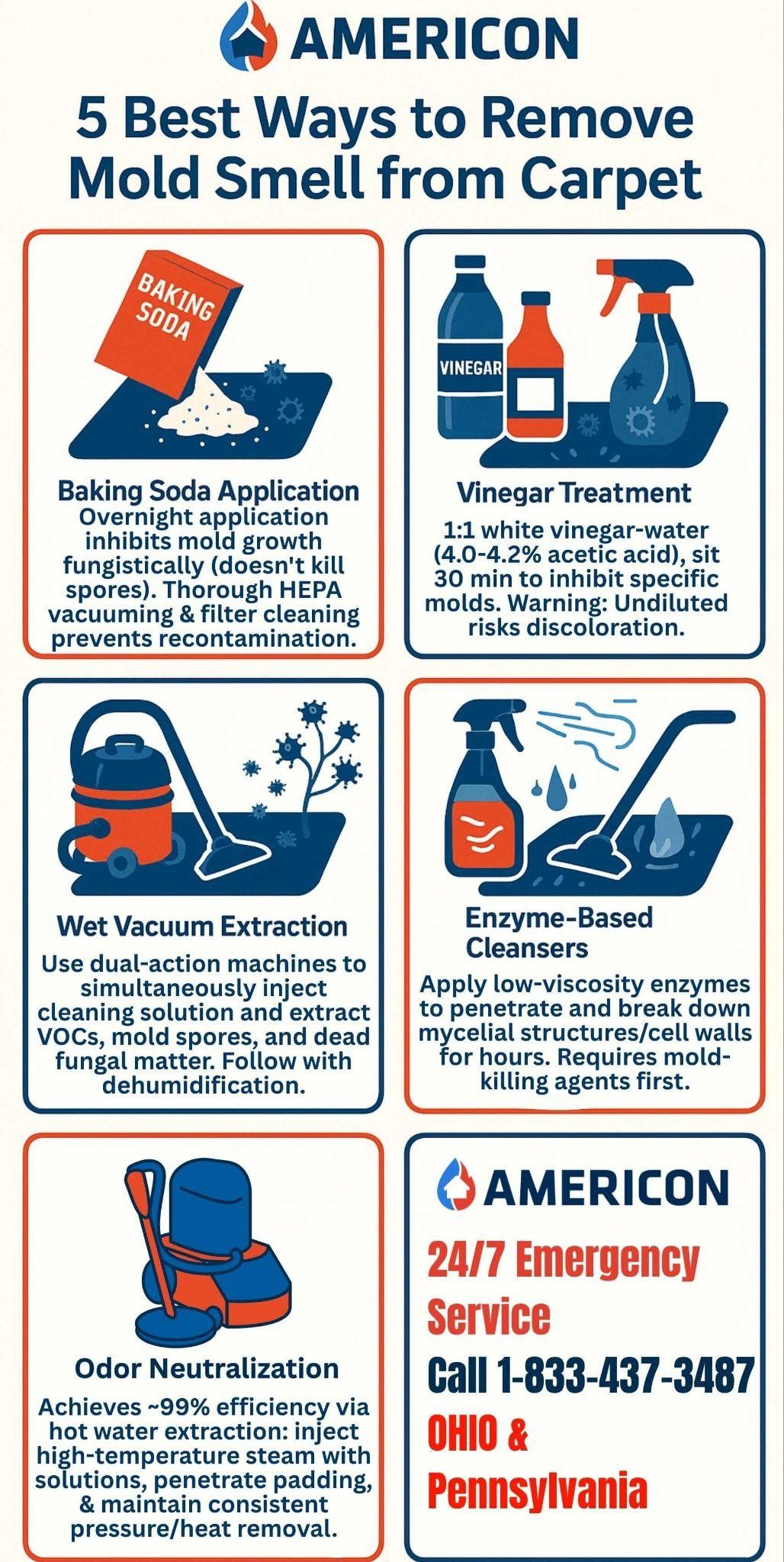
5 Best Ways to Remove Mold Smell from Carpet
The best way to get rid of the mold smell in the carpet is via professional steam cleaning. Moreover, certain home remedies, such as the application of baking soda or vinegar, are also effective in case of confined areas.
Additionally, you can employ strategies such as wet vacuum extraction, foam carpet shampoos, or enzyme-based cleansers. Fixation of moisture source, ensuring effective ventilation, and padding replacement can also produce a significant impact.
1. Home Remedies
Home remedies are effective for light to moderate mold infestations. If the mold infestations are extended over a wide area, they may not be potent enough to treat the issue completely.
It is mandatory to thoroughly vacuum the carpeted area before applying any of the homemade cleaning solutions listed below. Don’t forget to empty the vacuum, followed by cleaning its filter. Ensure this if you don’t want the mold spores to return to the carpet.
Baking Soda
Sprinkle a generous amount of baking soda over the affected area. It is advisable to leave it overnight and then vacuum.
However, do keep in mind that baking soda won’t kill the mold; therefore, it isn’t a permanent solution. It is fungistatic and will only inhibit mold growth, curbing odor.
Vinegar
Mix white vinegar and water in a 1:1 ratio in a spray bottle. Spray the mixture and let it sit for around 30 minutes. Blot dry and then air dry.
Undiluted vinegar will generate a more visible difference but can cause discoloration. A study conducted by the National Library of Medicine indicates that vinegar (4.0%–4.2%) is a growth inhibitor for certain mold species.
2. Wet Vacuum Extraction
The wet vacuum extraction method uses a specific machine termed a dry/wet vacuum or extractor vacuum. It is specialized to spray and suction the cleaning solution simultaneously, along with extracting solubilized grime and debris. This dual action is highly efficacious in eradicating VOCs, mold spores, and dead fungal matter. Post-extraction drying with dehumidifiers or fans is highly recommended.
This methodology is designed to tackle both dry and wet debris, unlike the standard vacuum cleaners that deal with only dry masses.
3. Foam Carpet Shampoos
Apply the foam evenly, covering the mold-smelling area. Now use a sponge or carpet brush to scrub the carpet. It will dislodge all the trapped mold spores, reducing odor. Dry vacuum the carpet to suck the moisture and allow it to air dry with the help of humidifiers or fans. Meanwhile, no foot traffic should be allowed in this region.
Note: Avoid overapplication. Conduct a patch test to ensure no discoloration occurs.
4. Enzymes-Based Cleansers
Enzyme-based cleansers have biological enzymes that can break down microbial waste, mold residue, or even food particles. They break down mycelial structures and cell walls of fungi, eradicating the odor source.
They have low viscosity, thus resulting in a deeper penetration into the carpet. They continue to work for several hours after the application process, contrary to cleaning agents like bleach or vinegar
Apply a generous amount. Wait for 10-30 minutes, followed by a thorough drying.
However, there is one limitation: they can’t kill living mold spores. They only remove odor and organic matter. Resultantly, they are best when used after mold-killing entities like baking soda or vinegar.
5. Professional Steam Cleaning
It is also known as hot water extraction. Hot water or high-temperature steam mixed with cleaning solutions is utilized in this deep cleaning method. This mixture is injected, followed by a powerful suction that pulls up embedded dirt, moisture, odor-causing agents, and mold residue. Steam breaks down VOCs responsible for the mold smell in the carpets.
Studies suggest that this method has 99% efficiency and is far more powerful than home remedies or household appliances for the following reasons:
- Penetrate deeper into the carpet fiber & the padding underneath
- All injected moisture is removed, decreasing the drying time
- Maintains consistent pressure and heat
Moisture Control & Supportive Strategies
1. Fixation of Moisture Source
Mold thrives on moisture, organic matter, and warmth, ultimately producing a mold smell. Among these prime contributors, you can fix the moisture source to control the mold odor in your carpets. Fix all the leaks and prevalent issues leading to moisture. You can also consider moisture sensors in this regard.
2. Effective Ventilation
Poor ventilation is parallel to a humid microenvironment, inviting the mold to regrow. Effective ventilation dilutes mold spores and helps in moisture elimination. For ventilation:
- Open doors and windows
- Use box/ceiling fans
- Exhaust fans in areas susceptible to moisture
- Install an air purifier coupled with HEPA filters
- Maintain HVAC filters
3. Padding Replacement
Carpet padding is a mold-prone material. Replace the padding if it’s mold-infested because even thorough surface cleaning won’t help you get rid of the mold. You can opt for antimicrobial or moisture-resistant padding if you are living in an area that is prone to water damage.
Comparison of Potential Odor Absorbents
Odor removal methods vary in how deeply they clean, how effectively they neutralize smells, and how long the results last. You can compare odor removal methods by penetration depth, effectiveness, and longevity.
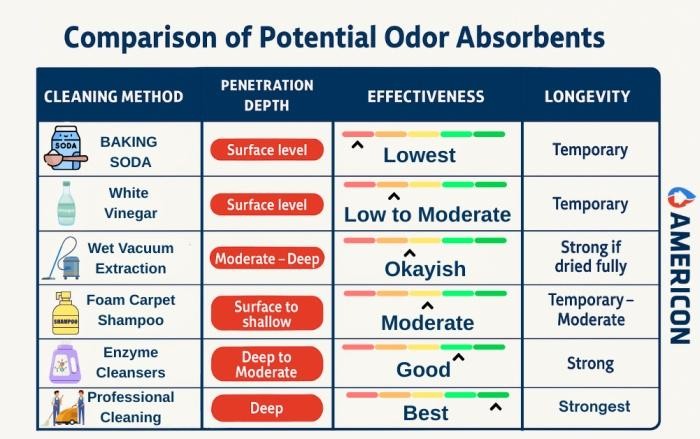
For instance, baking soda absorbs light surface odors but lacks the strength for deep cleaning. White vinegar neutralizes mild odors with limited penetration and should be combined with ventilation for better results. Wet vacuum extraction reaches deep into carpet fibers and removes embedded moisture, making it effective if carpets dry fully.
Foam carpet shampoos offer moderate cleaning for recent spills but often leave residue that can attract dirt. Enzyme-based cleaners chemically break down organic compounds such as urine and mildew, offering deep penetration and long-term odor control. Professional steam cleaning delivers the most thorough results by using heat and suction to kill bacteria and remove deep-seated odors, making it the most effective long-term solution.
| Cleaning Method | Penetration Power | Effectiveness | Lasting |
| Baking Soda | Surface level | Lowest | Temporary |
| White Vinegar | Surface level | Low to Moderate | Temporary |
| Wet Vacuum Extraction | Moderate – Deep | Fairly Good | Strong if dried fully |
| Foam Carpet Shampoo | Surface to shallow | Moderate | Temporary – Moderate |
| Enzyme-Based Cleansers | Deep to Moderate | Good | Strong |
| Professional Steam Cleaning | In-Depth Clean | Best | Strongest |
What Causes the Moldy Smell in Carpets?
There are many reasons behind the unpleasant moldy smells coming our of the carpets. Here are a few most important ones:
- Carpets act like a sponge and can trap moisture from floods, accidental spills, or high humidity. Absorption of moisture creates a damp environment that facilitates the growth of mold. Mold releases microbial volatile organic compounds (MVOCs), causing this moldy smell.
- Poor Ventilation (Lack of proper air circulation traps odor)
- Organic Material or Debris (These materials decompose, creating a moldy smell)
- Contaminated/Damp Carpet Padding (If you have placed the carpet over a padding or an old underlay having mold, it will definitely contribute to this musty smell)
- Inadequate drying after carrying out the cleaning procedure
Health, Financial & Environmental Impacts of Mold Smell
Cleaning carpet mold smell is highly crucial because it has an array of adverse effects owing to the presence of mold.
Health Impacts
- Eye & Skin Irritation
- Respiratory Issues
- Asthma
- Odor-Driven Psychological Stress
- Health risks for pets (as they sniff carpets)
- Exposure to Mycotoxins
- Infection risks, especially for individuals with a compromised immune system
Financial Impacts
- Structural Integrity (mold smell resulting from mold growth in carpets and padding can damage the floor and surroundings )
- Red Flag for Buyers ( Mold smell is an indicator of mold issues in the house, serving as a dealbreaker for the homebuyers, thereby decreasing resale value)
- High restoration costs (in case the mold smell from the carpet isn’t fixed promptly, and it spreads over a wide area)
Environmental Impacts
- Degraded Indoor Air Quality (VOCs, which are the causative agent for this moldy smell in carpet, degrade indoor air quality)
- Odor Contamination (This moldy odor, if not treated, seeps into furniture and fabrics, causing long-term odor problems)
- Mold smells in carpets lead to an unpleasant and uncomfortable indoor living environment
Do You Want a Permanent Solution for Musty Carpet Odor?
If you are looking to deodorize your carpet after water damage, Americon offers a certified team employing advanced industrial-grade techniques to fix the issue from the root cause.
Our deep extraction methodologies will restore your carpets to their pre-damage, fresh condition. You can rely on our expertise, coupled with a proven track record, to remove the mold smell from the carpet for sure. Call our 24/7 emergency number 1-833-437-3487 to get started right away.
Frequently Asked Questions:
Use a fan on wet carpet to speed up drying and prevent mold growth. Direct air circulation reduces moisture trapped in carpet fibers and padding. Combine fans with dehumidifiers for best results, especially after flooding or spills.
A damp carpet smell can last 24 to 72 hours depending on humidity, airflow, and carpet thickness. If moisture remains trapped, odor may persist for over a week and lead to mold. Use fans and dehumidifiers to eliminate the smell quickly.
Tea tree oil is the most effective natural scent that kills mold. Its antifungal properties disrupt mold spores and prevent regrowth. Use a diluted tea tree oil spray on affected areas for best results. Vinegar also kills mold but has a stronger odor.
Baking soda does not kill mold in carpet but helps absorb moisture and reduce odor. Mold requires stronger agents like vinegar or hydrogen peroxide to be eliminated. Use baking soda as a deodorizer after cleaning mold with antifungal solutions.
Let baking soda sit on carpet for 15 to 30 minutes to absorb odors and moisture. For deeper deodorizing, leave it for several hours or overnight. Vacuum thoroughly afterward to remove all residue and restore freshness.

 Loading...