Flood Damage Restoration in Cleveland, OH: Process, Costs & Timeline
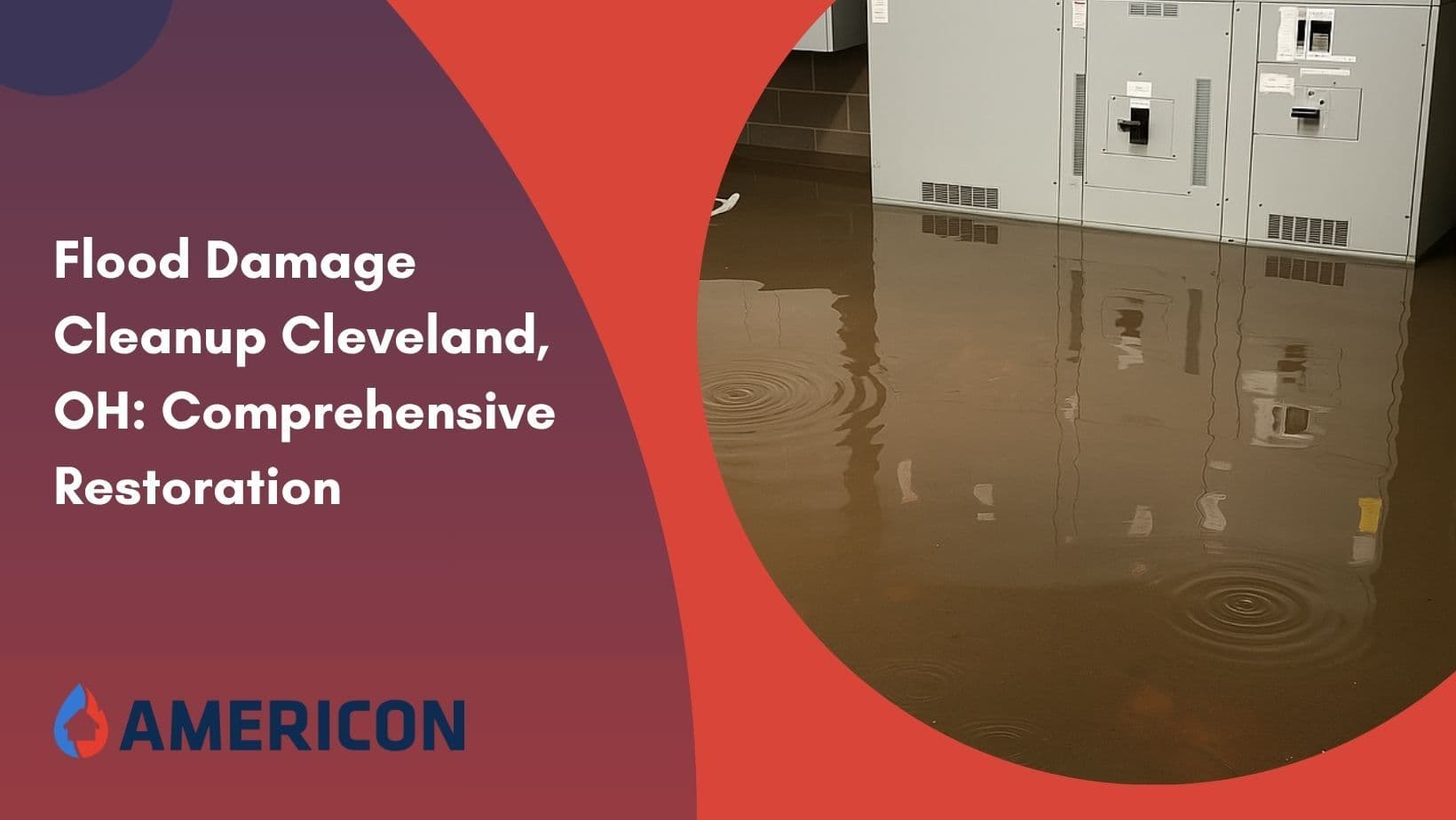
A sudden flood can escalate fast without the right response. Here's what comprehensive flood cleanup looks like in Cleveland.
A flood does not wait for business hours, and neither should your response. The first hour decides how much of your property can be saved, the first few days decide whether mold takes hold, and the choices you make before the adjuster arrives decide how smooth your claim runs.
This guide covers flood damage restoration in Cleveland the way a technician would explain it: what to do right now, where Cleveland actually floods and why, what the cleanup process involves, how long it takes, what it costs, and what your insurance adjuster needs from you.
If water is in your home now, call Americon Restoration in Cleveland at (216) 221-5200. We respond 24/7.
Learn more: Cleveland team.
What to Do in the First Hour (Before the Crew Arrives)
- Stay safe. Keep out of standing water while power is on, and never touch wet electrical equipment or outlets. If water levels are significant, call emergency services rather than entering on your own.
- Shut off the water at the source if you can do it safely. For a burst pipe, close the main shutoff valve. For appliance leaks, disconnect the appliance's power and water.
- Photograph and video everything before you move or clean anything: water levels, wall staining, flooring, and every affected belonging, from multiple angles.
- Move valuables and documents to a dry area, and lift furniture off wet floors with foil squares or blocks where you can do so safely.
- Call your insurance provider to report the damage, then call a restoration company. Every hour of delay adds spread, mold risk, and cost.
Where Cleveland Actually Floods (and Why)
Cleveland's flood risk comes from four directions at once, and knowing which one hit you tells the crew what to expect.
Lake Erie drives the first. Storm surge and seiche effects, wind pushing lake water toward shore and then sloshing back, raise water along low-lying lakefront and shoreline areas during strong storms. The second is the Cuyahoga River floodplain: properties in low ground near the river and its tributaries take water when heavy rain pushes the river over its banks. The third is the city's older infrastructure: inner-ring suburbs built on combined sewers, where one pipe carries both sewage and stormwater, back up into basements when a downpour overwhelms the system. The fourth is the ground itself: high water tables and clay soils across Northeast Ohio hold water against foundations instead of draining it away.
Learn more: storm damage restoration.
Homeowners can check their property's FEMA flood zone for Cuyahoga County, which also decides whether a separate flood insurance policy is required or simply wise. Standard homeowners insurance does not cover rising water; that distinction matters more in Cleveland than in most inland cities, and it is covered in the claims section below.
Cleveland's Winter Complication: Frozen Pipes
Winter adds a fifth flood source that has nothing to do with rain. When temperatures drop below freezing, water inside pipes expands and ruptures them, and the escaping water damages walls, floors, ceilings, and electrical systems fast. Frozen ground also blocks drainage, so spring thaw water has nowhere to go but in. Cold-weather drying changes the job too: drying a closedup building at around 35F takes longer and costs more than drying the same building in summer, because cold air holds less moisture and dehumidifiers work less efficiently.
The most common burst-pipe causes, and what prevents each:
Freezing temperatures — Water freezes, expands, and ruptures pipes. Insulate pipes in unheated basements, attics, and garages; let faucets drip during cold snaps.
Aging pipes — Corrosion weakens pipes until they crack. Replace old galvanized steel; schedule regular inspections and act on wear early. High water pressure — Pressure stresses pipes until they break. Install a pressure regulator to hold 40 to 60 psi. Clogs and blockages — Debris buildup raises internal pressure. Clean and maintain drains regularly and use drain screens to catch buildup.
Flood Water Categories: Clean, Gray, Black (and Why They Decide Everything)
Every flood job starts with one classification, because the water's category decides what is safe to touch, what can be saved, and what must be removed.
Category 1, clean water, comes from supply pipes, rainwater intrusion through a roof, or a broken clean-water line. It poses little immediate health risk, and fast action saves most materials it touches. Category 2, gray water, comes from appliances such as dishwashers and washing machines, from toilets without solid waste, and from sump-pump failures. It carries contaminants and becomes a health hazard the longer it sits; it also converts to Category 3 within 48 hours if left standing. Category 3, black water, comes from sewage backups, rising river or lake water, and any floodwater that has contacted the ground. It carries bacteria, chemicals, and pathogens, and everything porous it touches must be removed, not dried.
The category also decides the crew's safety posture and your salvage options, which is why the keep-or-remove matrix below is organized by category rather than by room.
The Flood Damage Restoration Process, Step by Step
Professional flood restoration follows the IICRC S500 standard's sequence. Here is what each step involves, how long it takes, and what equipment it uses.
Step 0: Shut off the water. If a pipe burst, turn the water off at the main valve immediately. If you cannot find the valve, call a plumber or restoration service right away. This step costs nothing and prevents everything that follows from getting worse.
Step 1: Assessment and inspection, 1 to 2 hours. Technicians inspect the full extent of damage, pinpoint the flooding source, and classify the water category. Moisture meters and thermal imaging cameras find hidden water inside walls and ceilings that eyes cannot see, and the crew maps moisture across every affected area before any drying starts.
Step 2: Water extraction, 2 to 4 hours for a typical room-level job, longer for deep or whole-home water. Truck-mounted pumps and industrial vacuums remove standing water. This is the stage that stops damage from worsening, and it cannot start until the water source is controlled.
Learn more: emergency water removal.
Step 3: Drying and dehumidifying, 3 to 5 days. Industrial dehumidifiers and air movers dry walls, floors, and affected materials, with daily moisture readings tracking progress until readings reach the dry standard. This is the longest active phase, and it is the one the old version of this page understated: drying takes days, not hours, because wall cavities and subfloors release moisture far more slowly than surfaces. Cold-weather jobs run toward the long end.
Step 4: Cleaning and sanitizing, 4 to 6 hours of active work across the drying period. All surfaces touched by floodwater are cleaned and disinfected with professional-grade products, since floodwater carries bacteria and pathogens. Odor treatment happens here too: lingering flood odors come from bacteria and damp materials, and professionals address them with antimicrobial treatment, HEPA air scrubbing, and, for smoke-adjacent jobs, thermal fogging or ozone, rather than masking them with air fresheners.
Step 5: Restoration and repair, 1 to 3 weeks including rebuilding. Damaged drywall is replaced, flooring is repaired or replaced, and electrical issues are fixed, bringing the property back to its pre-damage state.
Keep or Remove: The Salvageability Matrix
Whether a material can be saved depends on the water category and how fast drying started. This is the standard field guidance, and your crew confirms each item on site.
Salvageability by material and water category: Drywall — clean water: dry in place if caught early; gray water: flood cut 12–24 inches above the waterline; black water: remove affected sections. Carpet — clean water: extract and dry; gray water: carpet may survive but pad is usually removed; black water: remove carpet and pad. Hardwood flooring — clean water: dry with mats; gray water: partial replacement may be needed; black water: remove affected boards. Insulation — clean water: dry in place if clean and treated quickly; gray water: remove wet sections; black water: remove affected insulation. Baseboards and trim — clean water: dry and refinish; gray water: remove if swollen; black water: remove. Upholstered furniture — clean water: extract and dry; gray water: professional cleaning, often not salvageable; black water: remove. Solid wood furniture — clean water: dry slowly; gray water: clean and dry; black water: professional cleaning and removal of porous pieces. The rule: porous materials soaked in black water must be removed, not merely dried.
How Long Does Flood Restoration Take?
A typical single-room clean-water job runs about a week from call to dry, with repairs after. A whole-home or black-water job runs several weeks. Per phase, from real job patterns: assessment 1 to 2 hours; extraction 2 to 4 hours (a full day for deep water); drying 3 to 5 days, longer in cold weather or for dense materials; cleaning 4 to 6 hours of active work; repairs 1 to 3 weeks depending on how much drywall, flooring, and framing must be replaced. The two things that stretch a timeline most are delayed calls, because water spreads every hour before extraction, and hidden moisture, because a job is not finished when surfaces feel dry but when moisture readings confirm the structure is dry.
What Flood Damage Restoration Costs in 2026
Mitigation for a typical residential flood job runs from the hundreds for a small, single-room clean-water job into the thousands when several rooms, contaminated water, or reconstruction are involved. As a planning range, using Americon's published figures: water extraction $400 to $1,500; structural drying $1,000 to $3,500; repairs $1,500 to $6,000 or more; mold remediation, when needed, $1,500 to $6,000. Full reconstruction after major damage runs higher.
Learn more: water damage restoration costs.
Four drivers move a job inside or beyond those ranges: the water category (black water means removal, not drying, which costs more); the square footage and depth; how long the water sat before extraction; and whether drying happens in cold weather. What insurance typically covers: sudden and accidental water damage, such as a burst pipe or appliance failure, is usually covered under a standard homeowners policy, including cleanup and repairs. Gradual leaks and neglected maintenance are usually excluded. Rising-water flooding is not covered by standard homeowners insurance at all; it needs a separate flood policy, and sewer or sump-pump backup usually needs a specific endorsement. Confirm your own policy's wording before work starts.
Filing the Insurance Claim: The Packet Adjusters Want to See
Adjusters pay for what they can verify, and the packet that gets paid fastest has four parts. First, your photos and video from before cleanup, with dates and times. Second, the crew's moisture log: meter readings by room and by day, showing what was wet and when it reached the dry standard. Third, a line-item estimate and scope of work, so the adjuster sees exactly what was done and why. Fourth, a clear timeline from discovery to dry, so the claim shows prompt action rather than delay.
Learn more: filing an insurance claim.
Two coverage distinctions decide many claims. Sudden versus gradual: a pipe that bursts is sudden and covered; a pipe that leaked for months is gradual and usually denied, which is why maintenance records help. Flood versus water backup: rising river or lake water falls under flood insurance (NFIP or private flood policy), while a sump-pump failure or sewer backup falls under a homeowners endorsement, if you carry one. Ask your adjuster which bucket your loss falls in during the first call, not after the work is done.
What NOT to Do After a Flood
Four field lessons, each from jobs where the mistake cost more than the flood: do not pump a flooded basement dry in one go, because dropping the water level too fast lets hydrostatic pressure crack walls and buckle floors; pump in stages. Do not run your HVAC after black-water intrusion, because the system spreads contaminants through every room. Do not bleach-andclose-up: bleach on a damp surface does not dry the wall cavity behind it, and closing the wall traps the moisture that grows mold. Do not rip out drywall before the adjuster documents it: undocumented demolition is damage the claim cannot verify, and it comes out of your pocket.
How to Choose a Flood Restoration Company in Cleveland
Judge companies on verifiable facts, not slogans. Confirm 24/7 emergency response and a real arrival time (a responsible local company aims for 1 to 2 hours in the Cleveland metro). Confirm IICRC certification for water damage restoration, and ask to see it. Ask whether the crew maps moisture with meters and thermal imaging, and whether you will see the readings; moisturemapping proof is the difference between a company that dries and one that guesses. Confirm the company owns its extraction and drying equipment rather than renting it, which decides response speed. Confirm it documents damage for your insurer and communicates with your adjuster directly. Check Google and Better Business Bureau reviews for patterns in punctuality, communication, and finished results. A company that passes all six checks is rare; a company that fails the first two is not worth the call.
Frequently Asked Questions
What should I do first when a pipe bursts?
Shut off the water supply at the main valve immediately to stop the flooding at its source. Then move valuables away from the water and call a water damage restoration company. Fast action limits damage to walls, floors, and belongings.
Does homeowners insurance cover water damage from burst pipes?
In most cases, yes. Standard homeowners policies typically cover sudden and accidental water damage from burst pipes, including cleanup and repairs. Damage from gradual leaks or neglected maintenance is usually excluded. Check your policy and document everything with photos.
How long does flood damage cleanup take?
Water extraction takes 2 to 4 hours and structural drying takes 3 to 5 days. Full restoration and repair, including rebuilding, typically takes 1 to 3 weeks depending on the extent of the damage.
How do I choose a flood damage restoration service?
Check 24/7 response and arrival time, IICRC certification, moisture-mapping with meters and thermal imaging, owned equipment, insurance documentation help, and review patterns. Ask for proof of certification and similar past work before hiring.
How do restoration professionals address lingering odors after flood damage?
Lingering flood odors come from bacteria and damp materials, so professionals treat the source: antimicrobial cleaning, HEPA air scrubbing, and thorough drying to the moisture standard. Air fresheners only mask the odor; if the smell persists after drying, the moisture source has not been found yet.
Can carpet be saved after a flood?
After clean water with fast action, usually yes, with extraction and drying. After gray water, the carpet may survive but the pad usually does not. After black water, carpet and pad are removed, because sewage-soaked porous materials cannot be made safe by drying.
Does standard homeowners insurance cover flood damage?
No, not rising-water flooding. Standard homeowners insurance covers sudden and accidental water damage, like burst pipes, but flood damage from rivers, lakes, or storm surge needs a separate flood policy. Sewer and sump-pump backup usually need their own endorsement.
Get Help Fast for Flood Damage in Cleveland
Floodwater rewards speed and punishes delay at every stage, from the first hour to the adjuster's visit. Americon Restoration in Cleveland handles the full sequence: assessment, extraction, drying to the moisture standard, sanitizing, repairs, and the documentation your claim needs along the way. If you are dealing with flood damage now, call (216) 221-5200. The first call is the step that makes every other step cheaper.