Why is 24/7 Emergency Response Critical for Ohio Property Owners?
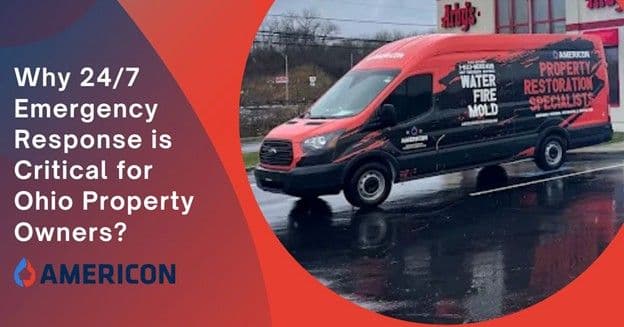
Secondary damage from a disaster often costs more than the initial event. Here's why round-the-clock emergency response matters for Ohio property owners.
Secondary damage from a disaster often costs more than the initial event. Here's why round-the-clock emergency response matters for Ohio property owners.
When disaster strikes your Ohio property, the only differentiating factor between resuming your normal life and dealing with severe structural damage to your home is speed. Every passing minute is critical.
With Ohio averaging about 1,000 wildfires and 21 tornadoes annually, having a 24/7 emergency response in Ohio is crucial for minimizing property damage and protecting your investment. Here's why you can't rely on a restoration company that only operates during business hours.
Why You Need 24/7 Emergency Response in Ohio
When disaster strikes your residential or business property, the clock starts ticking right away. What most people don't realize is that the initial damage from the event is only the beginning.
Damage that occurs after the initial impact, called secondary damage, can cost you a lot more than the original disaster: displaced families, structural damage, mold growth, lost revenue, operational shutdowns, all within mere hours. Waiting for business hours just isn't an option worth considering.
The Damage Multiplication Timeline
Damage to your property starts within hours, not days.
First 24 hours. Water soaks into floors, walls, and belongings. Wooden floors start warping, and electrical wiring can be permanently damaged. Soot particles and acidic smoke residue permanently discolor walls and ceilings. A storm-compromised structure stands exposed to the weather outside.
After 48 to 72 hours. Ohio's hot and humid climate creates the perfect breeding ground for mold, and metal surfaces begin to erode. What was originally a cleanup becomes a full restoration project. Smoke particles bond more strongly to surrounding materials, making post-fire cleaning exponentially more expensive and difficult. Plumbing and electrical failures start to emerge. With biohazard damage, bacteria, viruses, parasites, and fungi multiply and spread contamination.
After one week. All damage types result in structural damage. Belongings affected by the disaster might not be salvageable, and you're looking at a hefty bill that could have been prevented. A complete reconstruction is required instead of a restoration. Health and safety risks peak, and insurance complications surge, because proper documentation right after a disaster is key to getting claims approved.
When Do Most Natural Disasters Strike Properties in Ohio?
Disasters in Ohio don't follow business hours, but regular restoration companies do. Ohio's geographic location exposes properties to disasters all year round. Spring brings drastic thunderstorms and flooding, often overnight. Summer tornadoes peak in the evenings and at night. Fall brings windstorms as the weather changes. Winter brings ice storms and pipe bursts that usually occur overnight due to low temperatures.
According to FEMA, Ohio experiences declared disasters regularly, ones that require federal assistance. Since these disasters rarely occur during 9-to-5 business hours, 24/7 disaster response in Ohio is a necessity for property owners.
How Ohio Storm Damage Response Protects You Around the Clock
According to NOAA's National Centers for Environmental Information, between 1980 and 2024 Ohio saw an annual average of 2.3 billion-dollar disaster events. In the past 5 years, that number has jumped to 7.2 events. Most are severe storms, especially derechos and tornadoes strong enough to rip off roofs, flood homes, and shut off power within minutes.
Having an Ohio storm damage response team on standby 24/7 means you never deal with these situations alone. These teams are trained to tarp roofs, board up broken windows, and pump out any water that's found its way in.
Learn more about disaster restoration in Ohio.
Why 24/7 Emergency Fire and Smoke Cleanup Is Critical
Putting out the fire is not enough. Smoke residues are a toxic combination of acid gases and soot that stain walls, corrode metals, embed a strong stench in fabrics, and create a health hazard for anyone breathing the air in the property.
Emergency fire and smoke cleanup needs to kick in immediately. A team arriving once the fire crew has done its job can clean up residues and halt corrosion using HEPA vacuums, high-grade ozone machines, and neutralizing agents, before the damage sets permanently.
The Risks of Delaying a Biohazard Emergency Response
Sewage backups, chemical spills, trauma scenes, and unattended deaths can all lead to severe infections. Pathogens can spread rapidly, ending up causing far more problems than you started with.
These are situations you cannot deal with alone. OSHA and CDC protocols require professionally trained teams in PPE to handle them: everything bagged, labeled, transported, and disposed of legally and correctly. Biohazard situations escalate fast, and ignoring an immediate cleanup can void insurance coverage and trigger fines. A specialized team intervenes within the first critical hours, preventing long-term structural contamination, protecting everyone involved, and controlling costs.
How Much Does a Delayed Response Actually Cost?
For help with documentation, see our guide to insurance claims.
24/7 disaster response protects you from having to reconstruct your property instead of simply restoring it. Every hour you wait adds to the final bill, often by tens of thousands of dollars.
Water damage: one inch of floodwater can cause $25,000 of damage to your home, while drying water immediately can cost under a few thousand dollars. Fire and smoke damage: fire restoration costs vary with the scope and severity of damage, and delay can increase the work required; acting fast saves most belongings, at a fraction of their replacement cost. Biohazard contamination: improper handling of regulated biohazard waste may lead to penalties, depending on applicable rules, and delays can lead to building closure, health fines, and higher removal costs.
Every extra day also means hotel stays, rentals, and storage costs piling up, plus lost revenue from business closures. A 24/7 emergency response in Ohio isn't a luxury; it's how you get back to your normal routine without the added stress of fines and displacement.
What Happens When You Call Americon
The emergency line is answered around the clock, not during business hours: nights, weekends, and holidays included. Arrival times depend on the location, conditions, and crew availability. After the call, crews coordinate an assessment and mitigation, assess the damage, and start mitigation immediately, whether that means extracting water, tarping a roof, boarding up openings, or containing a biohazard. Americon serves Ohio, Western Pennsylvania, and the Dallas–Fort Worth area with the same 24/7 response.
7 Steps to Take While You Wait for Emergency Restoration Services
- Ensure personal safety first.
- Document everything before the team arrives.
- Stop the source if it is possible and safe to do so.
- Contact your insurance company and report the claim immediately.
- Open doors and windows if weather conditions permit.
- Keep detailed records of all temporary repairs and emergency expenses.
- Protect undamaged areas and belongings, using plastic sheets as barriers where feasible.
At the end of the day, the question isn't whether you can afford a professional emergency response; it's whether you can afford to go without one.
Call Americon Today for Emergency Restoration Services in Ohio
If you are in a panic because of a recent disaster, we can help. No matter the type of emergency, we offer a 24/7 fire, flood, storm, and biohazard emergency response Ohio residents can count on. Pick up the phone, dial 1-833-437-3487, and we'll be there fast.
Frequently Asked Questions
Why is 24/7 emergency response critical after property damage?
Because secondary damage starts within hours: water warps floors and grows mold within 48 hours, soot bonds to surfaces and corrodes them, and storm openings expose the structure to more weather. A same-night response keeps a restoration job from becoming a reconstruction job, and keeps the insurance documentation clean.
What happens in the first 24 hours after water damage?
Water soaks into floors, walls, and belongings; wooden floors begin warping and electrical wiring can be damaged. Extraction and drying started in this window are what prevent the mold growth and structural damage that arrive at 48 to 72 hours.
How fast does Americon respond to an emergency call?
The emergency line is answered 24/7, and crew arrival times depend on location and availability, then start mitigation (extraction, tarping, board-up, or containment) right away.
What should I do while waiting for the restoration team?
Stay safe first, document everything with photos, stop the source if it is safe, report the claim to your insurer, ventilate if weather permits, keep records of temporary repairs and expenses, and protect undamaged areas with plastic sheeting.
How much more does waiting cost?
Substantially. One inch of floodwater can cause $25,000 in damage, while immediate drying costs a fraction of that. Delayed fire and smoke cleanup can increase restoration costs substantially, depending on the damage. Waiting also adds hotel, rental, and storage costs, and risks fines on biohazard jobs.
Which areas does Americon's 24/7 response cover?
Ohio, Western Pennsylvania, and the Dallas–Fort Worth area, with round-the-clock emergency contact; on-site response times vary by region.