
According to the U.S Administration, approximately 24,000 electrical fires occur per year, while water or fire damage can affect countless electronics during natural disasters such as floods, earthquakes, wildfires etc..
Electronic restoration services can be a great option for recovering damaged equipment and helping property owners salvage their devices when traditional repair options fall short. Here’s everything you can expect from an electronics restoration company.
What is Electronic Restoration?
Electronic Restoration refers to the process of checking, testing, cleaning, and decontaminating an electronic device damaged by water, fire, corrosion, etc. The term itself means to restore hardware to its pre-loss condition before getting damaged by water, smoke from a fire, fire extinguisher dust, fire sprinkler damage, or other contaminants.
However, restoring these equipment varies on the severity of the damage, so there’s still hope for a recovery.
Electronic restoration is done by an expert recovery technician who will examine the damaged equipment and check if it is in proper working order.
How Electronic Restoration Services Evaluate Damaged Equipment
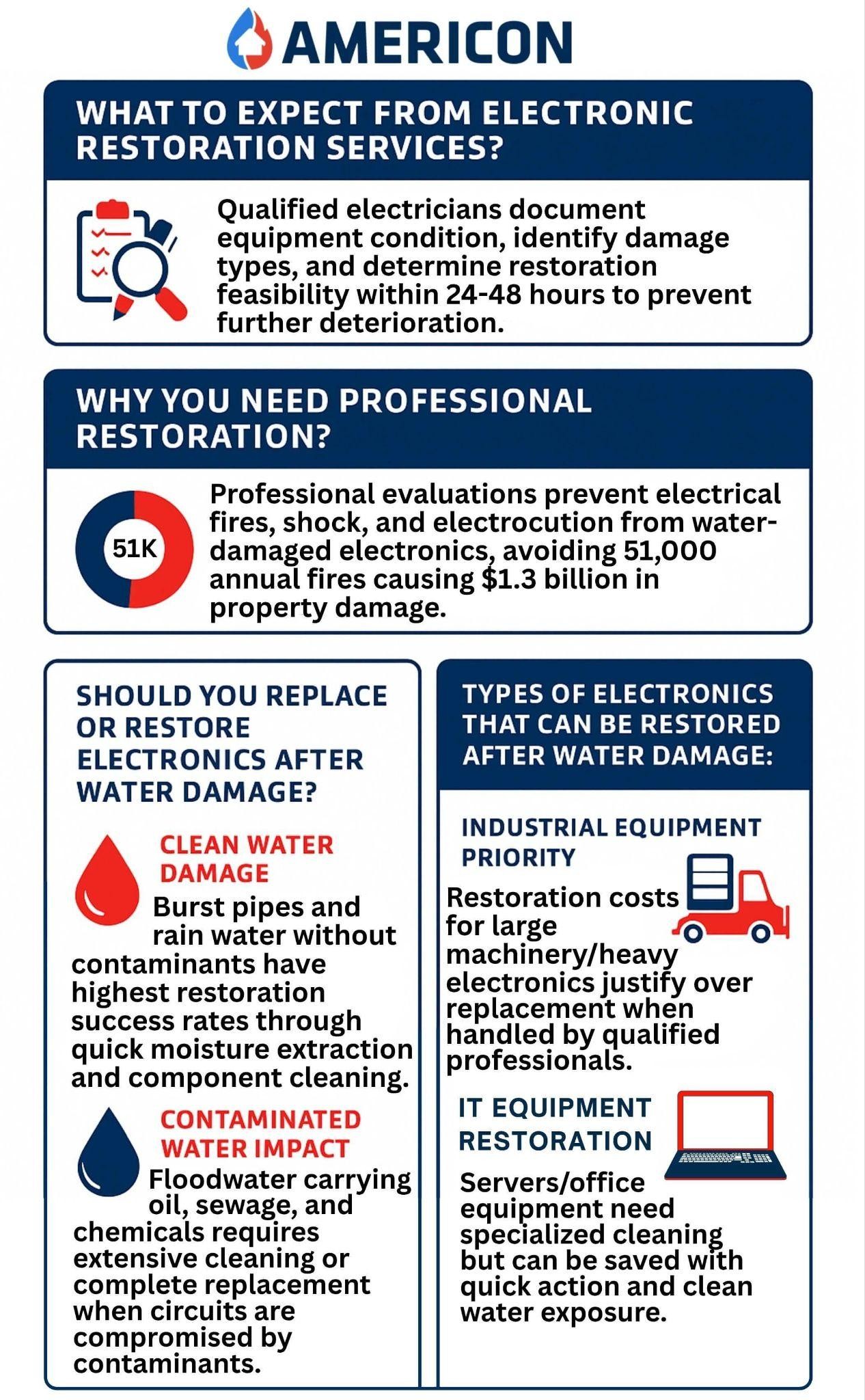
Electronic restoration companies follow systematic evaluation procedures based on established industry guidelines. According to ESF, evaluations of water-damaged electronics need to be conducted by qualified electricians.
Initial evaluation process:
The evaluation process typically begins with documenting the condition of the equipment, identifying the type of damage, and determining whether restoration is feasible.
There are challenges to this, though.
- Most floodwaters are contaminated with oil, sewage, and even chemicals that can affect the integrity and performance of your electronic equipment
- Ocean water can be especially damaging because of the conductive and corrosive nature of seawater residue
- Fire damage often results in accumulation of smoke, debris and soot in circuits, under camera glass, or the screen may get burnt due to heat.
Decontamination
The technician will remove and clean the black soot (often seen from smoke contamination), dirt, and acids, damaging the device over time.
Disassembling the parts
Once they cleaned and removed the contaminants, the technician would then disassemble the damaged device, then clean and decontaminate the affected parts inside. They would use specially made detergents, to neutralize the chloride or sulfate if necessary, then rinse them with demineralized water and dry them thoroughly.
Repairing the remaining parts / Restoration
After doing various tests, the technician will restore the devices, assemble them, and let the customer know when to pick up or deliver the repaired device. Otherwise, they should also let the customer know if the damaged equipment can’t be restored and replaced.
Documentation:
Technicians follow a systematic approach, which includes:
- Creating detailed inventories
- Documentation for insurance
- Categorizing electronics based on the severity of damage and restoration potential
In order to prevent further deterioration, it’s important to restore electronics after water damage within 24 to 48 hours.
Why Are Professional Evaluations for Electronics Important?
Returning power to fire or water-damaged electronics without conducting a proper evaluation can result in electrical fires, shock, electrocution, or even further damage to your devices. In fact, home electrical fires account for almost 51,000 fires annually, 500 deaths, and roughly $1.3 billion in property damage.
This makes it all the more important to conduct thorough evaluations, even if your electronic devices or equipment have been dried or don’t show any burn damage from outside.
Should You Replace or Restore Electronics After Water Damage?
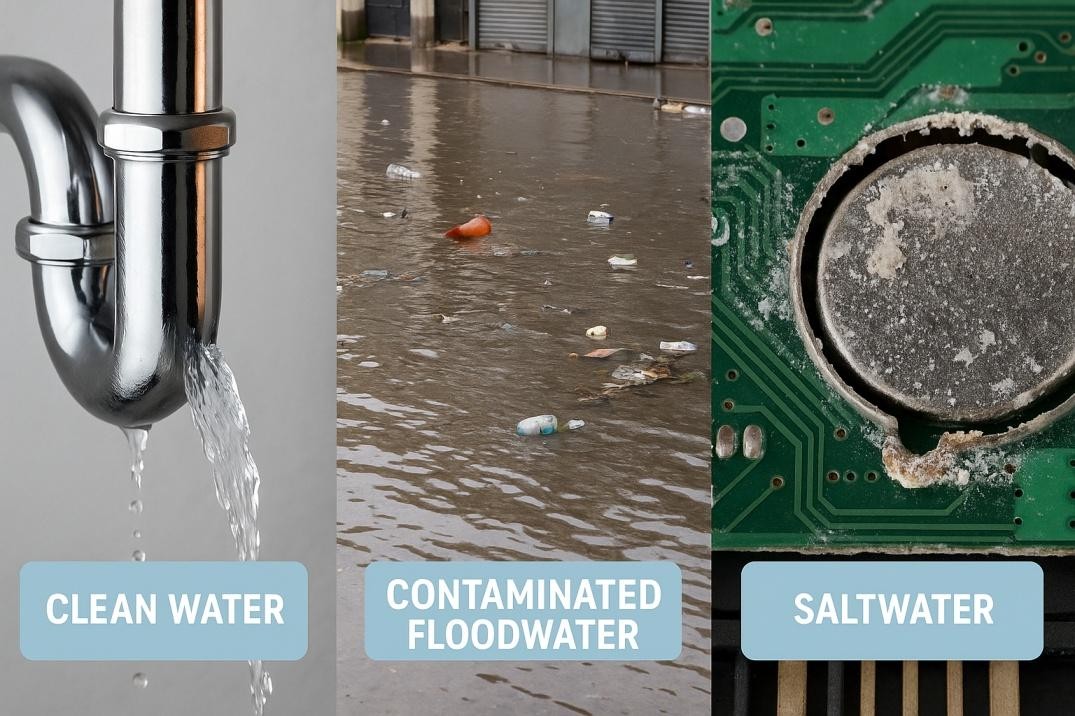
While professional restoration services can do a good job in restoring your electronics, the main factor that determines their success is the type of water that caused the damage in the first place:
- Clean water:
Water from burst pipes, leaky faucets, or rain is considered clean water, as long as it hasn’t picked up contaminants on the way. This type of damage usually has the highest success rates. Professionals can quickly extract moisture and clean each part to prevent further damage.
- Contaminated floodwater:
Contaminated floodwaters carry oil, sewage, garbage, and chemicals that can affect the way your equipment works. If it gets into the circuits, you could be looking at extensive cleaning or even complete replacement.
- Saltwater:
Salt residue is corrosive and conductive, which makes replacement a better option.
Electronics That Can Be Safely Restored
Water damage to your electronics doesn’t always mean throwing them away. Professional restoration companies follow strict guidelines that can determine what you can salvage:
1. Industrial Equipment and Heavy Machinery
Since replacing these machines can be extremely expensive, it makes the most sense to get large industrial-grade electronic equipment restored. This should be done by qualified professionals.
2. Electrical Panels and Motors
As long as the main structure isn’t damaged, there’s a good chance you can salvage your motors, electrical panels, and switchboards. Professionals will usually check whether the internal wiring and motor parts have survived the water.
3. Cable Systems and Electrical Wiring
Most electrical wiring can be saved, especially if the wire ends weren’t directly exposed to water or if the wire was properly protected. However, MC, AC, and NM cables will typically require a complete replacement.
4. Servers and Office IT Equipment
Servers and other office IT equipment will typically require special cleaning techniques, but can be restored as long as you act quickly and the water isn’t contaminated.
5. Smartphones, Tablets, Laptops, and Other Personal Devices
Truth be told, water and fire is perhaps your worst enemy when it comes to electronic devices. What do you think will happen if your electronic device was damaged by water or by fire? What would you expect? Here are some examples of what happens to an electronic device when it’s physically damaged:
Computers and Printers
- Water Damage: If you spill water on your laptop or your desktop computer, water can damage the components of your computer, such as the motherboard, hard drive, CPU, or monitor. They’ll most likely not work, so plug it off from the power to avoid power circuit failure. The same thing would apply to Printers. If it didn’t work, make sure to plug it off from the power immediately.
- Fire Damage: Another nemesis of electric devices. When a computer is fire-damaged, it would depend on how long the device was exposed to the fire and what temperature it was exposed to. If it was exposed to high temperatures, the device itself can’t be recovered. However, a chance of retrieving files depends if the drive-seal is still intact and remained undamaged.
Tablets and Smartphones
- Water Damage: Like any electronic device, any mobile phones or tablets that aren’t water-resistant will most likely get faulty when exposed to water. The screen will shut down due to a power circuit failure.
- Fire Damage: Being exposed to high temperatures will make it hard for the device to be recovered. In some instances, as long as the memory chip is still intact, the files can still be recovered.
Depending on how it was damaged, be it through water or fire, some or all of the equipment will be affected. And the only way to determine how much damage it sustained is to seek help from an Electronic Restoration technician.
Most devices can be restored if they were submerged in water only for a few seconds. Restoration really just depends on the extent of the exposure, how quickly you act, and the type of device you have.
For instance, if a phone has IP68 rating and it falls into water with 3 feet of depth, it might survive if taken out within 30 minutes. Some electronics can survive longer like the Samsung Galaxy devices with IP68 ratings have waterproofing to survive up to 1.5m 4.5 feet) of depth for 30 minutes.
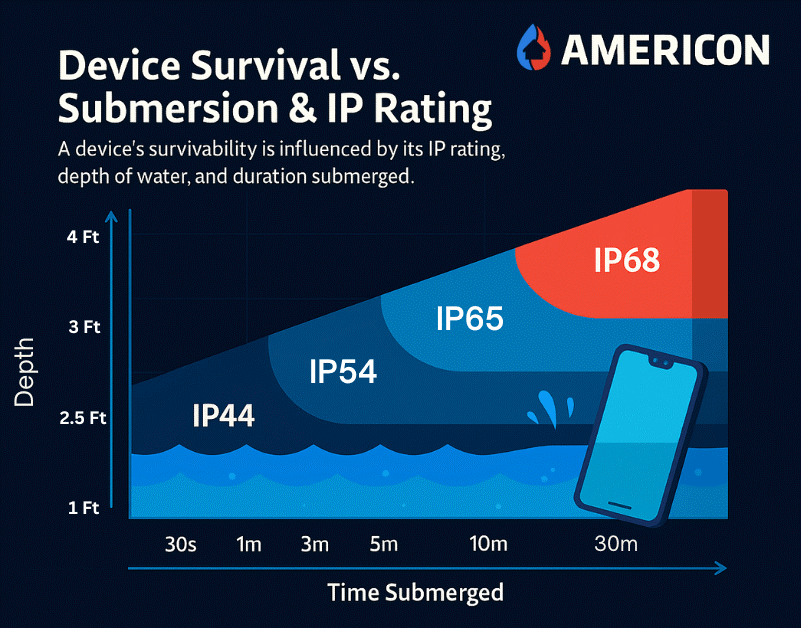
IP ratings consist of two digits after “IP” – the first digit indicates protection against solids, the second against liquids.
First Digit – Solid Protection
| Rating | Protection Against | Description |
| 0 | None | No protection |
| 1 | >50mm objects | Large surfaces (back of hand) |
| 2 | >12.5mm objects | Fingers |
| 3 | >2.5mm objects | Tools, thick wires |
| 4 | >1mm objects | Most wires, screws |
| 5 | Dust (limited) | Some dust ingress but not harmful |
| 6 | Dust-tight | Complete dust protection |
Second Digit – Liquid Protection
| Rating | Protection Against | Test Details |
| 0 | None | No water protection |
| 1 | Dripping water | Vertical drops – 10 min test |
| 2 | Tilted dripping | 15° angle – 10 min total |
| 3 | Spraying water | Up to 60° spray – 5-10 min |
| 4 | Water splashing | Any direction – 10 min |
| 5 | Water jets | Low pressure – 3 min minimum |
| 6 | Powerful jets | High pressure – 3 min minimum |
| 7 | Immersion (1m) | Up to 1m depth – 30 min |
| 8 | Immersion (1m+) | Extended depth/time per manufacturer |
Common Device Ratings
| Rating | Common Use | Example |
| IP44 | Indoor/light outdoor | Basic outdoor equipment |
| IP54 | Outdoor use | Weather-resistant devices |
| IP65 | Dust-tight, jet-resistant | Outdoor enclosures |
| IP67 | Submersible (1m/30min) | Rugged phones |
| IP68 | Extended submersion | Premium smartphones |
The device’s ability to survive varies depending on its IP rating, depth of water, and how long it’s submerged. Therefore, it’s important to turn off the power to avoid the rust and immediately take it to a professional for better chances of restoration.
Electronics That Shouldn’t Be Restored
Not everything that’s been exposed to water damage can be salvaged. Experts from the Electrical Safety Foundation and the National Electrical Manufacturers Association have set clear rules regarding what you need to replace.
1. Safety Devices
Arc-fault circuit interrupters, ground-fault circuit interrupters, circuit breakers, and surge protectors are all designed to protect you from fires and electrical shocks. Once these safety devices have been exposed to water damage, they must be replaced.
2. Batteries and Backup Power Equipment
Batteries and water don’t mix well. Water can cause hazardous chemical reactions inside and even lead to serious electrical hazards. This is why any backup power supply or battery that’s been exposed to water needs to be replaced immediately.
3. Electrical Outlets, Switches, and Junction Boxes
Outlets, switches, dimmer switches, and junction boxes can’t be restored if water reaches the basic electrical parts of your walls. To make sure your electrical system meets your building’s safety regulations and codes, it’s important to replace them as soon as possible.
What to Look For In an Electronic Restoration Company
You’re already grappling with the possible loss of your electronics; the last thing you need is an unreliable electronic restoration company. Here’s what you should look for when making this crucial decision.
- Do they have the right credentials?
A reliable company will have all the right certifications, especially IICRC credentials, and adhere to NEMA guidelines. Always make sure to check these first.
- Do they have the required equipment and facilities?
There’s a lot more that goes behind restoration than a couple of fans and dehumidifiers. Do they have specialized cleaning equipment and climate-controlled drying rooms? Ask about their facilities before handing in your damaged electronics.
- Can they handle other sorts of damage?
Disasters hardly ever lead to just one type of problem. More often than not, you’re dealing with smoke damage electronics repair along with water damage restoration. Make sure they’re also experienced in fire-damaged electronics recovery so you can get better results.
- How quickly can they respond?
When you’re hit with water, smoke, or fire damage, time is everything, and how quickly they can respond can make all the difference.
- How seriously do they take security?
Your personal electronics often contain personal data and confidential business information. Make sure to check whether they have proper security procedures in place.
Need to Restore Your Devices or Appliances? Call Americon
With decades of experience in restoring devices, properties, and other valuables, we have evolved as a company to perform even the most difficult restoration tasks with a high success rate.
Remember, you’re in a race against time when a device needs restoration because the more you wait, the more difficult restoration becomes because of secondary damage such as rusting if its water damaged.
So call 1-833-437-3487 to have our technicians take a look and tell you whether it’s salvageable or not, without wasting your time.
Frequently Asked Questions:
Water-damaged electronics can be repaired if the device hasn’t powered on while wet and if corrosion is minimal. Professionals use cleaning, drying, and circuit testing to restore function. Severe internal damage, however, might be beyond repair.
Rice is not a reliable method for drying electronics. While it may absorb some surface moisture, it does not remove internal condensation. For better results, use silica gel, isopropyl alcohol, or professional drying techniques.
Restoration involves returning an item to its original or near-original condition after damage, including deep cleaning and structural fixes. Repair, on the other hand, typically involves fixing specific parts or isolated problems without restoring the full original condition.
Yes, many electronics restoration services include data recovery if storage media like SSDs or hard drives are still intact. Using specialized tools, technicians can extract lost data even from physically damaged devices, though results depend on damage severity.




 Loading...